
[fusion_builder_container hundred_percent=”no” equal_height_columns=”no” menu_anchor=”” hide_on_mobile=”small-visibility,medium-visibility,large-visibility” class=”” id=”” background_color=”” background_image=”” background_position=”center center” background_repeat=”no-repeat” fade=”no” background_parallax=”none” parallax_speed=”0.3″ video_mp4=”” video_webm=”” video_ogv=”” video_url=”” video_aspect_ratio=”16:9″ video_loop=”yes” video_mute=”yes” overlay_color=”” video_preview_image=”” border_color=”” border_style=”solid” padding_top=”” padding_bottom=”” padding_left=”” padding_right=”” type=”legacy”][fusion_builder_row][fusion_builder_column type=”1_1″ layout=”1_1″ background_position=”left top” background_color=”” border_color=”” border_style=”solid” border_position=”all” spacing=”yes” background_image=”” background_repeat=”no-repeat” padding_top=”” padding_right=”” padding_bottom=”” padding_left=”” margin_top=”0px” margin_bottom=”0px” class=”” id=”” animation_type=”” animation_speed=”0.3″ animation_direction=”left” hide_on_mobile=”small-visibility,medium-visibility,large-visibility” center_content=”no” last=”true” min_height=”” hover_type=”none” link=”” border_sizes_top=”” border_sizes_bottom=”” border_sizes_left=”” border_sizes_right=”” first=”true”][fusion_text]
Article published on The Gospel Coalition Africa, July 29, 2024. By Rosie Moore.
King David’s worldview expressed in Psalm 139, that we are “fearfully and wonderfully made” is the only true foundation for human identity and worth. It is also the bedrock for fundamental human rights and liberties. David knew that the Creator who fashioned his innermost being in the womb would continue to care for him throughout his life. When this truth is discarded, Satan gets a foothold, and promotes the dehumanising, degrading worldview that we see shaping thoughts on the body and biology today.
Counterfeit Ideas
When we reject God’s beliefs about human identity and worth, we adopt counterfeit ideas about ourselves and the world we live in. Nihilism, associated with the German philosopher Friedrich Nietzsche, is the belief that there is no meaning in anything that exists.
When nihilism creeps into a person’s worldview, depression, self-loathing, self-hatred, self-mutilation, crime, drug addiction and suicide are typical results. There is no sense that life is precious, purposeful, and worthwhile. Nihilism is a profoundly hopeless worldview with a heavy influence in our world.
David knew that we have inherent value, without needing to create an identity.
Another counterfeit idea is existentialism, the belief that you are worth nothing until you make something of yourself through your own actions. Your story is yours to create, and you are free to create any meaning you choose. Your significance is entirely up to you. You can be whatever you want to be. If you believe you are beautiful, you will be beautiful! Jean-Paul Sartre’s godless philosophy has influenced the thought patterns of atheists and Christians alike.
Both nihilism and existentialism are deceptive atheistic philosophies that oppose God as Creator, nullifying human identity and worth. In contrast, David praised the Lord for creating his body “fearfully and wonderfully” (Psalm 139:14a). He knew that he had inherent value without needing to change or create an identity of his own. He knew that human life did not just evolve from impersonal forces but was meticulously crafted by a loving Creator.
Intrinsic Human Identity and Worth
A Biblical worldview places an intrinsic and equal value on each human life from the time of conception, as we are created in God’s image and known by God. This means that there are no redundant people, and no one’s worth exceeds another’s. Personhood begins when all twenty-three pairs of chromosomes are present.
Many argue that a woman has a right to terminate the life of her unborn child when motherhood is a burden or a shame to her. Other women are pressured to have an abortion because the father does not want to accept the responsibility of a baby born outside of marriage. Still others claim that the foetus is not a person, though it is biologically a human being.
The ideology of abortion threatens intrinsic human identity and worth.
Abortion is not an issue of family planning or women’s reproductive healthcare; it is the murder of a human life, made in God’s image. The ideology of abortion threatens the intrinsic human identity and worth of all people. God stands against the taking of the life of children in the womb and after birth, and he also calls on his church to support and love pregnant women, because both have intrinsic value.
The Hallmark of a Christ Follower
Satan has always targeted children, the weak and vulnerable.
Secular culture ties human value to productivity and performance, and dehumanises those who lack certain cognitive abilities. Psalm 139, on the other hand, is a cry of justice for the abused and voiceless, the old and needy, the disabled and despondent. Many people have been led to believe that they are a burden to society and that their lives are worthless. But Satan has always targeted children, the weak and vulnerable. He has always promoted infanticide, child slavery and child sacrifice. One of the hallmarks of a Christ follower is that we speak and act for the powerless and the voiceless (Proverbs 31:8-9; Psalm 146:7; 82:3-4).
Our Bodies Have Dignity
David is remembered as a great king and shepherd, but I doubt any of us would regard him as a man of science. Yet, three thousand years ago, inspired by the Holy Spirit, David wrote truths about human development which have been confirmed by the study of embryology and DNA in recent decades. David described his body as a ‘frame intricately woven in the depths of the earth’ (Psalm 139:15), like a tapestry with meticulous hand stitching.
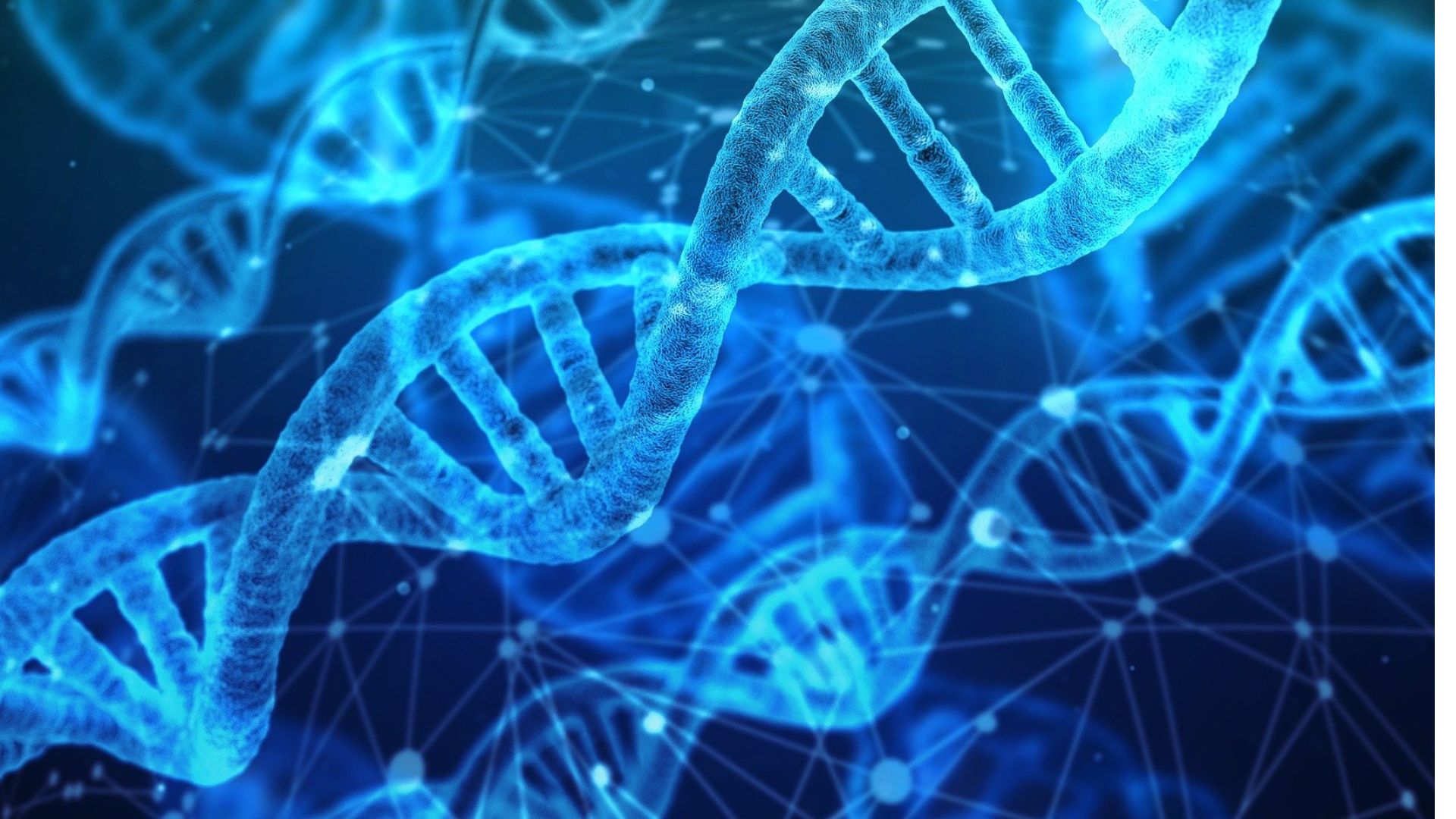
The process of three-dimensional DNA helixes, winding and unwinding to make proteins for human growth, looks a lot like knitting or weaving. And now we know, without a doubt, that an unborn child is a living, distinct, whole human being from the time of conception. Our DNA is unique and unchangeable; each of us is a walking miracle of irreducible complexity from the time of conception.
We cannot unhitch our physical lives from our spiritual lives.
Because God has created our inmost being, we cannot unhitch our physical lives from our spiritual lives. While there is a danger of obsessing about our bodies, there’s also a danger in de-valuing them or separating what we do with our bodies from our worship. The Christian worldview upholds the dignity of the body and biology, in stark contrast to the world’s pervasive hostility towards human identity and worth.
Although our bodies are ageing and decaying day-by-day, we are not less than the bodies that God has given us. We are embodied souls. Jesus had a physical body like ours, when “the Word became flesh and lived among us” (John 1:14). He gave his body to redeem us and to raise our bodies on the last day; our bodies are part of God’s redemption story. As Christians, we must reject every attempt of the enemy to subvert God’s order for human beings.
The Body Is a Gift From God
And so, regardless of our body’s weaknesses and imperfections, David reminds us that the body is a gift from God. We should be in awe of its incredible design and functionality. It is sinful to reject, despise, harm or wish for a different body than that which God has given us to steward.
The body is a gift from God.
The Bible equips us to live in our bodies as sexual beings. We should not look to the world for wisdom on these matters. Our bodies have been created through Christ and for Christ, to do the things that God has made them to do (Colossians 1:16-17). God has called us to sexual purity, as well as sexual enjoyment within marriage between a man and a woman (Proverbs 5:15-16; Matthew 5:27-30; 1 Corinthians 7:3-5).
David and the Apostle Paul were in perfect agreement: “The body is for the Lord, and the Lord is for the body” (1 Corinthians 6:13). Therefore, “glorify God in your body” (1 Corinthians 6:20). Our bodies are the “temple of the Holy Spirit” who dwells in us (1 Corinthians 6:19), and since our bodies belong to God, it matters what we do with them (1 Corinthians 6:13-20).
Glorifying God in Our Bodies
In light of our human identity and worth, glorifying God in our bodies is not just about what we avoid, but also about what we do positively—how we work, eat and exercise, what we do to help others, how we nourish our minds, how we listen to others and control our passions, and what we say with our mouths.
The Bible gives us practical wisdom on how to live well in our bodies.
The Bible gives us practical wisdom on how to live well in our bodies. Issues like sleep, sex, laziness, hard work, indulgence, gluttony, anxiety, and self-control are not trivial to God (Psalm 127:2; Proverbs 9-11; Ecclesiastes 5:12, Song of Solomon 2:3-6; Ephesians 4:28; 1 Thessalonians 4:11-12; Romans 13:13; Proverbs 23:2-3, 21; Hebrews 12:16-17; Philippians 4:6-8; Matthew 5:30; 1 Corinthians 9:24-27, Proverbs 5).
As Christians who seek to glorify God in our bodies, we need to counter the dehumanising worldview of secular culture by seeing our bodies as God sees them–worthy and valuable. After all, one day God will raise our weak and broken bodies in glory, strength and power (1 Cor 15:35-58). The resurrection of believers will be just like that of Christ–real, physical and recognisable. God will give each of us a transformed body that retains our own unique identity, but is immortal and incorruptible (1 Cor 6:14; 15:37,38,42). Jesus says that the righteous shall shine as the sun in the kingdom of our Father (Matt 13:43).
This promise of a future resurrection reminds us that our bodies are not going to be thrown away, but renewed and revitalised. Just as God made us– body and soul, He will redeem us– body and soul. All that God made is good, and He will redeem what He has made (Rom 8:22-24).
Our belief in the dignity of the body and biology should frame the way we see substance abuse; sexual immorality; mental illness, self-harm and suicide; transgenderism and marriage; the clothes we wear and the selfies we post; female circumcision; and pornography; eugenics and gene therapies; euthanasia, abortion and sex-trafficking. These are not just social or cultural issues. They are matters of the human body with deep spiritual roots, in which Satan has profoundly vested interests.
[/fusion_text][/fusion_builder_column][/fusion_builder_row][/fusion_builder_container]
 [/fusion_imageframe][/fusion_builder_column][fusion_builder_column type=”2_3″ last=”yes” spacing=”yes” center_content=”no” hide_on_mobile=”no” background_color=”” background_image=”” background_repeat=”no-repeat” background_position=”left top” hover_type=”none” link=”” border_position=”all” border_size=”0px” border_color=”” border_style=”solid” padding=”2%” margin_top=”2%” margin_bottom=”2%” animation_type=”0″ animation_direction=”down” animation_speed=”0.1″ animation_offset=”” class=”” id=””][fusion_title size=”2″ content_align=”left” style_type=”default” sep_color=”” margin_top=”” margin_bottom=”” class=”” id=””]Receive our latest devotion in your Inbox[/fusion_title][fusion_code]Q2xpY2sgZWRpdCBidXR0b24gdG8gY2hhbmdlIHRoaXMgY29kZS4=[/fusion_code][/fusion_builder_column][/fusion_builder_row][/fusion_builder_container][fusion_builder_container background_color=”#ffffff” background_image=”” background_parallax=”none” enable_mobile=”no” parallax_speed=”0.3″ background_repeat=”no-repeat” background_position=”left top” video_url=”” video_aspect_ratio=”16:9″ video_webm=”” video_mp4=”” video_ogv=”” video_preview_image=”” overlay_color=”” overlay_opacity=”0.5″ video_mute=”yes” video_loop=”yes” fade=”no” border_size=”0px” border_color=”” border_style=”solid” padding_top=”20″ padding_bottom=”20″ padding_left=”5%” padding_right=”5%” hundred_percent=”yes” equal_height_columns=”yes” hide_on_mobile=”no” menu_anchor=”” class=”” id=””][fusion_builder_row][fusion_builder_column type=”1_1″ background_position=”left top” background_color=”” border_size=”” border_color=”” border_style=”solid” spacing=”yes” background_image=”” background_repeat=”no-repeat” padding=”” margin_top=”0px” margin_bottom=”0px” class=”” id=”” animation_type=”” animation_speed=”0.3″ animation_direction=”left” hide_on_mobile=”no” center_content=”no” min_height=”none”][fusion_title size=”2″ content_align=”left” style_type=”default” sep_color=”” margin_top=”” margin_bottom=”” class=”” id=””]Other devotions from the God Walk…[/fusion_title][/fusion_builder_column][fusion_builder_column type=”1_1″ background_position=”left top” background_color=”” border_size=”” border_color=”” border_style=”solid” spacing=”yes” background_image=”” background_repeat=”no-repeat” padding=”” margin_top=”0px” margin_bottom=”0px” class=”” id=”” animation_type=”” animation_speed=”0.3″ animation_direction=”left” hide_on_mobile=”no” center_content=”no” min_height=”none”][fusion_recent_posts layout=”default” hover_type=”none” columns=”3″ number_posts=”6″ offset=”” cat_slug=”devotion” exclude_cats=”” thumbnail=”yes” title=”yes” meta=”no” excerpt=”yes” excerpt_length=”0″ strip_html=”yes” animation_type=”0″ animation_direction=”down” animation_speed=”0.1″ animation_offset=”” class=”” id=””][/fusion_recent_posts][fusion_text]–