Tag: Easter

  • The Crossroad at the Cross

    The Crossroad at the Cross

    Every Easter we’re faced with the ultimate question about God and our relationship with Him. Nothing in life matters more. When we stand before the cross, we stand at a crossroads—what will we do with Jesus of Nazareth? That decision leads either to everlasting life with God, or eternal separation. According to the Bible, there are no other destinations. Easter’s central message is captured in Jesus’ words: “For God so loved the world that he gave his only Son, that whoever believes in him should not perish but have eternal life.” (John 3:16)

    That’s why it’s vital to understand what happened when Jesus died, and what it means for us. If Jesus has never really mattered to you, I pray this Easter will be different. I pray you’ll see the glory of God in the face of Jesus and respond like the centurion who watched Him die: “Truly this man was the Son of God!”

    Mark’s account of Jesus’ death:

    33 And when the sixth hour had come, there was darkness over the whole land until the ninth hour. 34 And at the ninth hour Jesus cried with a loud voice, “Eloi, Eloi, lema sabachthani?” which means, “My God, my God, why have you forsaken me?” 35 And some of the bystanders hearing it said, “Behold, he is calling Elijah.” 36 And someone ran and filled a sponge with sour wine, put it on a reed and gave it to him to drink, saying, “Wait, let us see whether Elijah will come to take him down.” 37 And Jesus uttered a loud cry and breathed his last. 38 And the curtain of the temple was torn in two, from top to bottom. 39 And when the centurion, who stood facing him, saw that in this way he breathed his last, he said, “Truly this man was the Son[i] of God!” (Mark 15:33-39)

    The Darkness.

    There’s no natural explanation for the eerie darkness from noon to 3pm. Matthew, Mark, and Luke record it. So do three extra-biblical historians: Thallus, Phlegon, and Africanus. Thallus suggested a solar eclipse, but that’s astronomically impossible—eclipses don’t happen during Passover, which occurs at a full moon, nor do they last three hours.

    In Scripture, daytime darkness signals God’s judgment on sin (Deut 28; Amos 8). It began during the first Passover in Egypt: the ninth plague brought three days of darkness, described as a “darkness to be felt” (Ex 10:21–22). To be spared the final plague—the death of the firstborn—each family had to sacrifice a spotless lamb and mark their doorposts with its blood. That lamb was the substitute. The Hebrew people understood that to be spared death and set free from slavery, an innocent life had to die in their place.

    The three days of darkness pointed to God’s judgment on His enemies but also to God’s mercy on His covenant people. The question at the crossroad: Would it be the death of the firstborn, or the death of the lamb?

    The Crossroad at the Cross.

    Two thousand years later, on the first Good Friday, God turned off the lights for three hours from noon until 3pm. He turned His face away from His sinless Son and poured out the full cup of His judgment, so that sinners could be free. The only way to be saved is to repent and trust in Christ, who bore our sins in His own body.

    I wonder when the disciples realized what was happening. At the Passover meal, Jesus had identified Himself as the once-for-all Lamb who would pay sin’s death penalty: “Take; this is my body… This is my blood of the new covenant, which is poured out for many. Truly, I say to you, I will not drink again of the fruit of the vine until that day when I drink it new in the kingdom of God. (Mark 14:22–25)

    Jesus wasn’t speaking in metaphor—He was revealing His mission. He would die to bear the sins of all who trust in Him. His blood redeems, atones, and cleanses. Isaac Watts’ 1707 hymn captures the scene:

    “Well might the sun in darkness hide,
    And shut its glories in,
    When God, the mighty maker, died,
    For his own creature’s sin.”

    The Cries at the Cross.

    We dare not miss Jesus’ spiritual anguish as He cried out, “My God, my God, why have you forsaken me?” His body was pierced and tortured. His mind endured mockery, contempt, insults and taunts. Emotionally, He’d been betrayed, denied, abandoned by his closest friends. He refused wine mixed with myrrh—no relief (Mark 15:23). He hung for six hours, naked, humiliated.

    Every detail was foretold centuries before, even that His hands and feet would be pierced, and His clothes would be divided (Psalm 22:8, 16-18; Zechariah 13:7, 11:12-13; Isaiah 53:4-12; 50:6; 52:14; Psalm 69:9; 19-20; Psalm 69:21). Even the reason for Christ’s death was recorded by Isaiah: “He bore the sin of many, and made intercession for transgressors” (Isaiah 53:12).

    His cry of abandonment fulfilled Psalm 22:1. For the first time in eternity, Jesus did not say “Abba,” but “My God.” In that moment, He experienced a separation from the Father He had never known. This was the “cup” He dreaded in Gethsemane (Mark 14:36)—the full weight of sin and judgment against sin was poured out on Jesus.

    The physical pain paled compared to this spiritual alienation. As Jesus embodied our sin, God turned His face away. This is what it means to be a sinner before a holy God—uncovered, exposed. Only the blood of the Lamb can cover us. Imagine the horror of our sin—it took the death of God’s beloved Son to remedy it.

    Mark doesn’t give us the words Jesus cried as He breathed his last (Mark 15:37), but John records Jesus’ final cry: “It is finished!” (John 19:30). Luke adds: “Father, into your hands I commit my spirit.” (Luke 23:46). His mission was complete. These cries take us to the very heart of Easter, as Jesus died in full control of his faculties to open the gates of heaven to every sinner who turns to him in repentance and faith. The temple curtain was torn from top to bottom.

    The Torn Curtain.

    This act of God demonstrated that Jesus’ sacrifice was sufficient. The eighty-foot-high curtain, separating the Holy of Holies, symbolized the barrier between God and man. Now, access to God was open to all. God vandalised His own Temple and tore the curtain—ending the old sacrificial system with its repeated animal sacrifices on the Day of Atonement to gain forgiveness for the people.

    Jesus was both the great High Priest and the final sacrifice. “By a single offering he has perfected for all time those who are being sanctified.” (Hebrews 10:18)

    The crossroads.

    The cross is a crossroads for each one of us. About ten years ago, our teenage son came to such a moment at a Christian camp. As he heard the re-telling of the crucifixion story, God stirred his heart to genuine sorrow over his sin, and he embraced the mercy and love of Christ. Seeing how lost, guilty and helpless he was to pay for his own sin, he put his faith in Jesus. His life changed direction. He later asked to be confirmed at his Anglican school.

    But as the confirmation classes rolled by, he noticed Jesus was hardly mentioned. When a classmate asked the chaplain a sincere question, “Sir, how can I make sure that I will go to heaven to be with God when I die”, the chaplain replied, “Whatever you choose to believe in, just believe in it with all your heart.” After a few moment of silence, my son asked, “But sir, if that’s true and there is another way to God, why would God send His own Son to die such a terrible death on the cross?”

    Why did Jesus have to die? Unless I see that I am a great sinner and Jesus is the only Saviour, the cross makes no sense. Easter makes no sense unless I see the darkness of our sin alongside God’s immense love and mercy for sinners like us. May we see the King of Glory, crowned with thorns and arms outstretched. May we respond to His invitation.

    This is the crossroads we face if we truly consider the innocent young man who died on a Roman cross in 33AD. Like the Roman centurion, who recognized the unique Son of God dying a criminal’s death, we must answer: “Who is this man, and why did He die?”

    Prayer (Hebrews 10:19–25)

    Lord, thank you that through faith in Jesus, we can have full assurance of eternal life. The blood shed on Calvary washes away our sins and gives us new life.
    We come to you not because we’re good, but through the “new and living way that [Jesus] opened for us through the curtain, that is, through His flesh.”
    Thank you, Jesus, our great high priest, for cleansing our hearts and removing our guilt. Let us hold fast the confession of our hope, for you who promised are faithful.
    Amen.
     

  • Silence of the Lamb

    Silence of the Lamb

    Jesus remained silent before His accusers. His trials were steeped in conspiracy, treachery and twisted truths, showcasing the greatest miscarriage of justice in human history. As religious leaders conspired and bloodthirsty mobs shouted “Crucify him!”, the only truly innocent man was flogged and handed over to be crucified by a cowardly Roman governor called Pontius Pilate.

    Mark captures Peter’s testimony as Jesus stood trial before the Sanhedrin and then Pilate: “Then the high priest stood up and came forward and questioned Jesus, saying, “Do You not offer any answer for what these men are testifying against You?” But He kept silent and did not offer any answer.” (Mark 14:61). Pilate, amazed by Jesus’ silence, pressed further, asking, “Do You offer nothing in answer? See how many charges they are bringing against You!” (Mark 15:4-5). Yet, Jesus remained silent.

    Matthew notes that “when he was accused by the chief priests and elders, he gave no answer, not even to a single charge.” Then Pilate said to him, “Do you not hear how many things they testify against you?” (Matthew 27:12-14)

    Luke is the only gospel writer to record Jesus’ silence before Herod, where mocking soldiers added to the contempt He faced: “So [Herod] questioned him at some length, but he made no answer….Then, arraying him in splendid clothing, he sent him back to Pilate. (Luke 23:9-10)

    Conspiracy.

    The conspiracy against Jesus had been building for quite some time. The animosity of the Jewish ruling council known as the Sanhedrin, had come to a head. Jesus was an offense to their pride and threatened their power over the people. Mark notes the motivation behind their desire to kill Jesus, “for they feared Him” (Mark 11:18).

    After witnessing Jesus heal on the Sabbath, instead of embracing Him as the Saviour of the world, the Pharisees plotted with the Herodians to destroy Him (Mark 3:6). They resented the way the Lord cleared the Temple of those who fleeced the people and envied how the crowds listened to Him with delight (Mark 11:12-19; 12:37). Fear, resentment and envy are dangerous forces.

    Jesus’ trial before the chief priests and Sanhedrin exposes this conspiracy (Mark 14:53-65). It was more of a preliminary hearing designed to fabricate charges, as blasphemy was not a viable charge under Roman law. Conducted in the secrecy of darkness, it was a farce of justice, a conspiracy dressed in legal robes, lawfare in its purest form.

    Condemnation.

    Condemnation was their foregone conclusion and a guilty verdict was decided long before the trial started. The Jewish leaders sought evidence to justify their predetermined conclusion: death by crucifixion. There was no fair cross- examination of witnesses, and no dissenting voices were allowed.

    The widow of Nain and Jairus were not invited to tell of how Jesus had raised their dead children. Legion the former demoniac was not called to testify to his miraculous transformation. Nor were Lazarus, Bartimaeus or the bleeding woman on the witness list. Mary Magdalene, Mary of Bethany and Zacchaeus were not asked to tell their stories of redemption, and sympathetic Jews like Nicodemus and Joseph of Arimathea were not welcome either.

    Instead, Mark records how evidence was false and fabricated: “The chief priests and whole Sanhedrin were searching for evidence against Jesus, but couldn’t find any. Many testified falsely against [Jesus] but their statements did not agree” (Mark 14:57, Matt 26:60). The charges were false, contradictory, and at best, twisted half-truths.

    Twisted Truth.

    Twisted truths can be more dangerous than outright lies. Proverbs 25:18 reminds us, “A man who bears false witness against his neighbour is like a war club, or a sword, or a sharp arrow”. A false witness has the power to destroy a person’s life.

    Consider the twisted evidence of two false witnesses, “This fellow said, “I am able to destroy the temple of God and rebuild it in three days” (Matt 26:61). This misrepresentation sought to paint Jesus as a traitor and terrorist, twisting His prophecy of resurrection into a weapon against Him. Jesus had never said that He would destroy the temple. Rather, he said, “Destroy this temple, and I will raise it again in three days” (John 2:19).

    The chief priests and elders “persuaded” and “stirred up” the crowd for the express purpose of condemning Jesus (Matt 27:20; Mark 15:11). Death by crucifixion was always their end game for Jesus and they used every means at their disposal to achieve it.

    Pilate.

    Pontius Pilate, the pragmatic politician, recognized Jesus’ innocence, but lacked the integrity to uphold justice. By the time Jesus was dragged before the notorious Roman Governor, Pilate knew that it was envy driving the Jewish leaders (Matt 27:18, Mark 15:14). Weeks later, speaking in Solomon’s Colonnade, Peter would explain that Pilate had decided to release Jesus, before the Jewish leaders “disowned him” before Pilate (Acts 3:13). While sitting on the judge’s seat, Pilate’s wife warned him to to avoid “that innocent man” (Matt 27:19).

    But feeling trapped and manipulated, Pilate made a last ditch attempt either to release Jesus or pass on the problem to Herod. First, he unsuccessfully tried to appease the crowd by offering Barabbas, a notorious insurrectionist and murderer (Mark 15:7-9). When that failed, his final act of deflection was sending Jesus to Herod, hoping to evade responsibility (Luke 23:1-7).

    Ultimately, Pilate washed away his honour and integrity for all time as he dipped his hands into the water bowl, declaring himself innocent of Christ’s blood (Matt 27:24-25). The mob’s reply is chilling, “Let his blood be on us and our children!”

    Today Pilate is remembered as the cowardly man who stood by while God’s Son was murdered by His own people.

    Jesus breaks His silence.

    Amid this gross injustice, Jesus remained silent. In any criminal trial, this would be the moment for the defence attorney to ask for an acquittal. The evidence was weak and inconsistent, certainly not beyond reasonable doubt. This moment became pivotal.  But Jesus chose to break his silence when the high priest asked a direct question about His identity: “Are you the Christ, the Son of the Blessed One?”

    Jesus could have remained silent. He was not obliged to answer the high priest. Yet, His shocking response is what sent him to the cross. Jesus made a powerful declaration of His identity:

    “I am, but I tell you, from now on you will see the Son of Man seated at the right hand of Power and coming on the clouds of heaven.” (Mark 14:62)

    Jesus finally broke His silence by affirming his identity, using three provocative phrases:

    I am.

    “I am” ascribes to Himself the name of God revealed to Moses (Exodus 3:14). The title “Son of Man” links Himself to the Messianic King and Judge described in Daniel’s vision (Daniel 7),  while “sitting at the right hand of the Mighty One” signifies divine authority and power. Without a doubt, Jesus was claiming to be the Son of Man sitting at the right hand of the Ancient of Days in Daniel’s vision.

    After hours of silence, Jesus’ bombshell declaration shook his accusers to the core. The high priest, horrified, tore his robes, then escalated the contempt and brutality against Jesus (Mark 14:63-65). For a Jew, it is the highest blasphemy for a man to identify as God….unless, of course, He is God.

    Beaten and bloody, humiliated and abused, wearing a mock crown and purple robe, Jesus did not look anything like a king. But in these carefully chosen words He chose to unveil His true identity as God’s chosen King. He also issued a powerful warning: “All who stand in judgment of the Lord Jesus Christ will ultimately by judged by Him.”

    Jesus’ resurrection three days later would be a foretaste of his ultimate return as King and Judge. In a very real sense, Jesus wasn’t on trial before the Sanhedrin, Pilate or Herod at all. His accusers were on trial. In fact, we will all stand before Christ and be held to account for what we do with Him. Pilate had the power to crucify Jesus, but the accused standing before him held ultimate power.

    Jesus remained silent before His accusers, but Rome would ultimately collapse and Jerusalem would be utterly destroyed, along with its Temple in 70AD. Pontius Pilate would be recalled to Rome, face disgrace, and he either committed suicide or was executed by Emperor Caligula, possibly with his body thrown into the Tiber River. 

    Jesus remained silent in 33AD, but no empire or tyrant has successfully silenced the gospel of Christ ringing through the next two thousand years. In these mock trials on the eve of the crucifixion, the only one  who was truly innocent, confident, and free was our Lord. He could see the day when all the kingdoms of the world would come under his reign forever and ever. Wasn’t it loving of Jesus to warn His accusers that they were falsely judging the One who would one day be their Judge?

    Then, as the priest’s question turned to abuse, the Lord resumed His silence.

    Silence of the Lamb.

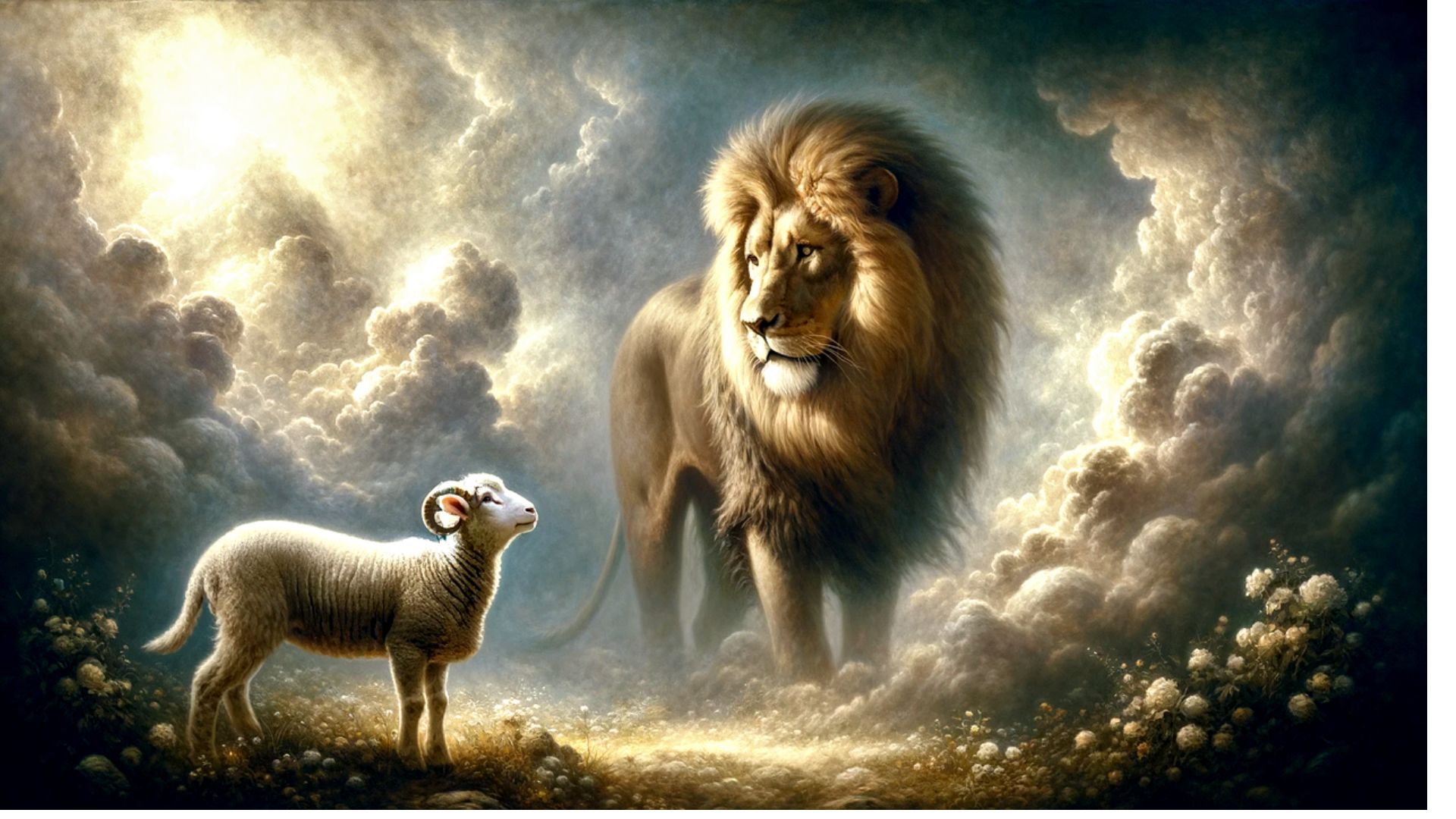
    The silence of Jesus during his trials was not the response of a helpless victim, but the declaration of a perfectly righteous man who saw beyond the moment. His silence was not a resigned fatalism, nor a response to intimidation. At any moment, Jesus could have called ten thousand angels to lead him to safety. Jesus’ silence was not a sign of weakness but of profound love and compassion. The Lamb of God stood there silently and bravely, taking all those insults, lies and accusations for us.

    Jesus was in charge of every player in the drama leading to his crucifixion, and He saw the sovereign hand of His Father ordering those events, planned from the dawn of time. Peter later explained that this was all part of the definite plan and foreknowledge of God (Acts 2:23).

    Moreover, Jesus’ silence before his accusers was the most powerful disclosure of His identity as “the Lamb of God who takes away the sin of the world” (John 1:29), the sacrificial Lamb promised by Isaiah seven hundred years beforehand:

    “Behold, My Servant, whom I uphold; My chosen one in whom My soul delights. I have put My Spirit upon Him; He will bring forth justice to the nations. He will not cry out nor raise His voice, Nor make His voice heard in the street. A bent reed He will not break off, And a dimly burning wick He will not extinguish; He will faithfully bring forth justice. He will not be disheartened or crushed Until He has established justice on the earth (Isaiah 42:1-4).

    The innocent Lamb died an unjust death, so that the guilty might be set free. Jesus’ life was given as a ransom for many (Matt 20:28), as He volunteered to take the place of sinners and bear the just penalty of their sin. While Christ’s accusers were amazed that He did not open his mouth, God was working out His salvation plan for rebels and lost sheep like you and me. Amid the silence of the Lamb, Jesus was fulfilling Isaiah’s greatest messianic prophecy:

    “All we like sheep have gone astray; we have turned—every one—to his own way; and the LORD has laid on him the iniquity of us all. He was oppressed, and he was afflicted, yet he opened not his mouth; like a lamb that is led to the slaughter, and like a sheep that before its shearers is silent, so he opened not his mouth. (Isaiah 53:6-7)

    Prayer.

    Father, thank you that Jesus is both the sacrificial Lamb who takes away the sin of the world, and the conquering Lion who reigns victorious. Thank you that He walked towards the cross with purpose and clarity to die for our sins, once for all, the Righteous for the unrighteous. And thank you that He left us an example so that we might follow in His steps. “He committed no sin, neither was deceit found in his mouth. When he was reviled, he did not revile in return; when he suffered, he did not threaten, but continued entrusting himself to him who judges justly” (1 Peter 2:21-23). Lord, when we are falsely accused or face injustice, help us to look to Jesus, the Lamb who died and rose again. We trust that He will return and bring perfect justice on earth. Give us wisdom to know when to speak boldly as Christ’s witnesses, and when to stay silent and entrust ourselves to Your justice. Help us to see that we do not need to defend ourselves or the truth against every accusation, as You will have the last word. Amen.

    Listen to Andrew Peterson’s beautiful song, Behold the Lamb of God.


  • A Prayer Beyond Time: Jesus’ High Priestly Prayer

    A Prayer Beyond Time: Jesus’ High Priestly Prayer

    John Knox, on his deathbed in 1572, asked his wife to read John 17 to him, saying, “There I cast my first anchor.” This chapter, known as Jesus’ High Priestly Prayer, is a heavy anchor for our faith. It reveals the depth of Christ’s love for His first disciples and all who would ultimately believe in Jesus through their message. In this prayer offered up by Jesus shortly before His crucifixion, the Son of God interceded for all believers, asking the Father to keep us safe from Satan’s power, to sanctify us in the truth, and to unite us, thereby attracting others to the gospel.

    The Hour Has Come

    Throughout His ministry, Jesus often said that His hour had not yet come (John 2:4; 7:6). Yet, in John 17, He declares, “Father, the hour has come; glorify your Son that the Son may glorify you.” The moment had arrived for Jesus to fulfill His mission through His sacrificial death and resurrection. In John 17, Jesus lifted up His eyes to heaven and prayed,

    “Father, the hour has come; glorify your Son that the Son may glorify you, since you have given him authority over all flesh, to give eternal life to all whom you have given him. And this is eternal life, that they know you, the only true God, and Jesus Christ whom you have sent. I glorified you on earth, having accomplished the work that you gave me to do. And now, Father, glorify me in your own presence with the glory that I had with you before the world existed.

    “I have manifested your name to the people whom you gave me out of the world. Yours they were, and you gave them to me, and they have kept your word. Now they know that everything that you have given me is from you. For I have given them the words that you gave me, and they have received them and have come to know in truth that I came from you; and they have believed that you sent me. I am praying for them. I am not praying for the world but for those whom you have given me, for they are yours. 10 All mine are yours, and yours are mine, and I am glorified in them. 11 And I am no longer in the world, but they are in the world, and I am coming to you. Holy Father, keep them in your name, which you have given me, that they may be one, even as we are one. 12 While I was with them, I kept them in your name, which you have given me. I have guarded them, and not one of them has been lost except the son of destruction, that the Scripture might be fulfilled. 13 But now I am coming to you, and these things I speak in the world, that they may have my joy fulfilled in themselves. 14 I have given them your word, and the world has hated them because they are not of the world, just as I am not of the world. 15 I do not ask that you take them out of the world, but that you keep them from the evil one. 16 They are not of the world, just as I am not of the world. 17 Sanctify them in the truth; your word is truth. 18 As you sent me into the world, so I have sent them into the world. 19 And for their sake I consecrate myself, that they also may be sanctified in truth.

    20 “I do not ask for these only, but also for those who will believe in me through their word, 21 that they may all be one, just as you, Father, are in me, and I in you, that they also may be in us, so that the world may believe that you have sent me. 22 The glory that you have given me I have given to them, that they may be one even as we are one, 23 I in them and you in me, that they may become perfectly one, so that the world may know that you sent me and loved them even as you loved me. 24 Father, I desire that they also, whom you have given me, may be with me where I am, to see my glory that you have given me because you loved me before the foundation of the world. 25 O righteous Father, even though the world does not know you, I know you, and these know that you have sent me. 26 I made known to them your name, and I will continue to make it known, that the love with which you have loved me may be in them, and I in them.”

    Let’s note what Jesus prays leading up to the greatest act of redemption in human history.

    A Prayer for God’s glory.

    “Father, I desire that they also, whom you have given me, may be with me where I am, to see my glory.” (John 17:24)

    Jesus prays that all those the Father has given him would finally see his glory, the glory the Father gave Him, because He loved Him from before the creation of the world (John 17:24). This prayer points to our eternal hope as believers. One day, we will behold Jesus in His full splendour as King, rejoicing in His presence forever, as we ourselves are also glorified.

    Consider the petition of John 17:1-5. Jesus’ ultimate goal was to glorify the Father. Jesus glorified His Father through His life of perfect obedience. In every loving touch; every word He taught; every woe He pronounced on the Pharisees; every person He healed; every miracle and every encounter that brought eternal life, Jesus only ever sought the glory of His Father.

    But paradoxically, God the Father would be supremely glorified through Jesus’ death, resurrection, and ascension, in finishing His work of redemption. As the Lamb slain from the foundation of the world (Revelation 13:8), Jesus looked to his impending work on the cross as if it were already complete. “And now Father, glorify me in your presence with the glory I had with you before the world began” (John 17:5). Jesus could not have prayed these words if He were not Yahweh himself, equal with God the Father. He willingly embraced the cross as the pathway to glory.

    Spurgeon noted, “He poured out his soul in life before He poured it out unto death.”

    Ironically, it is the cross that brings God the most glory. This is the theme throughout John’s gospel (John 12:27-33; 13:30-33; 21:18-19). The greatest instrument of humiliation devised by man would become a beacon of glorification in God’s hands. Through it, Jesus accomplished redemption, and through our lives, we are called to reflect His glory.

    In a strange twist, Jesus is most glorified in and through His followers when we reveal His character,  presence and joy in our own lives (John 17:10). Jesus does not only want to live in His followers by His Spirit, but to be glorified in our lives too. This is especially true amid great troubles and opposition from the world. On the eve of His coming Passion and unspeakable suffering, Jesus, the source of all joy, prays for his followers to overflow with joy (John 17:13).  Even the deaths of Jesus’ disciples would glorify God (John 21:19).

    A Prayer for Protection

    Jesus did not ask the Father to remove His disciples from the world but to protect them from Satan, the evil one and avowed enemy of Christ and His people (John 17:11, 15). We see this protective heart again in John 18:8, where Jesus responds to the armed soldiers, chief priests and Pharisees, “If you are looking for me, then let these men go.”

    Jesus’ plea is striking given the persecution His disciples would soon face as he was arrested, beaten, crucified, and buried in the days ahead. Jesus was praying for the men who would carry his message of redemption to a hostile world, yet His concern was their spiritual protection, not their physical comfort. Christ’s petition is the same for believers today (John 17:20). He calls us to resist worldliness and to stand firm in a world that hates us, knowing that He intercedes on our behalf. Even though we have been sent into the world, we do not belong to the world (John 17:15-18).

    A Prayer for sanctification

    Jesus prayed for His followers to be sanctified by the truth, understanding that God’s word is our source of truth (John 17:17-19). He prayed for our holiness.

    We are made holy by trusting in Jesus and repenting of our sin. But once we have been forgiven through Christ’s sacrificial death, holiness comes through obedience to God’s Word. Daily engaging in God’s word has a purifying effect on our hearts and minds, as the Bible teaches us God’s will, points out our sin, corrects and trains us in right living (2 Timothy 3:14-17). In today’s world, Biblical illiteracy weakens many believers. Some do not know how to read the Bible, others are disinterested in Scripture unless they feel it can instantly solve their problems. But Jesus’ prayer highlights the need for a life centred on God’s word, shaping our character, choices, and witness. Bible reading skills must be taught to new believers, as we will only be set apart for God’s work if we are made holy by believing and obeying His word. God’s word is our true North star in a post-truth culture. There is no other way to be sanctified.

    A Prayer for Unity

    Jesus’ prayer extends beyond the eleven disciples to all future believers in Christ. He prayed that we would be one (John 17:11). Christians who love their Lord will strive to live in harmony and unity with other believers, in answer to Jesus’ plea in John 17:20-21, so that the world may believe that you have sent me.”

    As Jesus looked around him, He would have seen Jewish Galileans, but He looked forward to millions of believers who would become his disciples from every age through history, adding daily to the great multitude before the throne of God (Rev 7:9-10).

    In a world that loves to divide people with identity politics, Jesus prayed that we would rise above our different nationalities, races, languages and classes. Jesus called His followers to unity in Him and His word. As members of Christ’s diverse, indivisible Church, we are to be a testimony of God’s love to a watching world.

    The Eternal Significance of Jesus’ Prayer

    John 17 is a prayer beyond time. It stretches across centuries, embracing every believer who has ever lived and will ever live. In it, we see Christ’s heart for us—His deep longing for our sanctification, protection, and unity in a world that is not our home. Unlike a fleeting earthly intercession, this prayer has echoes in eternity, shaping the lives of all who belong to Him.

    This prayer also challenges us. Are we living in the holiness Christ desires? Are we standing firm against the enemy? Are we pursuing the unity He prayed for? Are we using all that we have and are to promote God’s glory? Are we allowing God’s word to sanctify us daily? The High Priestly Prayer is not merely theological—it is deeply practical, calling us to respond to Christ’s intercession with faith, obedience, and love.

    As we reflect on this prayer, we find assurance in knowing that Jesus, our eternal High Priest, is still interceding for us at the right hand of the Father (Romans 8:34; Hebrews 7:25). His words, spoken on the eve of His passion, continue to strengthen, sustain and sanctify His people today.

    Prayer

    Father, we thank You for sending Jesus to redeem us. We pray that You will be glorified in our lives. Sanctify us through the truth of Your word, protect us from the evil one, and unite us as one body in Christ. May we reflect Your love and bring others into Your kingdom. May we be salt and light in a decaying world. May we remain faithful until we see Your glory face to face. In Jesus’ name, Amen.


  • Thirty Pieces of Silver

    Thirty Pieces of Silver

    [fusion_builder_container hundred_percent=”yes” overflow=”visible”][fusion_builder_row][fusion_builder_column type=”1_1″ background_position=”left top” background_color=”” border_size=”” border_color=”” border_style=”solid” spacing=”yes” background_image=”” background_repeat=”no-repeat” padding=”” margin_top=”0px” margin_bottom=”0px” class=”” id=”” animation_type=”” animation_speed=”0.3″ animation_direction=”left” hide_on_mobile=”no” center_content=”no” min_height=”none”][fusion_text]

    Easter devotions: The difference between Peter and Judas.

    By Rosie Moore.

    Both Judas and Peter were handpicked as disciples by Jesus. Both watched Jesus heal the sick, deliver demoniacs, feed the crowds and raise the dead. Both listened to his teachings on God’s Kingdom and heard him foretell his impending death. Both were part of Jesus’s trusted circle who proclaimed the gospel and did miracles in his name (Mark 6:12-13). Both men struggled with sin and temptation. Both misunderstood Christ’s mission. Both betrayed Jesus on the night before his crucifixion. Yet, there were crucial differences between Simon Peter and Judas Iscariot which led them along different trajectories, to vastly different outcomes.

    Join us for the next two weeks to look at why the lives of Peter and Judas Iscariot ended so differently, and what lessons we can learn from them. Thereafter, we’ll resume our devotions in Peter’s letters.

    Thirty pieces of silver

    Many have speculated on what motivated Judas to betray Jesus. Was it greed? Was it resentment that Jesus was not the political leader he had hoped for? Was Judas a pawn of Satan or God, with no choice in the matter (Luke 22:3)? Did he try to force Jesus’ hand to rebel against Rome and set up a new political government?

    What we do know is that the gospel writers highlight Judas’s greed and dishonesty. Greed was Judas Iscariot’s besetting sin. He handed Jesus over to the Jewish leaders for just 30 pieces of silver, the average price to buy a slave in the first century.

    Essentially, Judas sold the Son of God in exchange for four month’s salary. Loyalty, friendship, integrity, justice, truth, innocence—None of this mattered to Judas as much as his financial interests. He used the mission of Christ for personal advancement, and he was shrewd and deliberate in his plotting:

    “He (Judas) went away and conferred with the chief priests and officers how he might betray him to them. And they were glad, and agreed to give him money. So he consented and sought an opportunity to betray him to them in the absence of a crowd.”
    (Luke 22:4-6)

    “Then one of the twelve, whose name was Judas Iscariot, went to the chief priests and said, “What will you give me if I deliver him over to you?” And they paid him thirty pieces of silver. And from that moment he sought an opportunity to betray him.”
    (Matthew 26:14-16).

    Judas, who was trusted to take care of the moneybag and give money to the poor (John 13:29-30), was a pretender right up to the moment when he came up to Jesus and kissed him (Matt 26:48-50). He wore the mask of a friend, but treated Jesus as an enemy.

    Twin embryos of betrayal.

    But Judas’s betrayal didn’t come out of nowhere. It was conceived from the twin embryos of greed and hypocrisy that he’d incubated in his heart for some time. The apostle John, who knew Judas as a brother, gives us insight into this progression of sin in chapter 12 and 13:

    It was at a dinner in Lazarus’s home in Bethany shortly before Jesus’s arrest. Mary, motivated by pure devotion, anointed Jesus with an entire bottle of expensive nard. When Mary poured the perfume lavishly over Christ’s feet and wiped his feet with her hair, Judas was highly offended, “Why wasn’t this perfume sold and the money given to the poor? It was worth a year’s wages.” He was indignant at the waste of money (John 12:5).

    Perhaps he valued money more than Jesus. Perhaps he was jealous of Mary. Perhaps he failed to see his own theft and lies as sin, because he was enslaved to the evil desire of greed and self promotion (James 1:14; 2 Peter 2:19).

    Judas’s pretense to care for the poor was sheer hypocrisy, as John exposes his true motives, “He did not say this because he cared for the poor but because he was a thief. As keeper of the money bag, he used to help himself to what was put into it.” C.H Spurgeon makes an interesting comment about Judas’s hypocrisy:

    “The kisses of an enemy are deceitful…Whenever a man is about to stab religion, he usually professes very great reverence of it. Let us beware of sleek-faced hypocrisy, which is assistant to heresy and infidelity.”

    Judas’s progression into sin is a shocking warning for each of us. It is a remarkable real life illustration of James’s metaphor describing how sin grows from conception to a stillborn baby:

    When tempted, no one should say, “God is tempting me.” For God cannot be tempted by evil, nor does he tempt anyone; 14 but each person is tempted when they are dragged away by their own evil desire and enticed. 15 Then, after desire has conceived, it gives birth to sin; and sin, when it is full-grown, gives birth to death (James 1:13-15).

    Judas’s despair and death is horrible to imagine (Acts 1:18; Matt 27:5). That’s why James warns us to take our heart desires seriously and not to deceive ourselves (James 1:16). They are potentially lethal.

    “Satan entered into him” (John 13:27).

    Judas’s greed and love of ill-gotten gain was fertile ground for Satan’s seeds of betrayal. The Bible is clear that the devil prompted Judas’s betrayal (John 13:2; 27), which was all part of God’s sovereign plan (Ps 41:9; Matt 20:18; 26:20-25; Acts 1:16, 20).

    However, the Bible is equally clear that Judas was not just a pawn of Satan or God. None of us can blame others or make excuses for our evil thoughts and wrong actions, because they are ours alone (James 1:13-14). Judas’s unchecked desires left him like putty in the devil’s hands.

    Jesus himself confronted Judas with his ‘sleek-faced hypocrisy’ on the night of his arrest:

    “Judas, are you betraying the Son of Man with a kiss?” (Luke 22:48). There’s almost a pleading in Jesus’s question, and no doubt that Judas was an active agent in his betrayal. But by the time Judas realized he didn’t like the way things were turning out, it was too late. The wheels of God’s sovereign plan had begun to turn (John 13:2; 10-11).

    “Surely not I, Rabbi?”

    Judas’s story should leave us feeling sad and troubled, as Jesus was (John 13:21). I can hardly imagine a sadder meal than the Last Supper, when Jesus told his disciples, “I tell you the truth, one of you is going to betray me.” (John 13:22; Matt 26:21).

    An inside job always leaves us feeling perplexed. How could a member of this loyal band of brothers betray Jesus? But in Matthew’s gospel, we see that Judas’s response is different to the response of Peter and the other disciples:

    Each of Jesus’s disciples was deeply worried that he might be the traitor. Their consciences were tender and concerned. Matthew recalls that night: “They were very sad and began to say to him one after the other, “Surely not I, Lord?” (Matt 26:22). But there is a stark contrast in the tone of Judas’s question: “Surely not I, Rabbi?” he asks, formally (Matt 26:25).

    The other disciples addressed Jesus as “Lord,” but for Judas, he was just “Rabbi”. Of course, Rabbi is a Jewish title of honour that conveys respect for a wise teacher, but it belied a deeper issue in Judas’s heart. Judas acknowledged Jesus as a man, but never as his Lord, the Son of God, with the right to rule his thoughts, desires and actions. He’d never accepted responsibility for his sins, confessed them and bowed the knee to Christ as his Saviour, as Peter had (Luke 5:8). Judas had no personal relationship with Jesus.

    A tragic trajectory

    Judas was a real man who, in real space, time and history, betrayed Jesus for thirty sheckels of silver. It’s a shocking and tragic story. But Judas is also a picture of anyone who ultimately rejects Jesus as their Lord and Saviour. Although he was closely associated with Jesus and looked just like the other disciples, he failed to follow Christ as Lord of his life. Tragically, he committed suicide without faith and without hope.

    But, no matter how great Judas’s sin was, betrayal is not the unforgivable sin. Nor is greed, theft, lying or suicide. No sin is an obstacle to Christ’s forgiveness. As Thomas Brookes explained many centuries ago:

    “The least sin should humble the soul, but certainly the greatest sin should never discourage the soul, much less should it work the soul to despair. Despairing Judas perished, whereas the murderers of Christ, believing on him, were saved.”

    But Judas had worn the mask of hypocrisy too long. When he realized what he had done and wanted to recant and return the money, he couldn’t humble himself to repent or even say Jesus’s name. He could only admit to the chief priests that he had betrayed “innocent blood” (Matt 27:3-10).

    But Jesus’s verdict on Judas is even more tragic than his suicide: “Woe to that man who betrays the Son of Man! It would be better for him if he had not been born” (Matt 26:24). Judas is called “doomed to destruction,” because he was never saved (John 17:12).

    Our own trajectory

    Judas’s story is not some remote cautionary tale, for we are all by nature traitors and rebels, ‘doomed to destruction’ unless we’re made right with God through Jesus. No matter what our church association or Christian pedigree, we’re either true followers of Christ or pretenders. It’s not enough to feel guilty and remorseful for sin and the havoc it causes in our lives. Even Judas did that. We need to surrender, turn back to Jesus, ask forgiveness and put our trust in him. And then we need to act on the truth that we are no longer enslaved to sin (Rom 6:6; John 8:34).

    Judas shows us that Christ is more than a wise teacher who teaches us to love our neighbour and live good lives. He is Lord of all, or not Lord at all.

    And, as Christians, we’re also tempted to sell out Jesus’s unpopular teachings; to use the church and the gospel for our personal advancement; to try to force Jesus’s hand to suit our own agenda. Like Judas, we’re tempted to lie, steal, covet, envy and worship money and the things it buys.

    Judas’s life is a big red flag to those ‘small’ invisible sins of the heart, like greed, resentment, pride and hypocrisy, which grow into dangerous habits and always end in terrible tragedy—now and/or in eternity. “The sins of some are obvious, reaching the place of judgment ahead of them; the sins of others trail behind them” (1 Tim 5:24).

    But, thanks to the gospel, we do not need to follow Judas’s tragic trajectory. We can choose to follow Christ, for “Stronger than darkness, New every morn, Our sins they are many, But his mercy is more”  (Keith and Kirstyn Getty).

    This is the difference between the two disciples who betrayed Jesus—Judas Iscariot and Simon Peter.

    Join us on Easter Friday, as we contrast Peter’s trajectory. The devotion is titled, “It is the Lord!”

    Prayer

    Lord, Judas’s shocking story reminds us that the human heart is deceitful above all things. Show us our invisible sins before they take root. Above all, do not let us become pretenders. Rule over every aspect of our lives and help us to be like Mary, who valued you more than anything else. Do not let us sell out the truth of your word for the sake of popularity, personal promotion or security. And though our sins are many and great, help us to remember that your mercy is more.  Amen.

    [/fusion_text][/fusion_builder_column][/fusion_builder_row][/fusion_builder_container][fusion_builder_container background_color=”#ffffff” background_image=”” background_parallax=”none” enable_mobile=”no” parallax_speed=”0.3″ background_repeat=”no-repeat” background_position=”left top” video_url=”” video_aspect_ratio=”16:9″ video_webm=”” video_mp4=”” video_ogv=”” video_preview_image=”” overlay_color=”” overlay_opacity=”0.5″ video_mute=”yes” video_loop=”yes” fade=”no” border_size=”0px” border_color=”” border_style=”solid” padding_top=”20″ padding_bottom=”20″ padding_left=”5%” padding_right=”5%” hundred_percent=”yes” equal_height_columns=”yes” hide_on_mobile=”no” menu_anchor=”” class=”” id=””][fusion_builder_row][fusion_builder_column type=”1_3″ last=”no” spacing=”yes” center_content=”yes” hide_on_mobile=”no” background_color=”” background_image=”” background_repeat=”no-repeat” background_position=”center center” hover_type=”none” link=”” border_position=”all” border_size=”0px” border_color=”” border_style=”solid” padding=”” margin_top=”” margin_bottom=”” animation_type=”0″ animation_direction=”down” animation_speed=”0.1″ animation_offset=”” class=”” id=””][fusion_imageframe lightbox=”no” gallery_id=”” lightbox_image=”” style_type=”none” hover_type=”none” bordercolor=”” bordersize=”0px” borderradius=”0″ stylecolor=”” align=”none” link=”” linktarget=”_self” animation_type=”0″ animation_direction=”down” animation_speed=”0.1″ animation_offset=”” hide_on_mobile=”no” class=”” id=””] [/fusion_imageframe][/fusion_builder_column][fusion_builder_column type=”2_3″ last=”yes” spacing=”yes” center_content=”no” hide_on_mobile=”no” background_color=”” background_image=”” background_repeat=”no-repeat” background_position=”left top” hover_type=”none” link=”” border_position=”all” border_size=”0px” border_color=”” border_style=”solid” padding=”2%” margin_top=”2%” margin_bottom=”2%” animation_type=”0″ animation_direction=”down” animation_speed=”0.1″ animation_offset=”” class=”” id=””][fusion_title size=”2″ content_align=”left” style_type=”default” sep_color=”” margin_top=”” margin_bottom=”” class=”” id=””]Receive our latest devotion in your Inbox[/fusion_title][fusion_code]Q2xpY2sgZWRpdCBidXR0b24gdG8gY2hhbmdlIHRoaXMgY29kZS4=[/fusion_code][/fusion_builder_column][/fusion_builder_row][/fusion_builder_container][fusion_builder_container background_color=”#ffffff” background_image=”” background_parallax=”none” enable_mobile=”no” parallax_speed=”0.3″ background_repeat=”no-repeat” background_position=”left top” video_url=”” video_aspect_ratio=”16:9″ video_webm=”” video_mp4=”” video_ogv=”” video_preview_image=”” overlay_color=”” overlay_opacity=”0.5″ video_mute=”yes” video_loop=”yes” fade=”no” border_size=”0px” border_color=”” border_style=”solid” padding_top=”20″ padding_bottom=”20″ padding_left=”5%” padding_right=”5%” hundred_percent=”yes” equal_height_columns=”yes” hide_on_mobile=”no” menu_anchor=”” class=”” id=””][fusion_builder_row][fusion_builder_column type=”1_1″ background_position=”left top” background_color=”” border_size=”” border_color=”” border_style=”solid” spacing=”yes” background_image=”” background_repeat=”no-repeat” padding=”” margin_top=”0px” margin_bottom=”0px” class=”” id=”” animation_type=”” animation_speed=”0.3″ animation_direction=”left” hide_on_mobile=”no” center_content=”no” min_height=”none”][fusion_title size=”2″ content_align=”left” style_type=”default” sep_color=”” margin_top=”” margin_bottom=”” class=”” id=””]Other devotions from the God Walk…[/fusion_title][/fusion_builder_column][fusion_builder_column type=”1_1″ background_position=”left top” background_color=”” border_size=”” border_color=”” border_style=”solid” spacing=”yes” background_image=”” background_repeat=”no-repeat” padding=”” margin_top=”0px” margin_bottom=”0px” class=”” id=”” animation_type=”” animation_speed=”0.3″ animation_direction=”left” hide_on_mobile=”no” center_content=”no” min_height=”none”][fusion_recent_posts layout=”default” hover_type=”none” columns=”3″ number_posts=”6″ offset=”” cat_slug=”devotion” exclude_cats=”” thumbnail=”yes” title=”yes” meta=”no” excerpt=”yes” excerpt_length=”0″ strip_html=”yes” animation_type=”0″ animation_direction=”down” animation_speed=”0.1″ animation_offset=”” class=”” id=””][/fusion_recent_posts][fusion_text]– more devotions –[/fusion_text][/fusion_builder_column][/fusion_builder_row][/fusion_builder_container]

  • Who is it you are looking for?

    Who is it you are looking for?

    [fusion_builder_container hundred_percent=”yes” overflow=”visible”][fusion_builder_row][fusion_builder_column type=”1_1″ background_position=”left top” background_color=”” border_size=”” border_color=”” border_style=”solid” spacing=”yes” background_image=”” background_repeat=”no-repeat” padding=”” margin_top=”0px” margin_bottom=”0px” class=”” id=”” animation_type=”” animation_speed=”0.3″ animation_direction=”left” hide_on_mobile=”no” center_content=”no” min_height=”none”][fusion_text]By Rosie Moore

    Now Mary stood outside the tomb crying. As she wept, she bent over to look into the tomb 12 and saw two angels in white, seated where Jesus’ body had been, one at the head and the other at the foot.

    13 They asked her, “Woman, why are you crying?”

    “They have taken my Lord away,” she said, “and I don’t know where they have put him.” 14 At this, she turned around and saw Jesus standing there, but she did not realize that it was Jesus.

    15 He asked her, “Woman, why are you crying? Who is it you are looking for?”

    Thinking he was the gardener, she said, “Sir, if you have carried him away, tell me where you have put him, and I will get him.”

    16 Jesus said to her, “Mary.”

    She turned toward him and cried out in Aramaic, “Rabboni!” (which means “Teacher”).

    17 Jesus said, “Do not hold on to me, for I have not yet ascended to the Father. Go instead to my brothers and tell them, ‘I am ascending to my Father and your Father, to my God and your God.’”

    18 Mary Magdalene went to the disciples with the news: “I have seen the Lord!” And she told them that he had said these things to her (John 20).

    Last at the cross, first at the grave

    It’s amazing how the first person to see Jesus alive is Mary Magdalene, a woman with no legal or social standing in Jewish culture, and a dubious past. But Jesus had freed her from seven demons and she owed him everything (Luke 8:2). Her devotion to Jesus was so irrepressible that she had left her home in Magdala to follow and support His mission. She never left his side on the way to Jerusalem. Even when his close friends deserted Jesus, Mary stayed, witnessing his trial and sentencing by Pilate. She watched her Saviour die on the cross and helped prepare his body for burial. On the first day after the Jewish Sabbath, it was Mary who was at the tomb earliest in the morning to witness the greatest event in world history.

    Imagine her grief as she stood outside the tomb (John 20:11). Imagine her confusion as she saw the ‘gardener’ and asked where he had put the body. Imagine her excitement when she finally saw Jesus for who He was: Her “Rabboni”! And imagine her astonishment when she heard him calling her to be the first messenger of the good news!

    An unlikely missionary

    In spite of her history and her gender, Jesus called Mary Magdalene to be his first ambassador after his resurrection. It was a scandalous honour in their patriarchal society, but after her personal encounter with the living Jesus, Mary needed no further convincing. She believed Jesus when he said, ‘I am ascending to my Father and your Father, to my God and your God’ (John 20:17). Those were radical, reassuring words to hear from the King of kings.

    Mary was bubbling over with joy as rushed to obey Jesus’s first mandate to go and tell her brothers the good news. She may not have been a leader or one of the twelve, but she was a woman with a mission! And she had just heard that she was God’s own daughter, as surely as Jesus was God’s own Son!

    She heard Him call her name

    At first, Mary is confused about who Jesus is, but Jesus points her in the right direction with his questions, “Why are you crying? Who is it you are looking for?” Jesus’s questions are full of tenderness and patience. They are personal and probing questions designed to help her discover the truth. That is exactly how Jesus deals with us as we grapple with the truth of who He is. He does not try to confound or hide from us.

    Then Jesus comes to her and tenderly calls her name, “Mary.” That’s when Mary recognizes him. Her doubt and confusion give way to jubilation and affection for her Saviour. Just as Jesus had said, “His sheep follow him because they know his voice” (John 10:3-4).

    Is this your experience this Easter? Are you fully convinced that Jesus is alive today? Do you know Christ in a personal relationship, as Mary did? Do you know that He has spoken to you in the Bible, and are you eager to go and tell others the good news found in its pages?

    Beyond evidence

    I could give you all the arguments why the resurrection actually happened. I could spend many pages writing about the missing body, the secure stone weighing 2 tons and the Roman guards outside the empty tomb. I could tell you about the eleven separate occasions when Jesus was seen alive (including 500 people at the same time), and throw in the evidence of the cowardly disciples who became brave evangelists, willing to die for their belief in the risen Jesus. I could tell you about Jesus’ skeptical brother James, and Paul the stubborn persecutor of Christianity, who both became grace-filled preachers who suffered and died for the truth of the resurrection. As an erstwhile lawyer, I love hard evidence!

    But instead, I’ll leave with you this simple story of a weeping woman, who heard Jesus call her name. Don’t let this season pass you by without grasping hold of the person at the centre of Easter. Mary Magdalene saw Jesus as her own Christ, her risen Lamb of God, her Saviour, her Lord and King. This same risen, reigning Jesus calls you by name and has made himself known to you. He asks you the most important question you can hear this Easter, “Who is it you are looking for?”

    Can you say, with Mary, “I have seen the Lord!”

    P.S Happy Resurrection Sunday!

    Here’s a read-aloud poem to lighten your hearts during this sombre season:

    How the Virus Stole Easter
    By Kristi Bothur
    (With a nod to Dr. Seuss)

    Twas late in ‘19 when the virus began
    Bringing chaos and fear to all people, each land.
    People were sick, hospitals full,
    Doctors overwhelmed, no one in school.

    As winter gave way to the promise of spring,
    The virus raged on, touching peasant and king.
    People hid in their homes from the enemy unseen.
    They YouTubed and Zoomed, social-distanced, and cleaned.

    April approached and churches were closed.
    “There won’t be an Easter,” the world supposed.
    “There won’t be church services, and egg hunts are out.
    No reason for new dresses when we can’t go about.”

    Holy Week started, as bleak as the rest.
    The world was focused on masks and on tests.
    “Easter can’t happen this year,” it proclaimed.
    “Online and at home, it just won’t be the same.”

    Maundy Thursday, Good Friday, the days came and went.
    The virus pressed on; it just would not relent.
    The world woke Sunday and nothing had changed.
    The virus still menaced, the people, estranged.

    “Pooh pooh to the saints,” the world was grumbling.
    “They’re finding out now that no Easter is coming.
    “They’re just waking up! We know just what they’ll do!
    Their mouths will hang open a minute or two,
    And then all the saints will all cry boo-hoo.

    “That noise,” said the world, “will be something to hear.”
    So it paused and the world put a hand to its ear.

    And it did hear a sound coming through all the skies.
    It started down low, then it started to rise.
    But the sound wasn’t depressed.
    Why, this sound was triumphant!

    It couldn’t be so!
    But it grew with abundance!
    The world stared around, popping its eyes.
    Then it shook! What it saw was a shocking surprise!

    Every saint in every nation, the tall and the small,
    Was celebrating Jesus in spite of it all!
    It hadn’t stopped Easter from coming! It came!
    Somehow or other, it came just the same!

    And the world with its life quite stuck in quarantine
    Stood puzzling and puzzling.
    “Just how can it be?”
    “It came without bonnets, it came without bunnies,
    It came without egg hunts, cantatas, or money.”

    Then the world thought of something it hadn’t before.
    “Maybe Easter,” it thought, “doesn’t come from a store.
    Maybe Easter, perhaps, means a little bit more.”

    And what happened then?
    Well….the story’s not done.
    What will YOU do?
    Will you share with that one
    Or two or more people needing hope in this night?
    Will you share the source of your life in this fight?

    The churches are empty – but so is the tomb,
    And Jesus is victor over death, doom, and gloom.
    So this year at Easter, let this be our prayer,
    As the virus still rages all around, everywhere.

    May the world see hope when it looks at God’s people.
    May the world see the church is not a building or steeple.
    May the world find Faith in Jesus’ death and resurrection,
    May the world find Joy in a time of dejection.
    May 2020 be known as the year of survival,
    But not only that –
    Let it start a revival.

    Amen![/fusion_text][/fusion_builder_column][/fusion_builder_row][/fusion_builder_container][fusion_builder_container background_color=”#ffffff” background_image=”” background_parallax=”none” enable_mobile=”no” parallax_speed=”0.3″ background_repeat=”no-repeat” background_position=”left top” video_url=”” video_aspect_ratio=”16:9″ video_webm=”” video_mp4=”” video_ogv=”” video_preview_image=”” overlay_color=”” overlay_opacity=”0.5″ video_mute=”yes” video_loop=”yes” fade=”no” border_size=”0px” border_color=”” border_style=”solid” padding_top=”20″ padding_bottom=”20″ padding_left=”5%” padding_right=”5%” hundred_percent=”yes” equal_height_columns=”yes” hide_on_mobile=”no” menu_anchor=”” class=”” id=””][fusion_builder_row][fusion_builder_column type=”1_3″ last=”no” spacing=”yes” center_content=”yes” hide_on_mobile=”no” background_color=”” background_image=”” background_repeat=”no-repeat” background_position=”center center” hover_type=”none” link=”” border_position=”all” border_size=”0px” border_color=”” border_style=”solid” padding=”” margin_top=”” margin_bottom=”” animation_type=”0″ animation_direction=”down” animation_speed=”0.1″ animation_offset=”” class=”” id=””][fusion_imageframe lightbox=”no” gallery_id=”” lightbox_image=”” style_type=”none” hover_type=”none” bordercolor=”” bordersize=”0px” borderradius=”0″ stylecolor=”” align=”none” link=”” linktarget=”_self” animation_type=”0″ animation_direction=”down” animation_speed=”0.1″ animation_offset=”” hide_on_mobile=”no” class=”” id=””] [/fusion_imageframe][/fusion_builder_column][fusion_builder_column type=”2_3″ last=”yes” spacing=”yes” center_content=”no” hide_on_mobile=”no” background_color=”” background_image=”” background_repeat=”no-repeat” background_position=”left top” hover_type=”none” link=”” border_position=”all” border_size=”0px” border_color=”” border_style=”solid” padding=”2%” margin_top=”2%” margin_bottom=”2%” animation_type=”0″ animation_direction=”down” animation_speed=”0.1″ animation_offset=”” class=”” id=””][fusion_title size=”2″ content_align=”left” style_type=”default” sep_color=”” margin_top=”” margin_bottom=”” class=”” id=””]Receive our latest devotion in your Inbox[/fusion_title][fusion_code]Q2xpY2sgZWRpdCBidXR0b24gdG8gY2hhbmdlIHRoaXMgY29kZS4=[/fusion_code][/fusion_builder_column][/fusion_builder_row][/fusion_builder_container][fusion_builder_container background_color=”#ffffff” background_image=”” background_parallax=”none” enable_mobile=”no” parallax_speed=”0.3″ background_repeat=”no-repeat” background_position=”left top” video_url=”” video_aspect_ratio=”16:9″ video_webm=”” video_mp4=”” video_ogv=”” video_preview_image=”” overlay_color=”” overlay_opacity=”0.5″ video_mute=”yes” video_loop=”yes” fade=”no” border_size=”0px” border_color=”” border_style=”solid” padding_top=”20″ padding_bottom=”20″ padding_left=”5%” padding_right=”5%” hundred_percent=”yes” equal_height_columns=”yes” hide_on_mobile=”no” menu_anchor=”” class=”” id=””][fusion_builder_row][fusion_builder_column type=”1_1″ background_position=”left top” background_color=”” border_size=”” border_color=”” border_style=”solid” spacing=”yes” background_image=”” background_repeat=”no-repeat” padding=”” margin_top=”0px” margin_bottom=”0px” class=”” id=”” animation_type=”” animation_speed=”0.3″ animation_direction=”left” hide_on_mobile=”no” center_content=”no” min_height=”none”][fusion_title size=”2″ content_align=”left” style_type=”default” sep_color=”” margin_top=”” margin_bottom=”” class=”” id=””]Other devotions from the God Walk…[/fusion_title][/fusion_builder_column][fusion_builder_column type=”1_1″ background_position=”left top” background_color=”” border_size=”” border_color=”” border_style=”solid” spacing=”yes” background_image=”” background_repeat=”no-repeat” padding=”” margin_top=”0px” margin_bottom=”0px” class=”” id=”” animation_type=”” animation_speed=”0.3″ animation_direction=”left” hide_on_mobile=”no” center_content=”no” min_height=”none”][fusion_recent_posts layout=”default” hover_type=”none” columns=”3″ number_posts=”6″ offset=”” cat_slug=”devotion” exclude_cats=”” thumbnail=”yes” title=”yes” meta=”no” excerpt=”yes” excerpt_length=”0″ strip_html=”yes” animation_type=”0″ animation_direction=”down” animation_speed=”0.1″ animation_offset=”” class=”” id=””][/fusion_recent_posts][fusion_text]– more devotions –[/fusion_text][/fusion_builder_column][/fusion_builder_row][/fusion_builder_container]