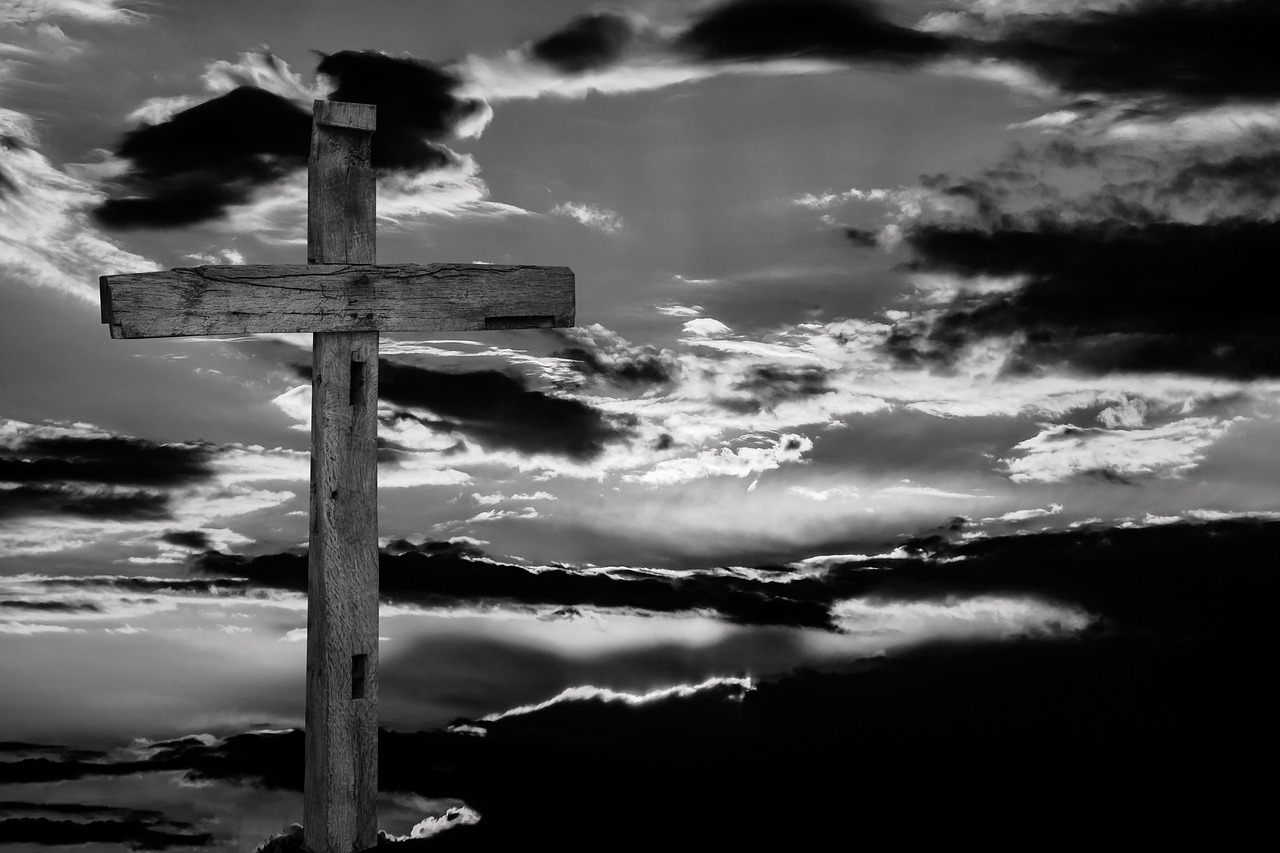
Every Easter we’re faced with the ultimate question about God and our relationship with Him. Nothing in life matters more. When we stand before the cross, we stand at a crossroads—what will we do with Jesus of Nazareth? That decision leads either to everlasting life with God, or eternal separation. According to the Bible, there are no other destinations. Easter’s central message is captured in Jesus’ words: “For God so loved the world that he gave his only Son, that whoever believes in him should not perish but have eternal life.” (John 3:16)
That’s why it’s vital to understand what happened when Jesus died, and what it means for us. If Jesus has never really mattered to you, I pray this Easter will be different. I pray you’ll see the glory of God in the face of Jesus and respond like the centurion who watched Him die: “Truly this man was the Son of God!”
Mark’s account of Jesus’ death:
33 And when the sixth hour had come, there was darkness over the whole land until the ninth hour. 34 And at the ninth hour Jesus cried with a loud voice, “Eloi, Eloi, lema sabachthani?” which means, “My God, my God, why have you forsaken me?” 35 And some of the bystanders hearing it said, “Behold, he is calling Elijah.” 36 And someone ran and filled a sponge with sour wine, put it on a reed and gave it to him to drink, saying, “Wait, let us see whether Elijah will come to take him down.” 37 And Jesus uttered a loud cry and breathed his last. 38 And the curtain of the temple was torn in two, from top to bottom. 39 And when the centurion, who stood facing him, saw that in this way he breathed his last, he said, “Truly this man was the Son[i] of God!” (Mark 15:33-39)
The Darkness.
There’s no natural explanation for the eerie darkness from noon to 3pm. Matthew, Mark, and Luke record it. So do three extra-biblical historians: Thallus, Phlegon, and Africanus. Thallus suggested a solar eclipse, but that’s astronomically impossible—eclipses don’t happen during Passover, which occurs at a full moon, nor do they last three hours.
In Scripture, daytime darkness signals God’s judgment on sin (Deut 28; Amos 8). It began during the first Passover in Egypt: the ninth plague brought three days of darkness, described as a “darkness to be felt” (Ex 10:21–22). To be spared the final plague—the death of the firstborn—each family had to sacrifice a spotless lamb and mark their doorposts with its blood. That lamb was the substitute. The Hebrew people understood that to be spared death and set free from slavery, an innocent life had to die in their place.
The three days of darkness pointed to God’s judgment on His enemies but also to God’s mercy on His covenant people. The question at the crossroad: Would it be the death of the firstborn, or the death of the lamb?
The Crossroad at the Cross.
Two thousand years later, on the first Good Friday, God turned off the lights for three hours from noon until 3pm. He turned His face away from His sinless Son and poured out the full cup of His judgment, so that sinners could be free. The only way to be saved is to repent and trust in Christ, who bore our sins in His own body.
I wonder when the disciples realized what was happening. At the Passover meal, Jesus had identified Himself as the once-for-all Lamb who would pay sin’s death penalty: “Take; this is my body… This is my blood of the new covenant, which is poured out for many. Truly, I say to you, I will not drink again of the fruit of the vine until that day when I drink it new in the kingdom of God.” (Mark 14:22–25)
Jesus wasn’t speaking in metaphor—He was revealing His mission. He would die to bear the sins of all who trust in Him. His blood redeems, atones, and cleanses. Isaac Watts’ 1707 hymn captures the scene:
“Well might the sun in darkness hide,
And shut its glories in,
When God, the mighty maker, died,
For his own creature’s sin.”
The Cries at the Cross.
We dare not miss Jesus’ spiritual anguish as He cried out, “My God, my God, why have you forsaken me?” His body was pierced and tortured. His mind endured mockery, contempt, insults and taunts. Emotionally, He’d been betrayed, denied, abandoned by his closest friends. He refused wine mixed with myrrh—no relief (Mark 15:23). He hung for six hours, naked, humiliated.
Every detail was foretold centuries before, even that His hands and feet would be pierced, and His clothes would be divided (Psalm 22:8, 16-18; Zechariah 13:7, 11:12-13; Isaiah 53:4-12; 50:6; 52:14; Psalm 69:9; 19-20; Psalm 69:21). Even the reason for Christ’s death was recorded by Isaiah: “He bore the sin of many, and made intercession for transgressors” (Isaiah 53:12).
His cry of abandonment fulfilled Psalm 22:1. For the first time in eternity, Jesus did not say “Abba,” but “My God.” In that moment, He experienced a separation from the Father He had never known. This was the “cup” He dreaded in Gethsemane (Mark 14:36)—the full weight of sin and judgment against sin was poured out on Jesus.
The physical pain paled compared to this spiritual alienation. As Jesus embodied our sin, God turned His face away. This is what it means to be a sinner before a holy God—uncovered, exposed. Only the blood of the Lamb can cover us. Imagine the horror of our sin—it took the death of God’s beloved Son to remedy it.
Mark doesn’t give us the words Jesus cried as He breathed his last (Mark 15:37), but John records Jesus’ final cry: “It is finished!” (John 19:30). Luke adds: “Father, into your hands I commit my spirit.” (Luke 23:46). His mission was complete. These cries take us to the very heart of Easter, as Jesus died in full control of his faculties to open the gates of heaven to every sinner who turns to him in repentance and faith. The temple curtain was torn from top to bottom.
The Torn Curtain.
This act of God demonstrated that Jesus’ sacrifice was sufficient. The eighty-foot-high curtain, separating the Holy of Holies, symbolized the barrier between God and man. Now, access to God was open to all. God vandalised His own Temple and tore the curtain—ending the old sacrificial system with its repeated animal sacrifices on the Day of Atonement to gain forgiveness for the people.
Jesus was both the great High Priest and the final sacrifice. “By a single offering he has perfected for all time those who are being sanctified.” (Hebrews 10:18)
The crossroads.
The cross is a crossroads for each one of us. About ten years ago, our teenage son came to such a moment at a Christian camp. As he heard the re-telling of the crucifixion story, God stirred his heart to genuine sorrow over his sin, and he embraced the mercy and love of Christ. Seeing how lost, guilty and helpless he was to pay for his own sin, he put his faith in Jesus. His life changed direction. He later asked to be confirmed at his Anglican school.
But as the confirmation classes rolled by, he noticed Jesus was hardly mentioned. When a classmate asked the chaplain a sincere question, “Sir, how can I make sure that I will go to heaven to be with God when I die”, the chaplain replied, “Whatever you choose to believe in, just believe in it with all your heart.” After a few moment of silence, my son asked, “But sir, if that’s true and there is another way to God, why would God send His own Son to die such a terrible death on the cross?”
Why did Jesus have to die? Unless I see that I am a great sinner and Jesus is the only Saviour, the cross makes no sense. Easter makes no sense unless I see the darkness of our sin alongside God’s immense love and mercy for sinners like us. May we see the King of Glory, crowned with thorns and arms outstretched. May we respond to His invitation.
This is the crossroads we face if we truly consider the innocent young man who died on a Roman cross in 33AD. Like the Roman centurion, who recognized the unique Son of God dying a criminal’s death, we must answer: “Who is this man, and why did He die?”
Prayer (Hebrews 10:19–25)
Lord, thank you that through faith in Jesus, we can have full assurance of eternal life. The blood shed on Calvary washes away our sins and gives us new life.
We come to you not because we’re good, but through the “new and living way that [Jesus] opened for us through the curtain, that is, through His flesh.”
Thank you, Jesus, our great high priest, for cleansing our hearts and removing our guilt. Let us hold fast the confession of our hope, for you who promised are faithful.
Amen.
 [/fusion_imageframe][/fusion_builder_column][fusion_builder_column type=”2_3″ last=”yes” spacing=”yes” center_content=”no” hide_on_mobile=”no” background_color=”” background_image=”” background_repeat=”no-repeat” background_position=”left top” hover_type=”none” link=”” border_position=”all” border_size=”0px” border_color=”” border_style=”solid” padding=”2%” margin_top=”2%” margin_bottom=”2%” animation_type=”0″ animation_direction=”down” animation_speed=”0.1″ animation_offset=”” class=”” id=””][fusion_title size=”2″ content_align=”left” style_type=”default” sep_color=”” margin_top=”” margin_bottom=”” class=”” id=””]Receive our latest devotion in your Inbox[/fusion_title][fusion_code]Q2xpY2sgZWRpdCBidXR0b24gdG8gY2hhbmdlIHRoaXMgY29kZS4=[/fusion_code][/fusion_builder_column][/fusion_builder_row][/fusion_builder_container][fusion_builder_container background_color=”#ffffff” background_image=”” background_parallax=”none” enable_mobile=”no” parallax_speed=”0.3″ background_repeat=”no-repeat” background_position=”left top” video_url=”” video_aspect_ratio=”16:9″ video_webm=”” video_mp4=”” video_ogv=”” video_preview_image=”” overlay_color=”” overlay_opacity=”0.5″ video_mute=”yes” video_loop=”yes” fade=”no” border_size=”0px” border_color=”” border_style=”solid” padding_top=”20″ padding_bottom=”20″ padding_left=”5%” padding_right=”5%” hundred_percent=”yes” equal_height_columns=”yes” hide_on_mobile=”no” menu_anchor=”” class=”” id=””][fusion_builder_row][fusion_builder_column type=”1_1″ background_position=”left top” background_color=”” border_size=”” border_color=”” border_style=”solid” spacing=”yes” background_image=”” background_repeat=”no-repeat” padding=”” margin_top=”0px” margin_bottom=”0px” class=”” id=”” animation_type=”” animation_speed=”0.3″ animation_direction=”left” hide_on_mobile=”no” center_content=”no” min_height=”none”][fusion_title size=”2″ content_align=”left” style_type=”default” sep_color=”” margin_top=”” margin_bottom=”” class=”” id=””]Other devotions from the God Walk…[/fusion_title][/fusion_builder_column][fusion_builder_column type=”1_1″ background_position=”left top” background_color=”” border_size=”” border_color=”” border_style=”solid” spacing=”yes” background_image=”” background_repeat=”no-repeat” padding=”” margin_top=”0px” margin_bottom=”0px” class=”” id=”” animation_type=”” animation_speed=”0.3″ animation_direction=”left” hide_on_mobile=”no” center_content=”no” min_height=”none”][fusion_recent_posts layout=”default” hover_type=”none” columns=”3″ number_posts=”6″ offset=”” cat_slug=”devotion” exclude_cats=”” thumbnail=”yes” title=”yes” meta=”no” excerpt=”yes” excerpt_length=”0″ strip_html=”yes” animation_type=”0″ animation_direction=”down” animation_speed=”0.1″ animation_offset=”” class=”” id=””][/fusion_recent_posts][fusion_text]–