Category: Church@Home Devotion

  • Saints in Christ: Chosen, Called, Converted

    Saints in Christ: Chosen, Called, Converted

    Series: Saints in Christ (Part 1)

    Do you know who you are in Christ? In counselling Christians, I’ve seen how often our self-perception is incomplete or shaky. We don’t fully grasp what it means to be simultaneously a saint, sinner, and sufferer in Christ. Our identity as “saints in Christ” should be the primary lens through which we view everything else.

    Too often, we feel defined by past mistakes, present struggles, or comparison with others, rather than the truth of our eternal redemption: “Not with the blood of goats and calves, but with his own blood [Jesus] entered once and once only into the Holy Place having procured an eternal redemption” (Hebrews 9:12). When anxiety strikes or we feel forgotten by God, our identity becomes tethered to circumstances instead of the unshakable truth of Christ, who said, “The very hairs on your head are all numbered. So don’t be afraid; you are more valuable to God than a whole flock of sparrows” (Luke 12:7).

    False guilt and lack of assurance weigh many Christians down. In seasons of stress, our emotions fluctuate wildly, casting doubt on our standing in Christ. We may feel condemned, unworthy, weary from ongoing sin or suffering, as though we’ve lost God’s approval. But feelings often distort or blind us to our identity as saints in Christ.

    Paul Tautges writes, “When our evaluation of ourselves, our sin, and our circumstances is misaligned with God’s view, we don’t live with the comfort and motivation Christ offers.” In contrast, if our identity is firmly rooted in Christ, it transforms how we think, speak, and act daily. Our feelings will eventually catch up with our beliefs about our identity. Embracing our identity in Christ enables us to fix our eyes not on what is seen, but on what is unseen.

    Embracing our full identity in Christ strengthens us to trust in the unseen promises and character of God when visible circumstances are hard. It also reframes all our other roles—our jobs, families, friendships, church life, and seasons of life.

    When I feel weary and discouraged, I need to return to the gospel to remind myself of who I am in Christ over and over again. I have to preach truth to myself: “I am in right standing with God, raised with Christ who has conquered sin, death, and the devil. His victory is assured, so is mine. Where Christ goes, there I go too.” Reading a book like Romans, especially the first eight chapters, helps renew my mind in what it means to be a saint.

    A key resource in understanding our identity is Paul Tautges’s Remade: Embracing Your Full Identity in Christ. In ninety devotionals, he presents our identity through three lenses—saint, sinner, and sufferer—and how God works out His purposes through each. Tautges writes, “You are a saint in good standing before God, yet you are simultaneously a sinner who must battle with your desires and a sufferer who undergoes hardship.” This paradox helps us live with humility, gratitude, and hope. It is essential for a productive Christian life.

    In the next few devotions, we’ll focus on just a few aspects of our identity as saints in Christ.

    Chosen by the Father

    Our sainthood begins with God’s eternal choice. Scripture reminds us that before the foundation of the world, He set His love upon us. It’s nothing like canonization–when certain churches declare a person to be a saint because of good things they have done. God’s choice was not based on anything in us, but purely His grace. Wayne Grudem explains, “Election is an act of God before creation in which he chooses some people to be saved, not on account of any foreseen merit in them, but only because of his sovereign good pleasure.”

    Ephesians 1 gives us full assurance that we have been chosen and called by the Father:

    “Blessed be the God and Father of our Lord Jesus Christ, who has blessed us in Christ with every spiritual blessing in the heavenly places, even as he chose us in him before the foundation of the world, that we should be holy and blameless before him. In love he predestined us for adoption to himself as sons through Jesus Christ, according to the purpose of his will, to the praise of his glorious grace, with which he has blessed us in the Beloved.”

    These words—blessed in the Beloved, chosen, holy and blameless, predestined, sons—speak of our position in Christ, not our effort. Our spiritual blessings originate with God and are aligned with His eternal purposes (Romans 8:28).

    If you’ve responded to Jesus, it’s only because the Father gave you to Him. Any good fruit in your life flows from God choosing, calling and drawing you to Himself. We didn’t choose Him, He chose us (John 15:16). We didn’t love God, He loved us first (1 John 4:19).

    Paul summarises this in Ephesians 1:11:

    “In Him we were also chosen, having been predestined according to the plan of him who works out everything in conformity with the purpose of his will.”

    Have you responded to the gospel through repentance and trust in Jesus? Then you have been called by God.

    Called by God.

    Like the Ephesians, we have been called by God through the gospel. The gospel has four essential elements that need to be proclaimed to us before we can respond:

    1. God is the righteous Creator who holds us morally accountable.
    2. We are sinners under His righteous judgment—“The wages of sin is death.”
    3. Jesus, the Son of God, died in our place and offers salvation as a free gift.
    4. We must respond by repenting and trusting in Christ’s finished work on the cross.

    Our faith is not the reason for God’s choice—it’s the result. That’s important, especially when our faith feels weak. We’re saved not by the strength of our faith, but by its object—Jesus Christ.

    If you’ve responded to the gospel, you’ve been chosen by the Father from eternity. God has called and drawn you to Himself through someone who proclaimed the gospel to you. This truth should fill you with deep confidence, joy, humility and gratitude. There is no room for pride in a saint.

    Regenerated and Converted

    Remembering the miracle of regeneration helps us further embrace our identity in Christ. How can a spiritually dead person respond to the gospel? How could we even understand the gospel or obey its invitation?

    Only by a supernatural work of God that imparts spiritual life. This is the work of regeneration. The Holy Spirit softens our heart so that we can respond to the gospel and be re-born as a new creature. Jesus described this as being “born again” in John chapter 3. Regeneration is as radical and wonderful as the birth of a baby. Regeneration is permanent and cannot be undone. Even the most law abiding, religious person must be regenerated by the Holy Spirit to enter into God’s kingdom.

    Ephesians 2:1–10 beautifully describes this divine work that has taken place in every true Christian. I urge you to absorb these truths several times as though you have never seen them before:

    “As for you, you were dead in your transgressions and sins, in which you used to live when you followed the ways of this world and of the ruler of the kingdom of the air, the spirit who is now at work in those who are disobedient. All of us also lived among them at one time, gratifying the cravings of our flesh and following its desires and thoughts. Like the rest, we were by nature deserving of wrath. But because of his great love for us, God, who is rich in mercy, made us alive with Christ even when we were dead in transgressions—it is by grace you have been saved. And God raised us up with Christ and seated us with him in the heavenly realms in Christ Jesus, in order that in the coming ages he might show the incomparable riches of his grace, expressed in his kindness to us in Christ Jesus. For it is by grace you have been saved, through faith—and this is not from yourselves, it is the gift of God— not by works, so that no one can boast. 10 For we are God’s handiwork, created in Christ Jesus to do good works, which God prepared in advance for us to do.”

    Do we recall that we were once dead in sin, following worldly desires and Satan’s lies, deserving God’s wrath? But God intervened, breathing life into our souls, binding us forever with Christ, and seating us with Him in heavenly realms.

    This new spiritual life enables us to respond to the gospel and the Bible with excitement. We now feel genuine sorrow for sin and have the power to turn from it in obedience to Christ. Without regeneration, true repentance is impossible. Only when God makes us alive with Christ can we be forgiven and changed (Colossians 2:13).

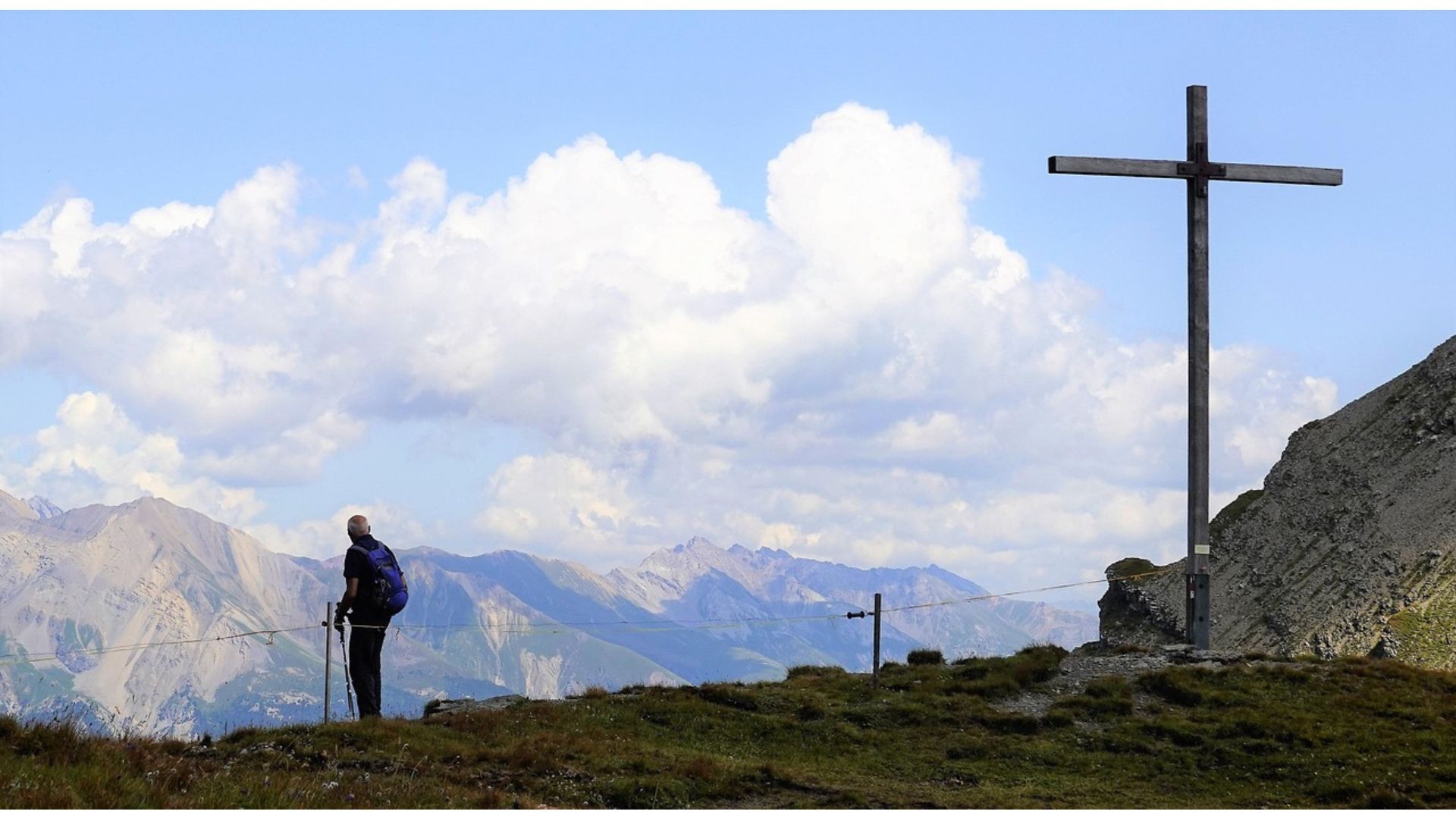
    Remembering our miraculous conversion and calling should still thrill us even decades later. It should excite us to give our testimony of how we became a saint. Remembering my own conversion forty years ago is what inspired my choice of picture for this blog. It’s by far the most important event of my life.

    Amazing Grace

    “Amazing grace, how sweet the sound that saved a wretch like me!” John Newton, once a slave trader, understood his sinful wretchedness and penned these words. During a violent storm in 1748, he cried out to God for mercy. His dramatic conversion on the high seas transformed him into a faithful gospel preacher and abolitionist.

    Newton knew he didn’t choose God—God’s grace reached out and rescued him. He knew that apart from God’s grace, he would not have even seen the horror of his sin. As Colossians 2:11 says, our hearts are spiritually circumcised not by human effort, but by God’s grace.

    One of my greatest blessings was growing up with parents who lived and taught us the gospel of grace from when I was born. They named our farm and our hotels “Grace,” and our BnBs still bear that name today, because everything is due to grace. Grace shaped everything in our home. My parents urged me and my siblings to show grace to each other in our differences, and the sweet fruit of our bond is stronger than ever today. It was foundational to our identity—not based on performance or feelings, but on God’s undeserved love for us.

    Salvation is entirely by grace—God’s unearned favour. Faith is a divine gift of grace, not something we generate. Like Lydia in Acts 16:14, if you’re a believer, it’s because the Lord opened your heart to receive the gospel. Grace isn’t earned by doing religious rituals or good deeds, or through virtue signalling. It’s God’s free gift so no one can boast.

    Grace is our refuge when we feel defined by sin, weakness, or failure. In fact, God’s grace is sufficient and perfected in our weakness (2 Corinthians 12:9). We can approach the throne of grace with confidence and receive grace upon grace (Hebrews 4:16; John 1:16).

    But God’s grace not only saves—it trains us to live holy lives and to say no to ungodliness (Titus 2:11–12). We cannot continue to live in habitual sin if we have received God’s grace. “No one born of God makes a practice of sinning, because God’s seed abides in him, and he cannot keep on sinning, because he has been born of God” (1 John 3:9). There is a time when we need to question someone’s salvation (or perhaps our own) if there is no evidence of the fruits of conversion.

    We don’t have to earn God’s love. We’re accepted in Christ. But this radically changes our behaviour and how we relate to others: Because of God’s grace, we can forgive, love, serve, and speak truth with courage—not from fear or a need for approval, but from our secure identity as saints in Christ. We can love people more, and need them less.

    Living as a Chosen Saint

    So how do we live as chosen saints?

    1. Rest in God’s grace rather than striving to earn it.
    2. Reflect Christ’s love, knowing our identity is secure.
    3. Pursue holiness, living in line with our true identity.

    Join Us Next Week…

    Next week, we’ll explore what it means to be redeemed by Jesus, sealed by the Holy Spirit, and adopted into God’s family.

    Reflection Questions

    1. How does knowing you were chosen before the foundation of the world affect your confidence?
    2. In what ways do regeneration, conversion, and grace shape your identity in practical ways?
    3. How can resting in your identity as a saint help you extend grace and forgiveness to others?

    Prayer

    Father, thank You that I am chosen, holy, blameless, and beloved in Christ. Thank you that I am saved by grace alone, through faith in Christ alone. Thank you for choosing me and calling me to yourself through the gospel. Thank you for sending someone to share the gospel with me and for giving me a soft heart to receive it. Thank you for planting the seed that gave me new life in Christ. Help me live out this identity daily, reflecting Your love and grace to those around me. Bring those you have ordained for eternal life across my path, so that I may share the gospel with them. Remind me that my security is in Christ alone, and empower me to live a holy and bold life for Christ. Amen.


     

  • Nine Ingredients of A Fruitful Christian Life

    Nine Ingredients of A Fruitful Christian Life

    What’s the End Goal of Life?

    According to the Bible, and summarised in the Westminster Catechism, our purpose is “to glorify God and enjoy Him forever” (Ecclesiastes 12:13–14; 1 Corinthians 10:31; 6:19–20). Imagine if our daily habits were shaped by this end goal over a lifetime.

    A Fruitful Life.

    On 14 July 2025, we experienced the sad loss of Pastor John MacArthur at 86 years old, after more than five decades of fruitful ministry at Grace Community Church in California. Among his many accolades, MacArthur is renowned for his verse-by-verse expository preaching through the entire New Testament, an effort that took forty years. He also founded Grace to You, a Media Ministry which has reached millions of listeners in over 100 countries. He wrote the MacArthur Study Bible containing over 20 thousand study notes; founded “The Master’s Seminary” to train pastors and missionaries around the world, and authored over 150 bestselling books. Most importantly, MacArthur lived a life of faithfulness and integrity—a life that matched his teaching. His family and those closest to him loved and respected him.

    A moving tribute by his son, Mark, made me sit up and think, “What are the active ingredients of a truly fruitful Christian life?” This is what Mark said about his dad:

    “Growing up as John MacArthur’s son, I had a front-row seat to a life of remarkable discipline and consistency. My dad never saw his calling as just a job—it was a joyful, lifelong stewardship. Every morning, he rose early, not out of obligation, but out of a deep love for the Lord and a desire to rightly handle His Word. His study wasn’t rushed or sporadic; it was marked by quiet, daily diligence, fueled by prayer and dependence on the Spirit. He lived what he preached—faithfulness over flash, substance over show. Whether it was preaching, counseling, or writing, he approached each task with the same unwavering commitment to truth and excellence. His productivity didn’t come from chasing results, but from a lifetime of small, faithful habits rooted in the conviction that God’s glory is worth every effort.”

    Fruitful Living Starts Today

    Every believer is called to a fruitful life. But sanctification is a gradual process, requiring intentional effort and cooperation with the Holy Spirit. We’re not instantly delivered from laziness, procrastination, or apathy. Growth in godliness demands diligence, dependence on God, and consistent small steps in the right direction.

    Apply All Diligence

    Peter offers first-century Christians the building blocks for a fruitful life in Christ. His instruction is far from passive and apathetic:

    “Now for this very reason also, applying all diligence, in your faith supply moral excellence, and in your moral excellence, knowledge, and in your knowledge, self-control, and in your self-control, perseverance, and in your perseverance, godliness, and in your godliness, brotherly kindness, and in your brotherly kindness, love.

    For if these qualities are yours and increasing, they will keep you from being ineffectual or unproductive in the true knowledge of our Lord Jesus Christ. For the one who lacks these qualities is blind or short-sighted, having forgotten his purification from his former sins.”
    —2 Peter 1:5–9 (NASB)

    Peter begins this chapter with a bold assurance: We already have everything we need for a godly life (2 Peter 1:3–4). We are equipped to participate in the divine nature and escape the corruption of the world caused by sinful desires.

    So why do so many Christians (myself included) feel stuck in apathy, sin, or frustration at times? Why do we not see an increase in spiritual fruit?

    Peter gives the answer: While God supplies the power, we must actively apply it. Growth takes effort and striving and discipline. It means pressing on when it’s hard and uncomfortable. We don’t wait passively for transformation—we live as if what we believe is true. We train ourselves for the purpose of godliness. And training is not for the fainthearted!

    Train Yourself for Godliness

    Paul instructed Timothy, a young pastor:

    “Have nothing to do with irreverent, silly myths. Rather train yourself for godliness; for while bodily training is of some value, godliness is of value in every way, as it holds promise for the present life and also for the life to come.”
    —1 Timothy 4:7–8

    I wonder what those silly myths look like for us? Perhaps today’s “silly myths” may be the endless streams of shallow content and online distractions which consume so much of our energy and time. They clutter our minds and divert us from what truly matters: Godliness. Training means guarding our attention and replacing distractions with habits that reflect Christ—moral excellence, knowledge, self-control, and love.

    This is not self-help. It’s Spirit-empowered transformation. If these qualities are increasing, our lives will be fruitful and effective for Christ. We will not live unproductive or empty Christian lives.

    I made this guide for myself, to remind me of my usual pitfalls and help me take nin faithful steps towards godly habits that lead to lasting growth. I hope it may be useful to you too.

    1. Start Today

    Do these delay tactics sound familiar?

    “When I’m less busy…”
    “After this tough season…”

    We often delay change with vague intentions to start “tomorrow,” but if you’re like me, that day rarely arrives. I have a remarkable ability to come up with reasons for avoiding hard things, especially when they’re early in the morning!

    The truth is this: There’s never a perfect time and life’s big responsibilities happen all at once. Today is the best time to start to do what is good and honouring to the Lord. Feeling afraid, overwhelmed or unmotivated is normal—but not an excuse. In Christ, we are no longer ruled by a spirit of slavery leading to fear again. We are led by the Spirit of adoption, by whom we cry, “Abba, Father” (Romans 8:13–17).

    1. Be a faithful steward of small things

    We underestimate how much time we have, delay starting, and a year later regret it: “If only I had started, I would now be reaping the rewards…” This cycle robs us of tomorrow’s fruitfulness.

    Break the sabotage cycle by being a faithful steward of small things today. “One who is faithful in a very little is also faithful in much, and one who is dishonest in a very little is also dishonest in much” (Luke 16:10).

    1. Set realistic Goals

    Dramatic resolutions rarely last, but sustainable change comes from slow, steady progress.

    Instead of dramatic changes, aim for:

    • Realistic goals
    • Small steps
    • Long-term consistency

    4. Set achievable goals

    Examples of achievable goals:

    • Improve sleep, diet, and exercise
    • Leave your phone out of the bedroom at night
    • Move your body 4x/week
    • Prepare for temptation
    • Build a daily routine
    1. Put off, renew your mind, put on

    Lasting change for a Christian always involves a three-step process:

    • Putting off the old self which belongs to our former manner of life,
    • Renewing our mind in the truth,
    • Putting on the new self “created after the likeness of God in true righteousness and holiness” (Ephesians 4:22–24).

    There are no shortcuts to this three-step process of putting off sinful attitudes, actions and words; renewing our minds in the truth of God’s Word; and putting on what pleases God. It’s not the recipe for instant change, but if you follow this biblical process day-by-day, a year from now you’ll look back and say, “Look what God has done!”

    1. Build good habits

    Better to move like a tortoise than run in rabbit circles! Fruitful Christians understand that slow and steady progress beats bursts of intensity or talent. It’s better to imitate the proverbial tortoise than the hare.

    Consider:

    • What is the easiest habit to change?
    • How much consistent time and effort can you invest in this habit?

    True progress starts by understanding the power of habits. Habits are learned patterns of behaviour that, over time, become second nature. When something is done regularly, it shapes lifestyle—and ultimately, our destiny.

    For example, Hebrews 5:14 describes mature Christians who consume the solid food of God’s Word, and who “by constant practice have trained themselves to distinguish good from evil.” Similarly, Paul writes to the Philippian Christians, “I have learned to be content whatever the circumstances.”
    —Philippians 4:11

    Constant practice, training, learning take time. The character fruits of maturity, discernment and contentment come through training. They do not arrive by osmosis or book learning. Through consistent practice, ungodly habits can be unlearned, and godly habits can be learned.

    Start with something simple—like daily Bible reading and prayer—as a way to train for godliness (1 Timothy 4:7).

    Godly disciplines exceed the benefits of useful bodily disciplines such as exercise and healthy eating. In Disciplines of a Godly Man[1]/Woman,[2] Kent and Barbara Hughes offer practical guidance on areas of key, godly disciplines that Christians should be developing:

    • Purity and Relationships
    • Soul and Mind
    • Worship and Witness
    • Ministry, Giving, and Work
    • Friendship and Leadership
    • Integrity, Speech, and Perseverance

    Although these books challenge us to spiritual effort, the authors also stress the difference between legalism and discipline.
    Legalism says, “I do this to earn merit with God.”
    Discipline says, “I do this because I love God and want to please Him.”
    One is man-centred; the other is God-centred. We need to be careful of our motives, because godly disciplines can easily become idols to feed our desire to look better than others.

    1. Walk by the Spirit

    Motivations fade and every journey has temptations, obstacles and roadblocks, whether from the world, the flesh or the Devil (Ephesians 2:1-3). These are powerful enemies that once enslaved us before we knew Jesus. When faced with fading motivation, we will either press on toward change, or nurture guilt and regret.

    Our fallen nature is a resilient enemy that will remain until we are glorified. And so, when motivation fades, we need to resist the presence of sin by stepping forward in the power of the Holy Spirit. Even the smallest step in the Spirit builds momentum. “But I say, walk by the Spirit and you will not carry out the desire of the flesh” (Gal 5:16).

    Walking by the Spirit  means putting our plans into action and living out our position in Christ.

    “For the grace of God has appeared, bringing salvation for all people, training us to say ‘No’ to ungodliness and worldly passions, and to live self-controlled, upright, and godly lives in the present age.”
    —Titus 2:11–12 reminds us of three important facts:

    • Grace trains us to say no to the flesh.
    • Don’t expect it to be easy “in the present age”.
    • Obedience comes first—feelings follow.

    8. Stay the Course

    When you hit a bump, stay the course. This is the definition of perseverance, which is the foundation for Christlike character.

    “Perseverance produces character, and character produces hope, and hope does not put us to shame, because God’s love has been poured into our hearts through the Holy Spirit who has been given to us.”
    —Romans 5:4–5

    Thank God for the bumps that give us opportunity to repent, grow and face challenges, depending on His strength alone. That’s how our faith grows resilient and mature (James 1:2–4; 1 Peter 1:6–7).

    9. Be Committed

    Pastor John MacArthur used the acronym A-C-C-E-P-T to describe true commitment to live for the glory of God:

    A – Acknowledge Responsibility
    You are responsible for your thoughts and responses. You can honour Christ, regardless of your circumstances.

    C – Choose a Biblical Perspective
    Let God’s Word, not feelings, interpret your life circumstances, past and present.

    C – Commit to Remove Obstacles

    “Put on the Lord Jesus Christ, and make no provision for the flesh…”
    —Romans 13:14.

    Be willing to eliminate any habit or influence that hinders your spiritual growth.

    E – Exert Effort

    “Make every effort…”
    —2 Peter 1:5

    Change is hard work, not instant or automatic. Be patient and diligent in pressing forward.

    P – Persevere in Obedience

    “You have need of endurance…”
    —Hebrews 10:36

    Don’t give up on obedience if progress is slow and discouraging. God is working in the hidden places.

    T – Trust God

    “Work out your salvation… for it is God who works in you…”
    —Philippians 2:12–13

    The Holy Spirit empowers you to do what you cannot do alone. When we look away from ourselves and trust Him, He enables us to do what seems impossible.

    Like Moses, we need to constantly shift our focus from our inadequacy and weakness, to God’s sufficiency and strength.

    Final Encouragement

    You and I don’t need to stay stuck in old habits or regrets. A fruitful and productive Christian life is possible—not by our own strength, but by the Spirit’s power.

    “Not by might nor by power, but by My Spirit,” says the Lord Almighty” (Zechariah 4:6.) This is part of a larger story where God, through the prophet Zechariah, tells Zerubbabel that the rebuilding of the temple will not be accomplished through human resources, but by God’s Spirit.

    Take small steps in the Spirit’s strength today. Build daily habits of obedience. Learn from faithful believers who finished well. Practice quiet, consistent, prayerful diligence.

    Choose faithfulness over flash. Fix your eyes on Jesus, the author and finisher of your faith.

    In time, your life will bear the fruit of transformation: A lifetime that glorifies God, blesses others, and brings lasting joy. Is this not a worthwhile legacy?


    [1] https://www.goodneighbours.org.za/shop/christian-living/christian-living-men/disciplines-of-a-godly-man/

    [2] https://www.goodneighbours.org.za/shop/christian-living/christian-living-counselling/christian-living-counselling-addiction/disciplines-of-a-godly-women/

  • Anger and the Fruit of Self Control

    Anger and the Fruit of Self Control

    When we hear the word anger, what picture comes to mind? A person yelling, slamming doors, or maybe red-faced with clenched fists? Perhaps it is the latest outburst of rage in your own household that you are thinking about. While those are clear expressions of anger, the Bible reveals that anger is often far more subtle—and more dangerous—than we think.

    Anger is not just rage; it can be impatience, bitterness, simmering resentment, grudges, or even a cold silence and unwillingness to work through conflict in a biblical way. Stewing, sulking and ignoring people are also expressions of sinful anger.

    Ephesians 4:31 says, “Let all bitterness and wrath and anger and clamour and slander be put away from you, along with all malice”. Similarly, Colossians 3:8, “But now you also, put them all aside: anger, wrath, malice, slander, and abusive speech from your mouth.”  The Bible is clear that we must train our hearts to deal with anger in a godly way. Sinful expressions of anger cannot be characteristic of a believer’s life, regardless of the provocation.

    Yet, sinful anger is far too often tolerated—even normalized—among Christians. Often this is because it is done behind closed door. As a biblical counsellor, I’ve witnessed first-hand the deep and lasting damage anger can cause in marriages and families. I’ve sat with grieving Christian families who, with painful honesty, confess that life feels more peaceful now that an angry loved one has passed away. It’s a tragic reality: the absence of one person has brought relief, not because of death itself, but because sinful anger no longer rules the home. That kind of sorrow tells us something is terribly wrong. We also know from the classic book, None of these Diseases, that anger and other strong emotions can have serious consequences on the body and health.

    The stakes are high when it comes to anger.

    And while the world offers shallow techniques like venting, avoiding, cutting people off, or counting to ten, the Bible speaks to something far deeper. The heart.

    What Is Anger really?

    Christian counsellor Robert Jones defines anger as “a whole-personed active response of negative moral judgment against perceived evil.” In other words, anger is not just something we have, it’s something we do. It involves our mind (judging), emotions (displeasure), body (tension), words (slander or shouting or insults), and desires (wanting something we’re not getting or getting something we’re not wanting).

    As David Powlison described it:

    • Our bodies move into military mode.
    • Our minds become courts of judgment.
    • Our motives begin to play god.

    Even when anger feels “justified,” we must ask: Is my desire righteous? Is my reaction Christlike?

    The Hidden Sins of Anger

    Ephesians 4:31 gives a sweeping list of anger-related sins that we often excuse or downplay:

    • Impatience: Internal complaints, rolled eyes, or harsh words when we don’t get our way (1 Thess. 5:14–15).
    • Bitterness: Lingering resentment that poisons relationships (Eph. 4:26–27; Heb. 12:15).
    • Clamour: Loud, argumentative outbursts (Eph. 4:31).
    • Slander, Malice and Insults: Words and actions meant to hurt or humiliate the person who has angered us.

    Left unchecked, these patterns lead to broken relationships, spiritual hardness, and even church disunity. As Proverbs 29:11 warns, “A fool gives full vent to his spirit, but a wise man quietly holds it back.”

    Anger Isn’t Caused by Circumstances

    We often say, “He made me angry!” or “That situation pushed me over the edge.” But the Bible teaches something very different.

    Anger arises not because of our circumstances, but because of our desires. James 4:1–2 tells us that quarrels and fights come from “[our] passions that are at war within [us].” We want something that we do not have, so instead of humbly asking God, we take matters into our own hands. We manipulate, explode, sulk, demand, nurse grievances or complain.

    Ask yourself:

    “What am I wanting that I’m not getting?”

    “What am I getting that I don’t want?”

    When we elevate good things—comfort, control, approval, love, justice, respect, the “right” to plan our own schedule, to have good health, to be married with children, to belong, to be accepted, to have the job we want, to have safety and security, to be understood, to be successful—into ultimate things, we begin to sin in our anger. We rage against whatever is standing between us and our desire. Our desires have morphed into demands that rule us.

    For example, Cain’s anger toward his brother, Abel, was a selfish anger borne out of jealousy and hurt. His anger controlled him to the point of murder. Likewise, our anger becomes sinful when we are easily provoked and dominated by anger (James 1:20). When this becomes a pattern, anger turns into a chronic problem—one that causes others to tiptoe around us. At that point, we are well on the path to becoming what Proverbs 19:19 calls a person “of great anger.”

    Therefore, the problem is not just what happens to us, but what rules our hearts.

    Righteous vs. Unrighteous Anger

    Ephesians 4:26–27 gives a clear warning: “Be angry and do not sin, do not let the sun go down on your anger, and do not give the devil a foothold.”

    Do not let the sun go down on your anger. Learning to be good and angry starts with dealing with problems and conflicts on a regular, daily basis, not allowing them to simmer. Be angry and do not sin. Paul also implies that anger is sometimes sinful and sometimes righteous. Is there such a thing as righteous anger?

    Yes—but it’s rare and difficult to maintain without slipping into sin. Jesus showed righteous anger in the temple (John 2:13–17), but His anger was over actual sin, not personal offense. It was focussed on God’s glory, not His own convenience. It was brief, not brooding. It was controlled, not explosive.

    It is appropriate and good to be angry about our own sin. We should be angry when God’s image is destroyed in a person or when we encounter gross injustice, cruelty and evil. Rape, abortion, murder and abuse should evoke anger in us, but only to provide energy to respond constructively.

    But even if our anger begins with good intentions (e.g. a parent correcting a rebellious child), it often turns self-centered. If we take time to evaluate the reasons for our anger, how often is it because we love God, His truth, and His righteousness? Are we really concerned about God’s kingdom and about advancing the cause of Jesus Christ? Or is our angry response related to pride and selfishness? Are we angry because we want our own way, we want to control people or a situation, and we’re not able to do it? The bottom line is that much of our sinful anger is because we have an agenda or an ideal, and something or someone is standing in the way.

    Restraining anger.

    There is a godly, biblical way to deal with offenses without resorting to unrighteous anger. Proverbs 29:11 says, “A fool always loses his temper, but a wise man holds it back.” Proverbs 16:32 teaches that a wise man rules his spirit. Since we have Christ, we do have the power to be that wise person. By the power of the Holy Spirit, we can control and restrain our anger. When we fail to master our anger, it’s usually because we don’t consider the stakes to be high enough.

    For example, a man is able to control his anger at work or in church, because he knows he’ll lose his job or destroy his image if he lets it all hang out. But for some strange reason, that same man thinks that he can get away with being angry in the privacy of his home.

    Let us never consider ourselves the exception to the rule laid out in Ecclesiastes 7:8-9:

    “The patient in spirit is better than the proud in spirit.
    Be not quick in your spirit to become angry,
        for anger lodges in the heart of fools.”

    Anger turns us into a fool.

    Changing from the fruit to the root

    Lasting change doesn’t come from anger management techniques or venting our anger. It comes from believing and applying the gospel.

    Jesus taught that anger, even in the form of verbal insults, is serious sin (Matt. 5:21–22) which causes irreparable damage in relationships. Like every sin, sinful anger must be brought to the cross. Through Christ’s death and resurrection, we are made righteous—not just positionally in the sense of being in right standing with God, but increasingly in practice as the Spirit transforms us.

    Anger can’t be conquered by sheer willpower, especially if it has become an entrenched habit over many years. It must be replaced by the fruit of the Spirit, especially patience, gentleness and self-control (Gal. 5:22–23). Self-control is the Spirit-empowered ability to say “no” to sinful impulses and “yes” to God-pleasing responses, even when provoked.

    We need to establish life habits which help us to grow in Christlike self-control day-by-day. Here are ten practical steps to build those habits:

    Ten steps towards self-control.

    1.Prayer
    Ask God daily to help you desire what pleases Him, especially the godly fruit of self-control (Col. 1:9–10). Confess your sinful anger to the Lord and ask for His forgiveness. Do not use euphemisms to excuse your anger or blame others for provoking you.

    2. Memorise Scripture.

    James 1:19-20

    Ephesians 4:26-27.

    3. Meditate on Proverbs about self-control:
    14:29:

    Proverbs 25:28: “A man without self-control
    is like a city broken into and left without walls.”

    4. Journal.
    Reflect on episodes when you responded with sinful anger.

    What triggered them? What desires were threatened? How can you use the energy produced by anger for constructive purposes?

    5. Learn how to handle conflict biblically and start each day afresh.

    6. Avoid angry companions.
    Proverbs warns us not to associate closely with angry people (Prov. 22:24–25). If a parent was an angry person, recognise their impact on you and commit to a new pattern.

    7. Move from the fruit to the root.
    Trace your reactions back to the heart idols which spawned them. Are you worshiping control? Comfort? Approval? Respect? Reputation?

    8. Replace sinful reactions with godly ones
    Ephesians 4:22–24 calls us to “put off” the old self and “put on” the new. Instead of yelling at someone, serve. Instead of brooding and nursing grievances, forgive. Instead of controlling, trust God.

    9. Confess your sinful anger and acknowledge the hurt you’ve caused. Ask the offended for forgiveness and resolve to change.

    10. Find a fellow Christian to hold you accountable and to help you pluck out sinful anger.

    The Gospel Transforms Angry Hearts

    Anger is the ultimate litmus test, as it reveals what we value most. It’s usually our own will being done—not God’s. But the good news is that Jesus came not just to forgive angry sinners like ourselves, but to transform us from the inside out. Whenever an angry, bitter person is changed into a kind, patient person, it transforms entire families and communities.

    Through Christ, we are no longer slaves to anger, bitterness and rage. We can grow in patience, gentleness, and self-control as we walk in step with the Spirit. As Paul writes to the Galatians, “But I say, walk by the Spirit and you will not carry out the desire of the flesh,” and to the Romans, “But put on the Lord Jesus Christ, and make no provision for the flesh in regard to its lusts” (Gal 5:16; Romans 14:13). Let’s not only manage our anger, but find its cure—in a changed heart, made new by the gospel in the power of the Holy Spirit.


    Recommended Resources

    • Uprooting Anger – Robert D. Jones
    • The Heart of Anger – Lou Priolo
    • Overcoming Anger – Joel James (free at Grace Fellowship’s website)
    • The Peacemaker – Ken Sande
    • Anger and Stress Management God’s Way – Wayne Mack.


  • A Biblical Model for Christian Care

    A Biblical Model for Christian Care

    How involved should Christians be in each other’s lives? What does genuine care within the church look like? As a Biblical counsellor, I have particular interest in these questions, but I think the answers are relevant to every Christian. In contrast to the professional detachment often promoted in psychology or the hierarchical efficiency of the corporate world, the Bible presents a radically different model. Rooted in Christ’s command to love one another, Scripture offers many examples and timeless principles for how believers are to care for one another. It also outlines a pattern for how Christian leaders should engage in the work of shepherding and caring for the congregation entrusted to them. Through the life of Christ and the ministry of the Apostles, we see a deeply relational, sacrificial, and practical model of care—one that ought to still shape our local churches and life groups today. Let’s look at some of these Scriptures together. Click on the Bible references to read and digest the verses for yourself.

    1. The Example of Christ: Compassionate and Personal

    Jesus is the ultimate model of care. His ministry wasn’t distant or transactional, but deeply personal and sacrificial. He didn’t shy away from suffering or the brokenness of others—He moved toward it with compassion and truth.

    In Matthew 9:35–37, Jesus is moved with compassion as He sees the crowds, teaching and healing them because He saw that they were harassed and helpless, like sheep without a shepherd. He didn’t just see their sickness; He saw their souls in need of care and guidance.

    He extends a personal invitation in Matthew 11:28–30, calling the weary and burdened to Himself, offering rest for their souls. His care is gentle and lowly in heart—never forceful, always welcoming.

    Matthew 12:20 describes how Jesus the Messiah tends to the fragile—a bruised reed He will not break, a smouldering wick He will not snuff out. His gentleness makes space for the weak to heal and grow. He does not crush or accuse those who are struggling.

    In Mark 3:1–5, Jesus heals a man with a withered hand even when religious leaders are watching with hard hearts. He is grieved by their indifference and self-righteousness. Mercy and compassion, He shows, must not be withheld for the sake of appearances.

    Mark 10:21 gives us a striking image of Jesus looking at the rich young ruler and loving him—even as He challenges his heart with the truth. Real care includes both love and truth.

    In Luke 7:13, Jesus sees a grieving mother and is moved by it. He doesn’t minimize her sorrow—He enters it and acts with genuine compassion for sufferers.

    In John 8:4–11, His response to the woman caught in sin is both merciful and restorative. He doesn’t excuse or minimize her sin, but lovingly calls her to a new life freed from the bondage of sin. Christ’s kindness leads sinners to repentance.

    He weeps with Mary and Martha in John 11:33–35, not rushing past their grief to the miracle He is going to perform. Even knowing He would raise Lazarus, Jesus still weeps with the mourners. He had real connections with real friends in a real place called Bethany. He often stayed in the home of Mary, Martha and Lazarus. Although He was God, Jesus was not aloof but a down-to-earth and fully human friend.

    And Hebrews 4:15 reminds us that Jesus fully understands our weaknesses. He is not a distant deity but a compassionate and sympathetic High Priest who has walked in our shoes and experienced the depths of human suffering Himself. This is the same Jesus who, from heaven, persistently intercedes for His suffering people.

    2. The Example of the Apostles: Persistent, Sacrificial, and Prayerful

    The Apostles followed Christ’s pattern of relational, sacrificial, prayerful care—not from a distance but with their whole hearts.

    In Acts 20:31, Paul reminds the Ephesian elders of how he warned and taught them persistently for three years—night and day—with tears. He didn’t preach and then delegate care, but did both at the same time.

    In Romans 9:1–3, we glimpse Paul’s anguish for his fellow Israelites who have rejected Christ, their Messiah. He expresses a love so deep, he’d be willing to be cursed himself if it meant they’d know Christ. Do we love lost family members and friends in this way?

    Even the way Paul opens his letters, as in 1 Corinthians 1:1–3, models pastoral warmth—his words are soaked in grace and peace, modelling for us a tone of blessing and encouragement.

    2 Corinthians 1:8 shows his vulnerability. Paul shares openly about his own suffering, not to draw attention to himself, but to comfort other believers with the comfort he has received from God. Paul is not part of a spiritual elite in an ivory tower, but someone who shares in the sufferings of fellow believers and points them to Christ.

    In Philippians 1:8, he writes of his longing for the believers with the affection of Christ Jesus. His heart is not cool or detached, but full of warmth and love. He shows deep emotional investment in those he has led to Christ and discipled.

    Colossians 4:12–13 paints a beautiful picture of Epaphras wrestling in prayer for fellow believers’ spiritual growth and well-being. Earnest, consistent prayer for one another is not a side note—it’s central to Christian care.

    And in 1 Thessalonians 2:7–12, Paul describes his pastoral ministry as both motherly and fatherly—gentle, encouraging, and full of love. He walked with them, not above them, like a nursing mother and a loving, hands-on father who leads and raises up his family.

    In all of this, we see 1 Peter 4:7–11 brought to life. We are to “love one another deeply, because love covers a multitude of sins.” We are called to show hospitality without grumbling, to serve with the gifts God has given us, and to speak and serve in a way that glorifies Christ. Paul and his co-labourers did not minister in their own strength but relied on God’s grace, aiming not for self-glory, but for praise to be given to Christ alone. I often wonder how many Christians have been blessed by a believer who invited them to stay or eat in their home. I know I have benefited greatly from the hospitality of kind Christians who have opened their hearts and homes to me.

    3. Principles from Scripture: Truth in Love, Wisdom in Speech, Honour in Action

    The Bible doesn’t only give us examples—it provides principles for how Christian care should be practised in every church and home.

    Proverbs 16:21 and 24 remind us that gracious speech brings healing. Care isn’t only what we do, but how we speak. Wise, gentle words nourish the soul more than forceful, preachy advice ever could.

    True friendship, according to Proverbs 27:6, 9, includes loving counsel—even when it’s hard to hear. Real care doesn’t flatter, but it encourages, builds up and sharpens us.

    Proverbs 18 offers vital wisdom for good listening, a critical aspect of genuine care:

    • Verse 2: “A fool takes no pleasure in understanding, but only in expressing his opinion.”
    • Verse 13: “If one gives an answer before he hears, it is his folly and shame.”
    • Verse 17: “The first to speak seems right, until someone comes forward and cross-examines.”

    These proverbs challenge us to slow down, seek understanding before we speak, and be fair and discerning. Christian care includes listening well—not jumping to conclusions, not speaking too quickly, and resisting the temptation to  offer simplistic answers to complex situations.

    In Romans 12:10, 15, we are called to love one another with brotherly affection and to rejoice and weep with others. This is not clinical or virtual—it’s deeply relational and physical. AI will never be able to replace genuine flesh-and-blood affection.

    Romans 15:14 shows that all born-again believers are ministers of hope, joy and peace. We are capable of instructing and encouraging one another with Christ’s goodness and rich knowledge rooted in God’s word. The ministry of care belongs to the whole church, not just to its leaders. In an age of hopelessness, Christians should be abounding in hope by the power of the Holy Spirit.

    1 Corinthians 13:7 describes love that believes the best, perseveres through all things, and protects. We are called to assume the best of others and to be gracious, not to nit-pick or live in suspicion of one another.

    Even in difficult relationships, 1 Corinthians 7:16 reminds us that love and patience may be a means of redemption. A believing spouse may have a redemptive influence on their unbelieving partner when they continue to love their spouse for the sake of Christ.

    Galatians 6:1–2 calls mature believers to gently restore those caught in sin, doing so with humility and a keen awareness of their own vulnerability. If we fail to examine ourselves first, we risk becoming proud and self-righteous—adding to others’ burdens rather than helping to carry them. True spiritual care means bearing one another’s burdens, not increasing them. Yet verse 5 reminds us that each one must also carry their own load. In other words, we must first take responsibility for our own walk with Christ before we can faithfully help others in theirs.

    Ephesians 4:15 calls us to speak the truth in love—not compromising truth, but never separating it from love. These two must go hand in hand; together, they are the litmus test for all Christian speech. When our words lack grace, encouragement, or appropriateness, it grieves the Holy Spirit, as Paul warns in Ephesians 4:29–30. Godly speech builds others up, not tears them down.

    Colossians 4:6 and Colossians 1:28 call us to speak the truth with grace—our words should be seasoned with salt and filled with wisdom, as we teach and admonish one another with the aim of presenting everyone mature in Christ. This means our speech should not be harsh or heavy-handed, like a sledgehammer, but purposeful and edifying. Our goal is to bring clarity, not confusion; to offer blessing, not harm—always with the aim of helping one another grow in Christlikeness.

    1 Thessalonians 5:14 gives a crucial pastoral principle: not everyone needs the same response. The unruly need warning and admonition; the fainthearted need encouragement, the weak need help, and everyone needs patience. We need to discern what each person needs when we minister to them. A formulaic, generalised approach will cause more harm than good.

    1 Timothy 5:1–2 teaches us to treat fellow believers like family: older men and women with honour, younger ones with purity and respect. There is a special deference due to our elders, because of their experience and maturity.

    2 Timothy 2:24–25 urges the Lord’s servants to correct opponents with gentleness and humility, trusting that God may grant them repentance and lead them to a knowledge of the truth. When people are ensnared by deception and influenced by Satan, we must not treat them as problems to be fixed, but as souls to be loved—rescued not by force, but through truth spoken in compassion.

    1 Peter 2:17 reminds us to honour everyone, love the family of believers, fear God, and respect those in authority. A God-fearing Christian will always show honour, love and respect in appropriate ways, in submission to Christ.

    Finally, 1 John 3:17 tells us that love is not a mere feeling—it must take action. If we see a fellow believer in need and close our hearts, we cannot claim to truly know Christ’s love.

    A Call to Christlike care.

    People today are longing for genuine connection. In the body of Christ, every born-again believer is a minister with something unique to contribute. Scripture offers us a rich relational model of Christian care—one that stands in sharp contrast to the detached professionalism of our culture. From the compassion of Christ, to the sacrificial love of the Apostles, to the everyday wisdom of Scripture, we are given a living model of what it means to truly love one another deeply, from the heart. This is not a theoretical love, confined to an ivory tower while the “official care team” goes about its business. It is a love that listens, weeps, encourages, prays, shares, teaches, warns, corrects, gives practical help, opens its home, and walks patiently with others in their weakness. It is the love of Christ, made visible in His people.

    Such care is not the job of a select few, but the calling of every believer. Whether we lead a ministry, or are part of a household, a digs, a friendship or a Bible study group, or simply walk alongside others in the church, we are called to reflect Christ’s heart—gentle, truthful, humble, and full of grace. We are family, not clients or consumers. And our love must be seen not only in our words, but in our actions, attitudes, and faithful presence.

    May we commit ourselves to this pattern of care—not out of guilt or duty, but as a joyful response to the immeasurable love and welcome we have received in Christ. For when we care for one another in this way, we bear witness to a watching world that we truly are Christ’s disciples (John 13:35).

  • The Right and Wrong Kind of Boasting

    The Right and Wrong Kind of Boasting

    But far be it from me to boast except in the cross of our Lord Jesus Christ, by which the world has been crucified to me, and I to the world (Galatians 6:14).

    I grew up in a time when boasting was frowned upon. I remember memorising Proverbs 27:2: “Let another praise you, and not your own mouth.” Compliments were supposed to come from others—not ourselves! But today’s culture often encourages self-promotion. People pump their fists and post online in search of attention, likes, and approval. Social media and Christian broadcasting networks have become the perfect platform for boasting and self promotion.

    Just recently, I went for a hike and was surprised to see so many fellow hikers more focused on selfies than the breathtaking scenery. At a nearby café, a large mirror was being used as a prop to pose for selfies. It was amusing, but also a little sad—everyone was glued to their phones, oblivious to one another and to God’s creation. I didn’t see a single table where people were actually talking or paying attention to the sounds and sights of the countryside.

    Selfie World

    We live in a “selfie world” where boasting often disguises itself as self confidence. It can mean talking endlessly about ourselves to impress others or seek affirmation. Sometimes it involves sharing our hardships to gain sympathy or attention. Boasting can cause us to dominate conversations, rarely listening or showing genuine interest in others’ lives. It may appear as name-dropping, humble-bragging, or simply needing the spotlight.

    At its core, boasting draws attention to self rather than lifting others up and considering them more important than ourselves. Boastfulness is not concerned with God’s glory or others’ well-being. Scripture often links boasting with arrogance (James 4:16), and it flows from the “pride of life,” which is not from the Father but from the world (1 John 2:16). Ultimately, it is a form of self-worship.

    Boasting and love cannot occupy the same camp. As Paul wrote in the famous love chapter: “Love is patient and kind; love does not envy or boast; it is not arrogant or rude. It does not insist on its own way” (1 Corinthians 13:4–5). Boasting and love don’t coexist.

    Lovers of Self

    Boasting marks our age, as it did Paul’s. In describing the “last days” between Christ’s first coming and His return, Paul warned that people would become increasingly“lovers of themselves, lovers of money, boastful, proud, abusive, disobedient to parents, ungrateful, unholy… lovers of pleasure rather than lovers of God—having a form of godliness but denying its power” (2 Timothy 3:2–5). It’s a bleak but accurate description of today’s culture.

    Meek and Lowly

    In contrast, Jesus—our perfect example and motivation—was humble and lowly. Though perfect in every way, He never boasted. He wasn’t driven by selfish ambition or vain conceit (Philippians 2:3), nor did He seek human approval. Even when tempted, He refused to perform for applause or followers. He did not elevate himself, but made himself nothing, taking the very nature of a servant, humbling himself to death on a cross (Luke 4:1–12; Philippians 2:5-8).

    Jesus cared for people genuinely and individually. He modelled humility and rebuked the Pharisees who did good deeds for human recognition, not God’s approval (Matthew 6:1–34).

    But as with every vice we “put off” in Christ, we must “put on” a godly virtue in its place (Ephesians 4:22–24). To borrow the words of Thomas Chalmers, we need “the expulsive power of a new affection” to defeat the sin of boasting in ourselves.

    When it comes to boasting, there is a kind that honours God.

    A Good Kind of Boasting

    Paul taught the Corinthians to boast—not in themselves, but in their relationship with Jesus and His work in the gospel (1 Corinthians 1:31). The right kind of boasting is all about God’s glory and what He has done, rather than drawing attention to ourselves. It is God’s approval that is the ultimate measure of our worth (2 Corinthians 10:17-18). So, Paul chose to boast in his own weakness (2 Corinthians 11:30–33), that the power and grace of God might shine more clearly in his life.

    In contrast, the so-called “super-apostles” in Corinth boasted in their worldly accomplishments and eloquence, trying to impress and dominate with clever words. But Paul wrote:

    “Consider your calling, brothers: not many of you were wise by worldly standards, not many powerful, not many of noble birth. But God chose what is foolish… weak… low and despised… so that no human being might boast in the presence of God… Let the one who boasts, boast in the Lord” (1 Corinthians 1:26–31).

    True Strength in Weakness

    The Bible reminds us that Jesus came not as a conquering king, but a humble servant. The kingdom belongs to those with a living, personal faith in Him—not to those boasting in their own strength to earn his gifts. When we recognize Christ as our only righteousness and redemption, our only sustenance and sufficiency, boasting in Him becomes not only right—it becomes necessary and a delight. True wisdom and knowledge belong to those who simply trust in Christ and find their complete identity in Him (Col 2:3). Our confidence is in Him alone.

    As King David declared:

    “Some boast in chariots and some in horses, but we will boast in the name of the Lord our God” (Psalm 20:7).

    And again in Psalm 34:

    “My soul makes its boast in the LORD; let the humble hear and be glad. Oh, magnify the LORD with me, and let us exalt His name together!” (Psalm 34:2–3)

    Boasting in anything other than the Lord—our beauty, brains, achievements, status—is like an axe boasting against the one who wields it (Isaiah 10:15). Churches that rely on spectacle and boastful pastors are at odds with the gospel. In contrast, boasting in the Lord means magnifying God and seeing ourselves rightly.

    How Do We Boast in the Lord?

    We boast in the Lord when we praise Him together and sing of his gospel grace. We boast in the Lord when His word dwells richly among us, when we encourage and teach one another with spiritual wisdom (Colossians 3:16, Ephesians 5:18–19). We boast in the Lord when we rejoice in our salvation—not because of anything we’ve done, but because of His mercy and grace (Ephesians 2:5–6). We boast in the Lord when we gather around the communion table to remember our redemption and forgiveness of sins, “according to the riches of his grace, which he lavished upon us (Eph 1:7-8).

    As we meditate on the following Scriptures, let us rejoice and boast in:

    • The new life and abundant blessings we have in Christ (Ephesians 1:3–14)
    • The peace we now enjoy with God (Romans 5:1)
    • Our full acceptance in the Beloved (Ephesians 1:6)
    • The deep joy of knowing our sins are forgiven (Psalm 32:1–2)
    • The Holy Spirit, who seals us and guarantees our inheritance (Ephesians 1:13–14)
    • Our freedom from all condemnation (Romans 8:1)
    • Our adoption into God’s family (Ephesians 1:4–5)
    • Our victory through Christ (Ephesians 1:19–23; Romans 7:24–25; 1 Corinthians 15:56–57)
    • Our weaknesses, through which God’s strength is revealed (2 Corinthians 11:30)
    • God’s faithful work in us, enabling us to work out our salvation with reverence and awe (Philippians 1:6; 2:12–13)
    • His power that equips us to live holy and set-apart lives (1 Thessalonians 4:7; 5:23–24)

    Even in the smallest churches, even in hostile lands, even in suffering and pain, saints continue to boast in the Lord. Why? Because our purpose is to glorify God and enjoy Him forever. We boast that today we can live for God’s glory because Jesus has conquered our sin and death. We boast that tomorrow we will stand with the redeemed– all his servants both small and great, shouting:

    “Hallelujah! For our Lord God Almighty reigns. Let us rejoice and be glad and give him glory! For the wedding of the Lamb has come, and His bride has made herself ready… Blessed are those who are invited to the wedding supper of the Lamb!” (Revelation 19:6–9)

    “Let him who boasts boast in this: that he understands and knows Me, that I am the Lord who practices steadfast love, justice, and righteousness on the earth” (Jeremiah 9:24)

    Prayer

    Father, we often care too much about our image or fear appearing weak. Right now some of us are afflicted with weaknesses, failures, regrets, humiliation and heartache. But we ask that our weaknesses would lead us to utterly depend on You. May we boast in Your greatness, not our own. Were it not for your salvation and the strength of Jesus sustaining us moment by moment, we would be left in despair. So Lord, we renounce all self-reliance and every sinful form of boasting. We long to decrease, so that You may increase in us. Be our strength, our joy, and our glory. We boast in You and ask that Your power be made perfect in our weakness. We are not sufficient Lord, but You are. Use our ordinary lives for Your glory. Amen.


  • The Crossroad at the Cross

    The Crossroad at the Cross

    Every Easter we’re faced with the ultimate question about God and our relationship with Him. Nothing in life matters more. When we stand before the cross, we stand at a crossroads—what will we do with Jesus of Nazareth? That decision leads either to everlasting life with God, or eternal separation. According to the Bible, there are no other destinations. Easter’s central message is captured in Jesus’ words: “For God so loved the world that he gave his only Son, that whoever believes in him should not perish but have eternal life.” (John 3:16)

    That’s why it’s vital to understand what happened when Jesus died, and what it means for us. If Jesus has never really mattered to you, I pray this Easter will be different. I pray you’ll see the glory of God in the face of Jesus and respond like the centurion who watched Him die: “Truly this man was the Son of God!”

    Mark’s account of Jesus’ death:

    33 And when the sixth hour had come, there was darkness over the whole land until the ninth hour. 34 And at the ninth hour Jesus cried with a loud voice, “Eloi, Eloi, lema sabachthani?” which means, “My God, my God, why have you forsaken me?” 35 And some of the bystanders hearing it said, “Behold, he is calling Elijah.” 36 And someone ran and filled a sponge with sour wine, put it on a reed and gave it to him to drink, saying, “Wait, let us see whether Elijah will come to take him down.” 37 And Jesus uttered a loud cry and breathed his last. 38 And the curtain of the temple was torn in two, from top to bottom. 39 And when the centurion, who stood facing him, saw that in this way he breathed his last, he said, “Truly this man was the Son[i] of God!” (Mark 15:33-39)

    The Darkness.

    There’s no natural explanation for the eerie darkness from noon to 3pm. Matthew, Mark, and Luke record it. So do three extra-biblical historians: Thallus, Phlegon, and Africanus. Thallus suggested a solar eclipse, but that’s astronomically impossible—eclipses don’t happen during Passover, which occurs at a full moon, nor do they last three hours.

    In Scripture, daytime darkness signals God’s judgment on sin (Deut 28; Amos 8). It began during the first Passover in Egypt: the ninth plague brought three days of darkness, described as a “darkness to be felt” (Ex 10:21–22). To be spared the final plague—the death of the firstborn—each family had to sacrifice a spotless lamb and mark their doorposts with its blood. That lamb was the substitute. The Hebrew people understood that to be spared death and set free from slavery, an innocent life had to die in their place.

    The three days of darkness pointed to God’s judgment on His enemies but also to God’s mercy on His covenant people. The question at the crossroad: Would it be the death of the firstborn, or the death of the lamb?

    The Crossroad at the Cross.

    Two thousand years later, on the first Good Friday, God turned off the lights for three hours from noon until 3pm. He turned His face away from His sinless Son and poured out the full cup of His judgment, so that sinners could be free. The only way to be saved is to repent and trust in Christ, who bore our sins in His own body.

    I wonder when the disciples realized what was happening. At the Passover meal, Jesus had identified Himself as the once-for-all Lamb who would pay sin’s death penalty: “Take; this is my body… This is my blood of the new covenant, which is poured out for many. Truly, I say to you, I will not drink again of the fruit of the vine until that day when I drink it new in the kingdom of God. (Mark 14:22–25)

    Jesus wasn’t speaking in metaphor—He was revealing His mission. He would die to bear the sins of all who trust in Him. His blood redeems, atones, and cleanses. Isaac Watts’ 1707 hymn captures the scene:

    “Well might the sun in darkness hide,
    And shut its glories in,
    When God, the mighty maker, died,
    For his own creature’s sin.”

    The Cries at the Cross.

    We dare not miss Jesus’ spiritual anguish as He cried out, “My God, my God, why have you forsaken me?” His body was pierced and tortured. His mind endured mockery, contempt, insults and taunts. Emotionally, He’d been betrayed, denied, abandoned by his closest friends. He refused wine mixed with myrrh—no relief (Mark 15:23). He hung for six hours, naked, humiliated.

    Every detail was foretold centuries before, even that His hands and feet would be pierced, and His clothes would be divided (Psalm 22:8, 16-18; Zechariah 13:7, 11:12-13; Isaiah 53:4-12; 50:6; 52:14; Psalm 69:9; 19-20; Psalm 69:21). Even the reason for Christ’s death was recorded by Isaiah: “He bore the sin of many, and made intercession for transgressors” (Isaiah 53:12).

    His cry of abandonment fulfilled Psalm 22:1. For the first time in eternity, Jesus did not say “Abba,” but “My God.” In that moment, He experienced a separation from the Father He had never known. This was the “cup” He dreaded in Gethsemane (Mark 14:36)—the full weight of sin and judgment against sin was poured out on Jesus.

    The physical pain paled compared to this spiritual alienation. As Jesus embodied our sin, God turned His face away. This is what it means to be a sinner before a holy God—uncovered, exposed. Only the blood of the Lamb can cover us. Imagine the horror of our sin—it took the death of God’s beloved Son to remedy it.

    Mark doesn’t give us the words Jesus cried as He breathed his last (Mark 15:37), but John records Jesus’ final cry: “It is finished!” (John 19:30). Luke adds: “Father, into your hands I commit my spirit.” (Luke 23:46). His mission was complete. These cries take us to the very heart of Easter, as Jesus died in full control of his faculties to open the gates of heaven to every sinner who turns to him in repentance and faith. The temple curtain was torn from top to bottom.

    The Torn Curtain.

    This act of God demonstrated that Jesus’ sacrifice was sufficient. The eighty-foot-high curtain, separating the Holy of Holies, symbolized the barrier between God and man. Now, access to God was open to all. God vandalised His own Temple and tore the curtain—ending the old sacrificial system with its repeated animal sacrifices on the Day of Atonement to gain forgiveness for the people.

    Jesus was both the great High Priest and the final sacrifice. “By a single offering he has perfected for all time those who are being sanctified.” (Hebrews 10:18)

    The crossroads.

    The cross is a crossroads for each one of us. About ten years ago, our teenage son came to such a moment at a Christian camp. As he heard the re-telling of the crucifixion story, God stirred his heart to genuine sorrow over his sin, and he embraced the mercy and love of Christ. Seeing how lost, guilty and helpless he was to pay for his own sin, he put his faith in Jesus. His life changed direction. He later asked to be confirmed at his Anglican school.

    But as the confirmation classes rolled by, he noticed Jesus was hardly mentioned. When a classmate asked the chaplain a sincere question, “Sir, how can I make sure that I will go to heaven to be with God when I die”, the chaplain replied, “Whatever you choose to believe in, just believe in it with all your heart.” After a few moment of silence, my son asked, “But sir, if that’s true and there is another way to God, why would God send His own Son to die such a terrible death on the cross?”

    Why did Jesus have to die? Unless I see that I am a great sinner and Jesus is the only Saviour, the cross makes no sense. Easter makes no sense unless I see the darkness of our sin alongside God’s immense love and mercy for sinners like us. May we see the King of Glory, crowned with thorns and arms outstretched. May we respond to His invitation.

    This is the crossroads we face if we truly consider the innocent young man who died on a Roman cross in 33AD. Like the Roman centurion, who recognized the unique Son of God dying a criminal’s death, we must answer: “Who is this man, and why did He die?”

    Prayer (Hebrews 10:19–25)

    Lord, thank you that through faith in Jesus, we can have full assurance of eternal life. The blood shed on Calvary washes away our sins and gives us new life.
    We come to you not because we’re good, but through the “new and living way that [Jesus] opened for us through the curtain, that is, through His flesh.”
    Thank you, Jesus, our great high priest, for cleansing our hearts and removing our guilt. Let us hold fast the confession of our hope, for you who promised are faithful.
    Amen.


  • Silence of the Lamb

    Silence of the Lamb

    Jesus remained silent before His accusers. His trials were steeped in conspiracy, treachery and twisted truths, showcasing the greatest miscarriage of justice in human history. As religious leaders conspired and bloodthirsty mobs shouted “Crucify him!”, the only truly innocent man was flogged and handed over to be crucified by a cowardly Roman governor called Pontius Pilate.

    Mark captures Peter’s testimony as Jesus stood trial before the Sanhedrin and then Pilate: “Then the high priest stood up and came forward and questioned Jesus, saying, “Do You not offer any answer for what these men are testifying against You?” But He kept silent and did not offer any answer.” (Mark 14:61). Pilate, amazed by Jesus’ silence, pressed further, asking, “Do You offer nothing in answer? See how many charges they are bringing against You!” (Mark 15:4-5). Yet, Jesus remained silent.

    Matthew notes that “when he was accused by the chief priests and elders, he gave no answer, not even to a single charge.” Then Pilate said to him, “Do you not hear how many things they testify against you?” (Matthew 27:12-14)

    Luke is the only gospel writer to record Jesus’ silence before Herod, where mocking soldiers added to the contempt He faced: “So [Herod] questioned him at some length, but he made no answer….Then, arraying him in splendid clothing, he sent him back to Pilate. (Luke 23:9-10)

    Conspiracy.

    The conspiracy against Jesus had been building for quite some time. The animosity of the Jewish ruling council known as the Sanhedrin, had come to a head. Jesus was an offense to their pride and threatened their power over the people. Mark notes the motivation behind their desire to kill Jesus, “for they feared Him” (Mark 11:18).

    After witnessing Jesus heal on the Sabbath, instead of embracing Him as the Saviour of the world, the Pharisees plotted with the Herodians to destroy Him (Mark 3:6). They resented the way the Lord cleared the Temple of those who fleeced the people and envied how the crowds listened to Him with delight (Mark 11:12-19; 12:37). Fear, resentment and envy are dangerous forces.

    Jesus’ trial before the chief priests and Sanhedrin exposes this conspiracy (Mark 14:53-65). It was more of a preliminary hearing designed to fabricate charges, as blasphemy was not a viable charge under Roman law. Conducted in the secrecy of darkness, it was a farce of justice, a conspiracy dressed in legal robes, lawfare in its purest form.

    Condemnation.

    Condemnation was their foregone conclusion and a guilty verdict was decided long before the trial started. The Jewish leaders sought evidence to justify their predetermined conclusion: death by crucifixion. There was no fair cross- examination of witnesses, and no dissenting voices were allowed.

    The widow of Nain and Jairus were not invited to tell of how Jesus had raised their dead children. Legion the former demoniac was not called to testify to his miraculous transformation. Nor were Lazarus, Bartimaeus or the bleeding woman on the witness list. Mary Magdalene, Mary of Bethany and Zacchaeus were not asked to tell their stories of redemption, and sympathetic Jews like Nicodemus and Joseph of Arimathea were not welcome either.

    Instead, Mark records how evidence was false and fabricated: “The chief priests and whole Sanhedrin were searching for evidence against Jesus, but couldn’t find any. Many testified falsely against [Jesus] but their statements did not agree” (Mark 14:57, Matt 26:60). The charges were false, contradictory, and at best, twisted half-truths.

    Twisted Truth.

    Twisted truths can be more dangerous than outright lies. Proverbs 25:18 reminds us, “A man who bears false witness against his neighbour is like a war club, or a sword, or a sharp arrow”. A false witness has the power to destroy a person’s life.

    Consider the twisted evidence of two false witnesses, “This fellow said, “I am able to destroy the temple of God and rebuild it in three days” (Matt 26:61). This misrepresentation sought to paint Jesus as a traitor and terrorist, twisting His prophecy of resurrection into a weapon against Him. Jesus had never said that He would destroy the temple. Rather, he said, “Destroy this temple, and I will raise it again in three days” (John 2:19).

    The chief priests and elders “persuaded” and “stirred up” the crowd for the express purpose of condemning Jesus (Matt 27:20; Mark 15:11). Death by crucifixion was always their end game for Jesus and they used every means at their disposal to achieve it.

    Pilate.

    Pontius Pilate, the pragmatic politician, recognized Jesus’ innocence, but lacked the integrity to uphold justice. By the time Jesus was dragged before the notorious Roman Governor, Pilate knew that it was envy driving the Jewish leaders (Matt 27:18, Mark 15:14). Weeks later, speaking in Solomon’s Colonnade, Peter would explain that Pilate had decided to release Jesus, before the Jewish leaders “disowned him” before Pilate (Acts 3:13). While sitting on the judge’s seat, Pilate’s wife warned him to to avoid “that innocent man” (Matt 27:19).

    But feeling trapped and manipulated, Pilate made a last ditch attempt either to release Jesus or pass on the problem to Herod. First, he unsuccessfully tried to appease the crowd by offering Barabbas, a notorious insurrectionist and murderer (Mark 15:7-9). When that failed, his final act of deflection was sending Jesus to Herod, hoping to evade responsibility (Luke 23:1-7).

    Ultimately, Pilate washed away his honour and integrity for all time as he dipped his hands into the water bowl, declaring himself innocent of Christ’s blood (Matt 27:24-25). The mob’s reply is chilling, “Let his blood be on us and our children!”

    Today Pilate is remembered as the cowardly man who stood by while God’s Son was murdered by His own people.

    Jesus breaks His silence.

    Amid this gross injustice, Jesus remained silent. In any criminal trial, this would be the moment for the defence attorney to ask for an acquittal. The evidence was weak and inconsistent, certainly not beyond reasonable doubt. This moment became pivotal.  But Jesus chose to break his silence when the high priest asked a direct question about His identity: “Are you the Christ, the Son of the Blessed One?”

    Jesus could have remained silent. He was not obliged to answer the high priest. Yet, His shocking response is what sent him to the cross. Jesus made a powerful declaration of His identity:

    “I am, but I tell you, from now on you will see the Son of Man seated at the right hand of Power and coming on the clouds of heaven.” (Mark 14:62)

    Jesus finally broke His silence by affirming his identity, using three provocative phrases:

    I am.

    “I am” ascribes to Himself the name of God revealed to Moses (Exodus 3:14). The title “Son of Man” links Himself to the Messianic King and Judge described in Daniel’s vision (Daniel 7),  while “sitting at the right hand of the Mighty One” signifies divine authority and power. Without a doubt, Jesus was claiming to be the Son of Man sitting at the right hand of the Ancient of Days in Daniel’s vision.

    After hours of silence, Jesus’ bombshell declaration shook his accusers to the core. The high priest, horrified, tore his robes, then escalated the contempt and brutality against Jesus (Mark 14:63-65). For a Jew, it is the highest blasphemy for a man to identify as God….unless, of course, He is God.

    Beaten and bloody, humiliated and abused, wearing a mock crown and purple robe, Jesus did not look anything like a king. But in these carefully chosen words He chose to unveil His true identity as God’s chosen King. He also issued a powerful warning: “All who stand in judgment of the Lord Jesus Christ will ultimately by judged by Him.”

    Jesus’ resurrection three days later would be a foretaste of his ultimate return as King and Judge. In a very real sense, Jesus wasn’t on trial before the Sanhedrin, Pilate or Herod at all. His accusers were on trial. In fact, we will all stand before Christ and be held to account for what we do with Him. Pilate had the power to crucify Jesus, but the accused standing before him held ultimate power.

    Jesus remained silent before His accusers, but Rome would ultimately collapse and Jerusalem would be utterly destroyed, along with its Temple in 70AD. Pontius Pilate would be recalled to Rome, face disgrace, and he either committed suicide or was executed by Emperor Caligula, possibly with his body thrown into the Tiber River. 

    Jesus remained silent in 33AD, but no empire or tyrant has successfully silenced the gospel of Christ ringing through the next two thousand years. In these mock trials on the eve of the crucifixion, the only one  who was truly innocent, confident, and free was our Lord. He could see the day when all the kingdoms of the world would come under his reign forever and ever. Wasn’t it loving of Jesus to warn His accusers that they were falsely judging the One who would one day be their Judge?

    Then, as the priest’s question turned to abuse, the Lord resumed His silence.

    Silence of the Lamb.

    The silence of Jesus during his trials was not the response of a helpless victim, but the declaration of a perfectly righteous man who saw beyond the moment. His silence was not a resigned fatalism, nor a response to intimidation. At any moment, Jesus could have called ten thousand angels to lead him to safety. Jesus’ silence was not a sign of weakness but of profound love and compassion. The Lamb of God stood there silently and bravely, taking all those insults, lies and accusations for us.

    Jesus was in charge of every player in the drama leading to his crucifixion, and He saw the sovereign hand of His Father ordering those events, planned from the dawn of time. Peter later explained that this was all part of the definite plan and foreknowledge of God (Acts 2:23).

    Moreover, Jesus’ silence before his accusers was the most powerful disclosure of His identity as “the Lamb of God who takes away the sin of the world” (John 1:29), the sacrificial Lamb promised by Isaiah seven hundred years beforehand:

    “Behold, My Servant, whom I uphold; My chosen one in whom My soul delights. I have put My Spirit upon Him; He will bring forth justice to the nations. He will not cry out nor raise His voice, Nor make His voice heard in the street. A bent reed He will not break off, And a dimly burning wick He will not extinguish; He will faithfully bring forth justice. He will not be disheartened or crushed Until He has established justice on the earth (Isaiah 42:1-4).

    The innocent Lamb died an unjust death, so that the guilty might be set free. Jesus’ life was given as a ransom for many (Matt 20:28), as He volunteered to take the place of sinners and bear the just penalty of their sin. While Christ’s accusers were amazed that He did not open his mouth, God was working out His salvation plan for rebels and lost sheep like you and me. Amid the silence of the Lamb, Jesus was fulfilling Isaiah’s greatest messianic prophecy:

    “All we like sheep have gone astray; we have turned—every one—to his own way; and the LORD has laid on him the iniquity of us all. He was oppressed, and he was afflicted, yet he opened not his mouth; like a lamb that is led to the slaughter, and like a sheep that before its shearers is silent, so he opened not his mouth. (Isaiah 53:6-7)

    Prayer.

    Father, thank you that Jesus is both the sacrificial Lamb who takes away the sin of the world, and the conquering Lion who reigns victorious. Thank you that He walked towards the cross with purpose and clarity to die for our sins, once for all, the Righteous for the unrighteous. And thank you that He left us an example so that we might follow in His steps. “He committed no sin, neither was deceit found in his mouth. When he was reviled, he did not revile in return; when he suffered, he did not threaten, but continued entrusting himself to him who judges justly” (1 Peter 2:21-23). Lord, when we are falsely accused or face injustice, help us to look to Jesus, the Lamb who died and rose again. We trust that He will return and bring perfect justice on earth. Give us wisdom to know when to speak boldly as Christ’s witnesses, and when to stay silent and entrust ourselves to Your justice. Help us to see that we do not need to defend ourselves or the truth against every accusation, as You will have the last word. Amen.

    Listen to Andrew Peterson’s beautiful song, Behold the Lamb of God.


  • A Prayer Beyond Time: Jesus’ High Priestly Prayer

    A Prayer Beyond Time: Jesus’ High Priestly Prayer

    John Knox, on his deathbed in 1572, asked his wife to read John 17 to him, saying, “There I cast my first anchor.” This chapter, known as Jesus’ High Priestly Prayer, is a heavy anchor for our faith. It reveals the depth of Christ’s love for His first disciples and all who would ultimately believe in Jesus through their message. In this prayer offered up by Jesus shortly before His crucifixion, the Son of God interceded for all believers, asking the Father to keep us safe from Satan’s power, to sanctify us in the truth, and to unite us, thereby attracting others to the gospel.

    The Hour Has Come

    Throughout His ministry, Jesus often said that His hour had not yet come (John 2:4; 7:6). Yet, in John 17, He declares, “Father, the hour has come; glorify your Son that the Son may glorify you.” The moment had arrived for Jesus to fulfill His mission through His sacrificial death and resurrection. In John 17, Jesus lifted up His eyes to heaven and prayed,

    “Father, the hour has come; glorify your Son that the Son may glorify you, since you have given him authority over all flesh, to give eternal life to all whom you have given him. And this is eternal life, that they know you, the only true God, and Jesus Christ whom you have sent. I glorified you on earth, having accomplished the work that you gave me to do. And now, Father, glorify me in your own presence with the glory that I had with you before the world existed.

    “I have manifested your name to the people whom you gave me out of the world. Yours they were, and you gave them to me, and they have kept your word. Now they know that everything that you have given me is from you. For I have given them the words that you gave me, and they have received them and have come to know in truth that I came from you; and they have believed that you sent me. I am praying for them. I am not praying for the world but for those whom you have given me, for they are yours. 10 All mine are yours, and yours are mine, and I am glorified in them. 11 And I am no longer in the world, but they are in the world, and I am coming to you. Holy Father, keep them in your name, which you have given me, that they may be one, even as we are one. 12 While I was with them, I kept them in your name, which you have given me. I have guarded them, and not one of them has been lost except the son of destruction, that the Scripture might be fulfilled. 13 But now I am coming to you, and these things I speak in the world, that they may have my joy fulfilled in themselves. 14 I have given them your word, and the world has hated them because they are not of the world, just as I am not of the world. 15 I do not ask that you take them out of the world, but that you keep them from the evil one. 16 They are not of the world, just as I am not of the world. 17 Sanctify them in the truth; your word is truth. 18 As you sent me into the world, so I have sent them into the world. 19 And for their sake I consecrate myself, that they also may be sanctified in truth.

    20 “I do not ask for these only, but also for those who will believe in me through their word, 21 that they may all be one, just as you, Father, are in me, and I in you, that they also may be in us, so that the world may believe that you have sent me. 22 The glory that you have given me I have given to them, that they may be one even as we are one, 23 I in them and you in me, that they may become perfectly one, so that the world may know that you sent me and loved them even as you loved me. 24 Father, I desire that they also, whom you have given me, may be with me where I am, to see my glory that you have given me because you loved me before the foundation of the world. 25 O righteous Father, even though the world does not know you, I know you, and these know that you have sent me. 26 I made known to them your name, and I will continue to make it known, that the love with which you have loved me may be in them, and I in them.”

    Let’s note what Jesus prays leading up to the greatest act of redemption in human history.

    A Prayer for God’s glory.

    “Father, I desire that they also, whom you have given me, may be with me where I am, to see my glory.” (John 17:24)

    Jesus prays that all those the Father has given him would finally see his glory, the glory the Father gave Him, because He loved Him from before the creation of the world (John 17:24). This prayer points to our eternal hope as believers. One day, we will behold Jesus in His full splendour as King, rejoicing in His presence forever, as we ourselves are also glorified.

    Consider the petition of John 17:1-5. Jesus’ ultimate goal was to glorify the Father. Jesus glorified His Father through His life of perfect obedience. In every loving touch; every word He taught; every woe He pronounced on the Pharisees; every person He healed; every miracle and every encounter that brought eternal life, Jesus only ever sought the glory of His Father.

    But paradoxically, God the Father would be supremely glorified through Jesus’ death, resurrection, and ascension, in finishing His work of redemption. As the Lamb slain from the foundation of the world (Revelation 13:8), Jesus looked to his impending work on the cross as if it were already complete. “And now Father, glorify me in your presence with the glory I had with you before the world began” (John 17:5). Jesus could not have prayed these words if He were not Yahweh himself, equal with God the Father. He willingly embraced the cross as the pathway to glory.

    Spurgeon noted, “He poured out his soul in life before He poured it out unto death.”

    Ironically, it is the cross that brings God the most glory. This is the theme throughout John’s gospel (John 12:27-33; 13:30-33; 21:18-19). The greatest instrument of humiliation devised by man would become a beacon of glorification in God’s hands. Through it, Jesus accomplished redemption, and through our lives, we are called to reflect His glory.

    In a strange twist, Jesus is most glorified in and through His followers when we reveal His character,  presence and joy in our own lives (John 17:10). Jesus does not only want to live in His followers by His Spirit, but to be glorified in our lives too. This is especially true amid great troubles and opposition from the world. On the eve of His coming Passion and unspeakable suffering, Jesus, the source of all joy, prays for his followers to overflow with joy (John 17:13).  Even the deaths of Jesus’ disciples would glorify God (John 21:19).

    A Prayer for Protection

    Jesus did not ask the Father to remove His disciples from the world but to protect them from Satan, the evil one and avowed enemy of Christ and His people (John 17:11, 15). We see this protective heart again in John 18:8, where Jesus responds to the armed soldiers, chief priests and Pharisees, “If you are looking for me, then let these men go.”

    Jesus’ plea is striking given the persecution His disciples would soon face as he was arrested, beaten, crucified, and buried in the days ahead. Jesus was praying for the men who would carry his message of redemption to a hostile world, yet His concern was their spiritual protection, not their physical comfort. Christ’s petition is the same for believers today (John 17:20). He calls us to resist worldliness and to stand firm in a world that hates us, knowing that He intercedes on our behalf. Even though we have been sent into the world, we do not belong to the world (John 17:15-18).

    A Prayer for sanctification

    Jesus prayed for His followers to be sanctified by the truth, understanding that God’s word is our source of truth (John 17:17-19). He prayed for our holiness.

    We are made holy by trusting in Jesus and repenting of our sin. But once we have been forgiven through Christ’s sacrificial death, holiness comes through obedience to God’s Word. Daily engaging in God’s word has a purifying effect on our hearts and minds, as the Bible teaches us God’s will, points out our sin, corrects and trains us in right living (2 Timothy 3:14-17). In today’s world, Biblical illiteracy weakens many believers. Some do not know how to read the Bible, others are disinterested in Scripture unless they feel it can instantly solve their problems. But Jesus’ prayer highlights the need for a life centred on God’s word, shaping our character, choices, and witness. Bible reading skills must be taught to new believers, as we will only be set apart for God’s work if we are made holy by believing and obeying His word. God’s word is our true North star in a post-truth culture. There is no other way to be sanctified.

    A Prayer for Unity

    Jesus’ prayer extends beyond the eleven disciples to all future believers in Christ. He prayed that we would be one (John 17:11). Christians who love their Lord will strive to live in harmony and unity with other believers, in answer to Jesus’ plea in John 17:20-21, so that the world may believe that you have sent me.”

    As Jesus looked around him, He would have seen Jewish Galileans, but He looked forward to millions of believers who would become his disciples from every age through history, adding daily to the great multitude before the throne of God (Rev 7:9-10).

    In a world that loves to divide people with identity politics, Jesus prayed that we would rise above our different nationalities, races, languages and classes. Jesus called His followers to unity in Him and His word. As members of Christ’s diverse, indivisible Church, we are to be a testimony of God’s love to a watching world.

    The Eternal Significance of Jesus’ Prayer

    John 17 is a prayer beyond time. It stretches across centuries, embracing every believer who has ever lived and will ever live. In it, we see Christ’s heart for us—His deep longing for our sanctification, protection, and unity in a world that is not our home. Unlike a fleeting earthly intercession, this prayer has echoes in eternity, shaping the lives of all who belong to Him.

    This prayer also challenges us. Are we living in the holiness Christ desires? Are we standing firm against the enemy? Are we pursuing the unity He prayed for? Are we using all that we have and are to promote God’s glory? Are we allowing God’s word to sanctify us daily? The High Priestly Prayer is not merely theological—it is deeply practical, calling us to respond to Christ’s intercession with faith, obedience, and love.

    As we reflect on this prayer, we find assurance in knowing that Jesus, our eternal High Priest, is still interceding for us at the right hand of the Father (Romans 8:34; Hebrews 7:25). His words, spoken on the eve of His passion, continue to strengthen, sustain and sanctify His people today.

    Prayer

    Father, we thank You for sending Jesus to redeem us. We pray that You will be glorified in our lives. Sanctify us through the truth of Your word, protect us from the evil one, and unite us as one body in Christ. May we reflect Your love and bring others into Your kingdom. May we be salt and light in a decaying world. May we remain faithful until we see Your glory face to face. In Jesus’ name, Amen.


  • When Comfort Flows Like a River

    When Comfort Flows Like a River

    How do you understand ‘comfort’? Often we think of comfort as the removal of trouble and any obstacle to the ‘comfortable’ life. But God’s comfort is the strength, grace, and encouragement to endure trials in a way that pleases Him. Do you know what it means to be comforted by the Father of mercies and the God of all comfort? Paul did, as he wrote to suffering Christians in Corinth. When God’s comfort flows like a river, it touches many lives.

    “Grace to you and peace from God our Father and the Lord Jesus Christ.
    Blessed be the God and Father of our Lord Jesus Christ, the Father of mercies and the God of all comfort. He comforts us in all our afflictions so that we may comfort others with the same comfort we receive from Him. As we share abundantly in Christ’s sufferings, we also share abundantly in His comfort. If we are afflicted, it is for your comfort and salvation; if we are comforted, it is for your encouragement, helping you patiently endure sufferings. Our hope for you is firm, knowing that as you share in sufferings, you will also share in His comfort.

    We do not want you to be unaware, brothers, of the affliction we faced in Asia. We were burdened beyond our strength, despairing of life itself. We felt as if we had received the sentence of death. But this was to teach us not to rely on ourselves but on God, who raises the dead. He delivered us from deadly peril and will do so again. On Him, we have set our hope. You must help us by prayer so that many will give thanks for the blessings granted through the prayers of many (2 Corinthians 1:2-11).”

    The Comfort of God

    Just as God comforted Paul in his trials, He also comforted the Corinthians. Paul’s hardships in Asia, documented in Acts 13:2-14:28 and Acts 15:40-21:17 highlight the depth of his suffering, making his testimony of God’s comfort even more powerful. His afflictions served to bring believers the comfort and salvation of the gospel. Today, we are recipients of this same comfort and salvation. We praise God for giving Paul the fortitude to persevere and finish his race as a missionary and evangelist.

    Paul repeatedly links comfort to suffering, but often we think comfort means the removal of trouble and anything that hinders the ‘comfortable’ life. Some Christians view affliction as a spirit to be rebuked or be delivered from. But Paul’s testimony of deliverance teaches otherwise—God’s comfort is the strength, grace, and encouragement to endure trials in a way that pleases Him. While God sometimes delivers us from suffering in amazing ways, He often comforts us within it. The more we suffer, the more we realise our weakness and turn to God. As His comfort overflows in us, we can comfort others facing similar troubles. When God’s comfort flows like a river, it brings life to many lives.

    The Father of Mercies

    Why does God ordain suffering for Paul and his companions, and similarly, for you and me? One of the reasons is so that we may know God’s comfort and mercy, and pass it on to others in distress.

    I recall reading this passage as a homesick ten year old in boarding school. For me, the mere description of God as “the Father of mercies and God of all comfort” brought me deep comfort and reassured me of His love. During that season of life, God did not remove me from boarding school, but He gave me the strength to adapt and thrive at school, far from the comforts of home and family. God’s comfort did not mean deliverance from boarding school. Looking back, I see that my merciful Father ordained weakness and suffering in my life at an early age, so that I would learn to trust not in myself but in the God who raises the dead (2 Cor 1:9). Jesus became my closest friend, and His comfort overflowed in my life, pouring out His grace exactly when I needed it.

    Our adversities are never wasted. They are given so that our old self may die and the life of Jesus may be manifested in our mortal flesh (2 Cor 4:11). They teach us to depend on Christ. Our suffering draws attention to the only source of true life: Jesus Christ.

    Four Responses

    Paul offers four responses to suffering that allow God’s comfort to overflow like a river in our lives:

    1. Share in Christ’s sufferings (2 Cor 1:5).
    2. Let comfort flow like a river (2 Cor 1:4-7).
    3. Trust in God who raises the dead (2 Cor 1:9-10).
    4. Pray for each other (2 Cor 1:10-11).

    1. Share in Christ’s Sufferings

    Paul urges us to find comfort in sharing Christ’s sufferings. Those in Christ suffer with Him because we are united with Him by faith. This is especially true for those persecuted for their faith—a reality the persecutor-turned-Apostle knew well after encountering Jesus on the road to Damascus (Acts 9:4-5). Jesus identifies intimately and compassionately with His suffering people.

    Ironically, while many thousands of  Christians are enduring persecution, prosperity churches keep teaching material comfort and perfect health. In Syria, hundreds of believers have recently been massacred under the new Islamist regime. In the Democratic Republic of Congo, seventy Christians were recently found beheaded in a church. Last year alone, 355 Christians were killed in the DRC, and over 10,000 were displaced. Churches have been destroyed, villages abandoned, and there is no accountability for these heinous crimes. Yet amazingly, the DRC is only number 35 on the persecution watch list for 2025. Christians in North Korea, Somalia, Yemen, Libya, Sudan and Nigeria are sharing in Christ’s sufferings most intensely.

    Mainstream media hardly covers these stories, but the ascended Christ sees the suffering of these saints. He is not dispassionate about the persecution and suffering of His people (John 15:19-20; Matt 5:10-12; Rev 2:10-11; Matt 10:16-18; 1 Peter 4:12-14; Acts 7:55). Paul reminds us that while these believers are sharing in Christ’s sufferings, they are also sharing in his comfort. Jesus sustains them, as He did Paul and his companions. Persecution is nothing new. It follows a pattern seen in the world since Cain murdered Abel (Gen 4:8; Heb 11:4; 1 John 3:12). Satan opposes all who serve Christ, and suffering for His sake is an honour. Paul warned Timothy, “Indeed, all who desire to live a godly life in Christ Jesus will be persecuted” (2 Tim 3:12). No Christian is immune from sharing in Christ’s sufferings.

    But in suffering, we must remember who we are, whose we are, and who we are becoming like. Jesus is our model, motivation and comfort amidst suffering.

    2. Let Comfort Flow Like a River

    Every trial equips us to comfort others. When God comforts us, we must not respond by becoming a stagnant, introspective pond but rather we must open the sluice gates to overflow with God’s comfort, touching many lives. Paul teaches that suffering and comfort are interconnected—God brings abundant comfort through trials, not merely relief.

    If you are in distress, allow God to comfort you. Then share your testimony, praise God for his work in your life, offer encouragement, prayer and support to other Christians who are facing similar troubles, so that God would also develop the same patient endurance in them that He is producing in you (2 Cor 1:6). That is how we allow God’s comfort to flow like a river in and through us. We don’t wait for the trial to end before we share God’s comfort with other believers.

    3. Trust in God Who Raises the Dead

    When trials overwhelm us, do we remember that the God who raised Lazarus and Jesus from the dead is our hope? Paul felt “burdened beyond his ability to endure” and despaired of life itself (2 Cor 1:8-9). He was distressed and under great pressure. Yet, this suffering taught him not to rely on himself but on God who raises the dead.

    Recognising our powerlessness should drive us to depend on the Lord’s resurrection power. When we remember past deliverances, we are assured that God will continue to rescue us. The greatest deliverance—Christ’s resurrection—guarantees that He will sustain us in suffering.

    What God has done before, He will do again. This same power strengthens us to patiently endure and wait on the Lord.

    4. Pray for Each Other

    Paul requested prayer for himself and his companions as they spread the gospel. Suffering is lonely and isolating, and Paul valued the prayers of fellow believers. “On Him we have set our hope that He will continue to deliver us, as you help us by your prayers. Then many will give thanks on our behalf for the gracious favour granted in answer to the prayers of many” (2 Cor 1:11).

    Do you admit your struggles to others and ask for prayer? Do you intercede for suffering brothers and sisters? Do you thank God when prayers are answered?

    I know first-hand what a lifeline intercessory prayer is. I am blessed to be part of a group of women who have studied the Bible and prayed together for 29 years. Whenever one of us faces trouble, there is an army of women that arrives at the door ready to pray. Many times a sister has “despaired even of life”, and through prayer we have experienced God’s rivers of comfort and gracious favour in remarkable ways.

    As we pray and worship together; sing hymns and songs; speak apt words from Scripture, the suffering believer receives strength, courage, and endurance. Sometimes we have witnessed supernatural deliverance in answer to prayer. Whether through a life group, a Whatsapp group or a family, when we take the time to pray for each other, we become a flowing river of God’s comfort and hope to one another.

    I leave you with these words from Puritan Thomas Brooks, which I pray will comfort anyone sharing in Christ’s sufferings today:

    “All the troubles, afflictions, and persecutions that attend holiness can never reach a Christian’s soul, they can never diminish a Christian’s treasure; they reach the shell, not the kernel; the case, not the jewel; the outbuilding, not the palace… The most fiery trials and persecutions can never deprive a Christian of the special presence of God, nor the light of His countenance, nor the testimony of a good conscience, nor the joys of the Spirit, nor the pardon of sin, nor of fellowship with Christ, nor of the exercise of grace, nor the hopes of glory.”

    Prayer (adapted from “The Valley of Vision.”)

    O God of the Highest Heaven, Your presence is to me a treasure of unending peace; No provocation can part me from your sympathy, for you have drawn me with cords of love, and you forgive me daily, hourly. Help me then to walk worthy of your love, of my hopes, and my vocation. Keep me, for I cannot keep myself; Protect me that no evil befall me; Let me lay aside every sin admired of many; Help me to walk by your side, lean on your arm, converse with you, that henceforth I may be salt of the earth and a blessing to all. Amen.


  • Resting in the Bible amidst Anxiety

    Resting in the Bible amidst Anxiety

    Jesus extends this comforting invitation:

    “Come to me, all you who are weary and burdened, and I will give you rest. Take my yoke upon you and learn from me, for I am gentle and humble in heart, and you will find rest for your souls. For my yoke is easy and my burden is light” (Matthew 11:28).

    These words seem so straightforward—just trust in Jesus. “I’ve already trusted Jesus for my salvation,” you answer. Yet, when anxious thoughts grip a believer, trusting feels anything but simple. But the Bible offers more than just this one insight on finding rest or peace in the Lord in the midst of trouble.

    Resting in the Lord isn’t passive or automatic, especially during crises. We often picture rest as being still or simply leaving our burdens at Jesus’ feet. Yet, Scripture teaches that to truly rest in the Lord during trials, we first need to cast all our worries on God, trusting that He cares deeply for us (1 Peter 5:7).

    Before we can find rest in Him, we must first know who He is and trust in His character and promises. Before we can rest, we need to first have a living faith like the Egyptian midwives, who feared God more than they feared Pharaoh. Before we can find rest and peace, we must first entrust ourselves and our loved ones to the Lord of heaven and earth, whom we know to be sovereign, wise, good, just, and holy. But how can we trust the Lord without knowing Him? And how can we know Him without immersing ourselves in Scripture?

    The Bible is an indispensable way that God ministers to us when troubles assail us from every side.

    Here are four places where I regularly find rest in the turmoil of life.

    1. The Psalms and Prophets.

    The Psalms and Prophets are filled with prayers that help us express our emotions, worship, and seek God in our need. If we are to follow God’s prescription for anxiety, and thereby experience the peace of God and the God of peace described in Philippians 4:6-7, the Psalms provide the perfect model for praying about everything, asking God for what we need, and thanking Him for what He has done.

    For example, Psalm 139 is a powerful prayer when facing anxious thoughts about the future. It reminds us that God knows, God sees, and God cares for us personally and individually. From before birth, He authored the days of our lives:

    In his time of distress, David prayed, “Your eyes saw my unformed body; all the days ordained for me were written in your book before one of them came to be.” (Psalm 139:16)

    This Psalm is a prayer we can make our own, declaring that God is in control and our days are in His hands. Knowing that God is a personal God– all-seeing, all-knowing, all-powerful, and present everywhere– puts anxiety to rest.

    The Psalms help us re-align our anxious minds with God’s reality, so we can trust in what is unseen, rather than be overcome by what is seen.

    Psalm 27 reminds us that the Lord is our light, our salvation, our stronghold, our shelter, our rock. These are powerful visual symbols of God’s character. They help us regain perspective when our problems seem insurmountable, teaching us to seek safety in God’s presence, rather than just comfort or relief.

    Psalm 27 also gives us specific words to pray in these moments of crisis:
    “Hear my voice… Be merciful… Answer me… Do not hide your face… Do not turn away… Teach me your ways… Lead me in a straight path… Do not hand me over to my enemies.” (Psalm 27:7-12)

    The end of Psalm 27 gives us the bedrock for confidence:

    “I believe that I shall look upon the goodness of the Lord
    in the land of the living!
    14 Wait for the Lord;
    be strong, and let your heart take courage;
    wait for the Lord!” (Psalm 27:13-14).

    This is what we need most of all when anxious thoughts grip us: To declare our confidence in the Lord’s goodness. To be strong and courageous in the Lord. To wait for the Lord. To rest in his provision and justice. In waiting we find rest.

    Here are some more words from King David and the prophet Isaiah that give me rest when tempted with anxiety:

    “So do not fear, for I am with you; do not be dismayed, for I am your God. I will strengthen you and help you; I will uphold you with my righteous right hand.” (Isaiah 41:10)

    “But those who hope in the Lord will renew their strength. They will soar on wings like eagles; they will run and not grow weary, they will walk and not be faint.” (Isaiah 40:31)

    “The Lord is my shepherd; I shall not want. He makes me lie down in green pastures. He leads me beside quiet waters. He restores my soul.” (Psalm 23)


    1. God’s promises.

    Psalm 91 has been a treasury of God’s promises to me. David declares:

    “He who dwells in the shelter of the Most High
    will abide in the shadow of the Almighty.
    I will say to the Lord, “My refuge and my fortress,
    my God, in whom I trust.”

    This Psalm promises rest and refuge to God’s people amidst real threats. David doesn’t minimise these threats, but describes them vividly: Night terrors, arrows by day, pestilence stalking us in darkness and plague at midday. But the promise of rest and refuge is conditional: If we make the Most High our dwelling place…then God will rescue us because of his great love for us; He will protect us because we acknowledge his name; He will answer our cries when we call upon Him; He will be with us in trouble; He will deliver and honour us; He will satisfy us and show us his salvation.

    The conclusion of Psalm 91 is this: God promises to watch over those who actively put their trust in Him, especially in times of great stress and fear. His deliverance might not always be now or instant, but He will ultimately rescue His children. In the heat of trouble, His presence is our safe home and dwelling place. Because of these promises, we don’t need to worry, fret or fear. We can find rest in the Lord’s presence.

    Hebrews 13:5, Philippians 4:19 and Romans 8:38-39, are also promises worth banking, to enable us to rest in and through trials.

    1. Biblical Narratives

    The stories of real people in the Bible are not just historical accounts or myths— Paul says that the Old Testament stories were written down as examples for us, to warn us, and to help us in our own temptations and testings. (1 Corinthians 10:11.) Provided that we read them in context, biblical narratives are recorded to guide us through our own struggles and ultimately to lead us to Jesus.

    For example, in 2 Chronicles 20, King Jehoshaphat faced a terrifying enemy invasion. In great fear, he gathered the people together to seek help from the Lord. His prayer is a wonderful example of how to acknowledge our weakness and God’s strength. It’s a cry for help when you feel completely powerless. It ends like this:

    “O God, will you not judge them? For we have no power to face this vast army that is attacking us. We do not know what to do…but our eyes are upon you. All the men of Judah, with their wives and children and little ones, stood there before the Lord. Their eyes were on the Lord.”

    “We do not know what to do, but our eyes are on you.” Aren’t those perfect words to pray to God in our time of need?

    God responded to Jehoshaphat, “Do not be afraid… the battle is not yours, but God’s… the Lord will be with you.” Jehoshaphat’s story teaches us five powerful lessons in crisis:

    • Seek God first.
    • Declare who God is and stand firmly on His promises.
    • Keep your eyes on the Lord, not circumstances.
    • Worship, sing, and pray with God’s people.
    • Let your crisis lead you to Christ, the Warrior King who fights for you.

    The powerful Exodus narrative also reminds us that God hears our cries, remembers His promises, sees our pain, and knows our struggles (Exodus 2:23-25).

    … “And the sons of Israel sighed because of the bondage, and they cried out; and their cry for help because of their bondage rose up to God. So God heard their groaning; and God remembered His covenant with Abraham, Isaac, and Jacob.  God saw the sons of Israel, and God took notice of them.” Note:

    1. God heard their groanings…2. God remembered his covenant with his people…3. God saw them…4. God knew them.

    Don’t we also need to be assured of these four truths? The Exodus from Egypt is one of the most epic stories of deliverance, telling us why we can entrust ourselves to God’s loving care. But God sent an infinitely greater Moses, his own beloved Son to deliver us from slavery to sin. Jesus has already secured our freedom from our most dreadful enemies—sin and death. He is our ultimate Redeemer.

    And because of Christ, you and I can be confident that, even as we hurt and fear, are oppressed and afflicted, laden with heavy burdens… He hears our groanings, He remembers his covenant with us, He sees our pain…He knows all about it. He is familiar with suffering. And He died on the cross to do something about it.

    Here is a reality check for us to ponder as we seek rest amidst trouble:

    “He who did not spare his own Son but gave him up for us all—how will he not also, along with him, graciously give us all things?” (Romans 8:32)

    4. The Words of Jesus.

    Jesus not only promised to give us ultimate rest from our sin and striving, but he also showed believers how to find rest in a broken world. Jesus addressed one of the biggest causes of anxiety —fear of the future. He reminded us not to worry, but rather to focus on today, trusting our heavenly Father to provide for tomorrow.

    “But seek first his kingdom and his righteousness, and all these things will be given to you as well. Therefore do not worry about tomorrow, for tomorrow will worry about itself. Each day has enough trouble of its own.” (Matt 6:25-34)

    In an age of anxiety, Jesus’s words remind us to carefully choose what we focus on and take it one day at a time. Fixing our minds on what is true and right helps to keep our eyes on God’s love and care, especially when fear and anxiety threaten to overwhelm us (Philippians 4:8). It’s the way that we take captive every thought to the obedience of Christ (2 Cor 10:5). Through the pages of the Bible, Jesus speaks words of comfort and courage when we feel overwhelmed. We hear whispers of his voice, “Peace, be still!”

    Anchor in the storm.

    I’ve experienced this myself recently. Anxiety has been knocking at my door, desiring to master me. I wake up in the night, my heart racing, feeling gripped by panic. There are so many “what ifs” swirling in my mind, sucking me into their vortex. I won’t bore you with the details, but the source of my fear is real and potent, and I am tempted to become anxious. But God commands me to be anxious for nothing (Phil 4:6) and to cast all my anxiety on Him (1 Peter 5:7). He commands me not to fret or worry, but instead to commit my way to the Lord, to wait patiently for Him, to hope and take delight in Him (Psalm 37:1, 5-7; Matt 5:25). The Lord will never command what He cannot empower.

    God is faithfully meeting me in His Word, stilling my heart day by day. It’s not an instant cure, but each day, the Bible gives me words to pray when I can’t find my own. It gives me reasons to be thankful, to delight in God, and to trust Him. My daily readings provide the sword I need to battle anxiety and the strength to face another day without being consumed by worry. Without the Bible’s anchor, I would be cast adrift at sea.

    In seasons of trouble, it is in the pages of Scripture that we find rest—rest that only Christ can give. The Bible is an indispensable first aid kit that God has provided to minister to us when anxiety threatens. It is an anchor in stormy seas.

    Do you know it? Do you use it? Are you finding rest in God’s word?