Author: Proud Mpofu

  • When I Am Afraid I Put My Trust In You – Psalm 56:3 (Top Devotions of 2020)

    When I Am Afraid I Put My Trust In You – Psalm 56:3 (Top Devotions of 2020)

    By Martin Morrison

    This is one of our top devotions of 2020 published on the o7th of April 2020. Find the full article here

    Psalm 56:3

    3 When I am afraid,
    I put my trust in you.

    It is a grave error to believe that true believers never fear. It is patently unbiblical to claim that, if you have enough faith, anxiety will never cross the threshold of your mind or heart. The picture of an ever-smiling, always-victorious Christian striding into an everlasting golden sunrise, mocks the very humanity of our Lord and Saviour.

    The one who sweated blood at the prospect of the cross; the one who cried to His heavenly Father for respite from a divine separation; the one who pleaded that an agonizing cup of wrath be withdrawn from his dry, strained lips; this is the one who knows no humanity without a divine fear of the known future.

    The background to Psalm 56 is David in 1 Samuel 21, who finds himself in unknown territory. Verse 12 tells us that he was much afraid. And yet his anxiety and fear are well-founded. In fleeing from King Saul, he fled into the arms of Israel’s enemies, the Philistines! How often our anxieties and fears are self-inflicted. Our lack of trust in God; our independence; our self-sufficiency; our trust in our gifts and experience; our cavalier attitude to life and death; do they not portray a self-made man or woman ignorant of the fact that we are mere dust, a fleeting shadow, a shallow breath? Here today and gone tomorrow…Keep Reading

  • What Will God Say To You At Your Funeral? (Top Devotions of 2020)

    What Will God Say To You At Your Funeral? (Top Devotions of 2020)

    By Martin Morrison

    This is one of our top devotions of 2020 published on the 22nd of June 2020. Find the full article here

    Because of my job I have heard hundreds of eulogies at funerals. I’ve often wondered what is the most common word used in those eulogies? Perhaps one of these words: loving, devoted, compassionate, successful, family, role model, smart. Imagine if you could choose the words to describe yourself at your own funeral. That’s somewhat conceited, but what do you think they would be?

    The great shock in our passage today, Luke 12:13 – 21, is how God describes this man a heartbeat away from his death. You fool! In the eyes of the world this man has achieved greatness. He’s one of those annoying people who has landed in the butter! Distinctions at university, captain of the soccer team, lots of friends and parties, top job in Sandton, married ex Miss South Africa, quickly climbs up the corporate ladder. At 50 he has a large house in Houghton, a flat in London and a farm in Dullstroom.

    It’s Saturday afternoon on his Dullstroom Estate. He’s drinking cocktails with his wife on the patio, overlooking their vast property. Despite the recession, his company has had a bumper year with totally unexpected turnover and profits. As he looks across the estate, everything he sees belongs to him: his latest Porsche, the newly built guest cottage, the horses and stables, the rolling fields, all paid for. He says to his wife, “Darling, you know it’s been such an extraordinary year, I think I can start thinking about retirement. Don’t have to wait another ten years”. “How wonderful, darling” she says, “You’ve worked so hard, you deserve it. We could travel more, play some golf at St Andrews”. But of course, he doesn’t get the chance. There’s a sudden pain in his chest. The cocktail glass he’s holding shatters on the Italian tiles. He’s dead before they get him to the hospital.

    At the funeral everyone is in black, everyone has dark glasses, everyone smoking nervously before the service. Everyone is devastated. He was so smart, such a success; such a role model; how could this happen, so long before his time?

    You see how normal this story is.

    But God’s assessment is totally different. In fact, the exact opposite. “You fool”. Can you think of any more devastating words, than the Creator of the world, the Judge of all men, should look you straight in the eye and say, “You fool”. How shattering, for God to say that about you. Perhaps it would be smart to work out what the man got wrong!…Keep Reading

  • What in the world is Hyssop? (Top Devotions of 2020)

    What in the world is Hyssop? (Top Devotions of 2020)

    By Martin Morrison

    This is one of our top devotions of 2020 published on the 1st  of June 2020. Find the full article here

    Hyssopus officinalis, or hyssop, is a shrub in the Lamiaceae or mint family native to Southern Europe, the Middle East and the region surrounding the Caspian Sea. It is a shrub with dark green leaves, and during summer it produces pink, blue or more rarely, white fragrant flowers. The stalks are cut and dried, and as an oil it has antiseptic properties. In herbal medicine hyssop is believed to have soothing and cough suppressant properties.

    Why on earth are we reading a botanical definition, when all you want is some relief for your weary soul! Well let me answer by asking another question. What in the world is hyssop? The question is asked by Paul Tripp as he reads through Psalm 51. King David wrote Psalm 51 after he coveted and stole another man’s wife, committed adultery with Bathsheba, lied, then murdered Uriah the Hittite, and deceived Israel, of whom he was the monarch and spiritual leader. That’s at least 5 of the Ten Commandments!

    Psalm 51 is the most heart wrenching confession found in all of Hebraic or English literature. It is my go-to Psalm whenever I need to confess, which is no more than once or twice per day! If you want a balm for your sinful soul, go no further than this Psalm. David cries out in pain, “Wash me thoroughly from my iniquity, and cleanse me from my sin! Against you, you only, have I sinned and done what is evil in your sight, so that you may be justified in your words and blameless in your judgement” (Psalm 51:2,4).

    However, the question arises when you read verse 7, “Purge me with hyssop, and I shall be clean; wash me, and I shall be whiter than snow”. And so quite correctly you ask, what in the world is hyssop? Doing some botanical research won’t be of any use. Nor will Wikipedia help you!

    What you really need to know is Old Testament history. David’s mind goes back to that original Passover, when every household in Egypt wept with the death of the firstborn. The only homes that escaped the wrath of God were homes which had the blood of the Passover lamb spread on the lintel and doorframes. “Take a one-year old male lamb without blemish. Kill the Passover lamb. Take a bunch of hyssop and dip it in the blood, and touch the lintel and doorposts with the blood. And when I see the blood, I will pass over you, and no plague will befall you to destroy you, when I strike the land of Egypt” (Exodus 12: 1 – 13). So David remembers the bloody paint brush of hyssop. He remembers how Israel was rescued from God’s judgement by the blood of the Passover lamb, so he cries for that same rescue when he prays, “Purge me with hyssop, and I shall be clean”…Keep Reading

  • We’re Not Surprised (Top Devotions of 2020)

    By Martin Morrison

    This is one of our top devotions of 2020 published on the 30th of March 2020. Find the full article here

    Romans 8:22-23 English Standard Version Anglicised (ESVUK)
    22 For we know that the whole creation has been groaning together in the pains of childbirth until now. 23 And not only the creation, but we ourselves, who have the firstfruits of the Spirit, groan inwardly as we wait eagerly for adoption as sons, the redemption of our bodies.

    Christians who know their Bibles should not be surprised by calamity. The Bible tells us where calamity comes from and how it will end. Genesis 1 and 2 are abundantly clear that God created the created order. And it was very good.

    Tragically, our forebears who had the huge responsibility of managing creation, chose to reject their Creator which brought calamity upon our world. This calamity included God’s rightful curse upon the ground and subjected the world to futility. That is precisely why the world is how it is. That is precisely why calamity should not surprise us.

    Paul in Romans 8 explains this calamity by comparing this situation to childbirth. Since Genesis 3, creation has been subject to pain and groaning similar to the birth of a child. But not only all creation, but all Christians who received the Spirit at our rebirth, also still groan at the effects of the curse. God’s children inhabited by God’s Spirit are not inoculated from the greatest virus of all. Sin. Three letters. One word. Yet the greatest virus in creation…Keep Reading

  • Are we Safe in our Houses? (Top Devotions of 2020)

    Are we Safe in our Houses? (Top Devotions of 2020)

    By Rosie Moore.

    This is one of our top devotions of 2020 published on the 27th of March 2020. Find the full article here

    “Go, my people, enter your rooms and shut the doors behind you; hide yourselves for a little while until his wrath has passed by.” Isaiah 26:20.

    In this series titled Big Questions, we’ve been looking at questions from the Bible. You can stop paging through your Bible, as this week’s big question isn’t there! It’s just a question from inside my own head as I read and re-read the many Watsapp messages applying Isaiah 26:20 directly to our nation in lockdown until the end of Passover on 16th April. When I see a verse in splendid isolation, I like to read what comes before and after the little gem to make sure that it actually says what I thought it said! Without context, it’s tempting to make myself the centre of the text and miss the depth of God’s message for all time. This week, as I allowed verse 20 to take its place within the whole chapter, against the backdrop of the rest of the Bible, I began to see that this little verse is indeed God’s word to His people, but in a far richer sense than I first imagined. Now that you’ve stocked up on all your supplies and are finally able to take a breath, I’d urge you to read chapter 26 slowly on your own. I will highlight extracts and draw out the main themes of the text, before considering how these apply to our own state of emergency.

    Two cities

    Isaiah 26 is essentially a song about two cities. The first is the strong city that God himself has made for all His people. Its gates are always open to its righteous citizens who keep faith. Salvation itself is the city’s walls of defence. There is safety, protection and privilege for those who live within its walls:

    “In that day this song will be sung in the land of Judah:

    We have a strong city;
    God makes salvation
    its walls and ramparts.
    Open the gates
    that the righteous nation may enter,
    the nation that keeps faith” (Isa 26:1-2).

    But the alternative is a lofty city of human pride and self-sufficiency. Its inhabitants will be humbled and its useless walls will be demolished and levelled to dust. The bricks and mortar of this proud city are no protection at all, and the feet of the poor will trample down the symbols of their oppression:

    “He humbles those who dwell on high,
    he lays the lofty city low;
    he levels it to the ground
    and casts it down to the dust.
    Feet trample it down—
    the feet of the oppressed,
    the footsteps of the poor” (Isa 26:5-6).

    Isaiah 26 is a song of trust, praise and meditation for God’s people, but it also asks each one of us which city we call home.

    Double peace

    Wedged between the two cities is one of the most encouraging promises that God’s people can hear in times of turmoil:

    “You will keep in perfect peace
        those whose minds are steadfast,
        because they trust in you.
    Trust in the Lord forever,
        for the Lord, the Lord himself, is the Rock eternal (Isa 26:3-4)…Keep Reading

  • Do you not Care that we are Perishing? (Top Devotions of 2020)

    Do you not Care that we are Perishing? (Top Devotions of 2020)

    [fusion_builder_container hundred_percent=”yes” overflow=”visible”][fusion_builder_row][fusion_builder_column type=”1_1″ background_position=”left top” background_color=”” border_size=”” border_color=”” border_style=”solid” spacing=”yes” background_image=”” background_repeat=”no-repeat” padding=”” margin_top=”0px” margin_bottom=”0px” class=”” id=”” animation_type=”” animation_speed=”0.3″ animation_direction=”left” hide_on_mobile=”no” center_content=”no” min_height=”none”][fusion_text]This is one of our top devotions of 2020 published on the 14th of May 2020. Find the full article here

    Panic and fear are natural responses to the COVID-19 pandemic, as our cellphones alert us to  every advance of the viral storm on our borders, neighbourhoods and homes. Scientists estimate that between 40% and 80% of our population will be affected by the Coronavirus. But it is good to remind ourselves that we are not the pivot of history and our storm is not unique. Many plagues have stalked the planet before ours: In 260AD, Smallpox killed a third of the Roman Empire, and in 251AD a form of measles wreaked havoc on the world. In 1347 the Black Death wiped out 20 million people over five years. Then came the Plague of 1527, and a massive Cholera outbreak in London in 1854. The Spanish flu of 1918 killed over 50 million of those who managed to survive World War 1, and only five years ago, Ebola claimed 11 000 lives. Even now, billions of desert locusts are swarming in East Africa, posing a huge threat to the region’s food security.

    Where is God in these great storms? Does He even care? To the naked eye, it may appear that God is powerless, asleep or indifferent to our world, if He exists at all.

    These thoughts are implicit in the question that Jesus’s own disciples asked Him as they watched furious waves breaking over their fragile fishing boat: “Don’t you care that we are perishing?”

    It was a personal and urgent question, since Jesus was fast asleep in the boat while they were baling water and fighting the storm. The miracle worker who’d just healed a paralytic, seemed detached and impassive to their plight. Or was He?

    Today’s text is Mark 4:35-41.

    On that day, when evening had come, he said to them, “Let us go across to the other side.” 36 And leaving the crowd, they took him with them in the boat, just as he was. And other boats were with him. 37 And a great windstorm arose, and the waves were breaking into the boat, so that the boat was already filling. 38 But he was in the stern, asleep on the cushion. And they woke him and said to him, “Teacher, do you not care that we are perishing?” 39 And he awoke and rebuked the wind and said to the sea, “Peace! Be still!” And the wind ceased, and there was a great calm. 40 He said to them, “Why are you so afraid? Have you still no faith?” 41 And they were filled with great fear and said to one another, “Who then is this, that even the wind and the sea obey him?”

    Storms reveal faith and fear

    “For the things that are seen are transient, but the things that are unseen are eternal” (2 Cor 4:18).

    The disciples already knew that Jesus was a powerful rabbi who taught with authority, healed the sick and cast out evil spirits with a word. They’d seen Jesus forgive the sins of a paralysed man and restore his atrophied muscles. Jesus had already shown them that he was powerful, good and wise. He was starting to reverse the chaotic effects of sin and sickness…Keep Reading[/fusion_builder_column][/fusion_builder_row][/fusion_builder_container]

  • Christianity and The Pursuit Of Tolerance

    Christianity and The Pursuit Of Tolerance

    By Lucky Mogakane
    Article extracted from The Gospel Coalition Africa

    In The Gathering Storm, Albert Mohler writes, “a new and unprecedented right is now the central focus of legal, procedural, and cultural concern in many corridors––a supposed right not to be offended.” Thus, almost every corner of society is terrified to cause offence. Only tolerance is tolerated.

    The Winds Of Change

    Many societies must now transform their traditional ethical norms. For so many of these are now considered offensive. As a result, what used to be traditionally unethical is now celebrated as the new norm. Alternatively, what was once ethically normative in society is being rewritten in the pursuit of tolerance.

    Religious institutions are also reconsidering traditional positions and restructuring themselves. Yet the impetus for this change is rarely more than to avoid causing offence or appearing intolerant…KEEP READING

  • Is Social Media Damaging My Ability To Read the Bible?

    Is Social Media Damaging My Ability To Read the Bible?

    By Joshua Lemayian
    Article extracted from The Gospel Coalition Africa 

    I just finished watching a Netflix documentary, The Social Dilemma. It highlights the effects of social media on its users. Many of the observations are quite alarming. But what becomes clear throughout is that we are not unaffected consumers of some neutral mediums. As one interviewee puts it, “Social media isn’t a tool that’s just waiting to be used. It has its own goals, and has its own means of pursuing them.” That goal or purpose is to profit from your attention.

    Fact: Social Media Shapes Us

    In order to accomplish this, “you are being programmed at a deeper level.” By programmed, the interviewee means social media actively shapes your view of the world, likes and dislikes, hopes, and fears. How and what we consume on social media platforms – such as Instagram, Twitter, and Facebook – actually changes us. It alters our perception and even our personality…KEEP READING

  • Civil War Continued

    Civil War Continued

    By Martin Morrison

    “If you take this step of faith tonight! If you fully surrender your life to Christ tonight! If you give up all your dreams and ambitions for Christ tonight! Then you will live the truly victorious life. No more temptation. No more struggle. The fully anointed life! The higher life! The life of blessing! Living on a spiritual sphere far removed from the struggles and battles of this fallen world! Come on up! Praise the Lord! Hallelujah!”

    That of course is the voice of a false teacher. If what the false teacher said was true, then why on earth would Paul have to write Romans 8: 13, “… but if by the Spirit you put to death the deeds of the body, you will live”. Why on earth would Paul have to write, Romans 8:23, “For we know that the whole creation has been groaning together in the pains of childbirth until now. And not only the creation, but we ourselves …. groan inwardly as we wait eagerly for adoption as sons, the redemption of our bodies”. As we saw last week, every Christian is a walking Mr Jekyll and Mr Hyde. Every Christian has a civil war operating inside of them. Paul told us that this struggle or tension that we feel, more on some days than others, is in fact a mark of true spirituality. The mark of a true Christian is not smiling outwardly, but groaning inwardly, until our future full redemption, which will be glory.

    A key phrase in Romans 8:12 is the phrase, “So, then” or as in some versions, “therefore”. Paul is in full voice and right in the middle of an important argument which started at the beginning of the chapter. It may be helpful to read Romans 8: 1 – 13. Because Christ was condemned as our sin offering (vs. 3), therefore there is no condemnation for those who are in Christ Jesus (vs. 1). Consequently, Christ is in you (vs.10), what an extraordinary thought, and the Holy Spirit dwells in you (vs.11), an equally extraordinary thought! Now, because of these great truths, just mentioned, “Therefore”, says Paul, you have some serious obligations, to which we will return in a moment.

    Just by the way do take note, that Paul makes it crystal clear that it is not sufficient to merely understand Christian truth or Christian doctrine. No, it must always be applied. There is always lip and lifestyle. There is always orthodoxy and orthopraxis. There is always theology and ethics. There is always belief and behaviour. John Murray wrote a wonderful book called, Redemption Accomplished and Applied. Well, that’s precisely what we have here! Christ accomplished a great salvation for us, and now Paul calls on us to apply it to ourselves.

    Our first obligation is a negative obligation. “So then, brothers, we are debtors, not to the flesh, to live according to the flesh …. but the Spirit”, Romans 8:12. Again Paul reminds us, that despite being Christians, despite having Christ within us, we still have decaying, dying bodies, namely the flesh. We still have indwelling sin that wars against the indwelling Spirit. And when you are tempted to sin, to curse, to lust, to lie, to live autonomously, all of which comes from your sinful nature, remind yourself that you have no obligation to that old nature. Remind yourself, that it is precisely that old nature that got you into trouble in the first place; it is precisely that old nature that brought conflict and guilt and shame and broken relationships; it is precisely that old nature that brought trouble in your marriage or extended family or work.

    Martyn Lloyd Jones taught that one of our key problems in life is that we listen to ourselves more than we talk to ourselves. Talk to yourself. Lecture yourself.

    “Soul, you have no obligation to that old nature. Look where it got you last time; look at the trouble it caused; look at the results, the pain, the guilt, the damage! Soul, turn your back on it. You don’t owe that old life anything, live by the Spirit”.

    It’s an old sad story. You started a business with your best friend. It was such fun at first. You invested all your money into the partnership. For years, not a moment of distrust. Until he ran away with all the money. Everything! Will you start another partnership with him? Not on your life! You’d be a fool! You have no obligation to someone who so completely broke your trust, your heart, ruined everything.

    Well, says Paul. It’s no different with the old fleshly nature. All it brought was pain and ruin. “You have absolutely no obligation to live according to the flesh, all it did was bring you pain, in fact it will be the death of you”. Christianity is not a hobby, it’s not an interesting topic for debate or discussion. No, we are talking about life and death. We are talking about heaven and hell! “If you live according to the flesh you will die”. So, the negative obligation is to talk to yourself.

    The positive obligation is no longer to the flesh, but to the Spirit, who lives within you. “But if by the Spirit you put to death the deeds of the body, you will live”, Romans 8:13. I am sure you noticed the extraordinary irony in this verse. There’s a certain kind of life that leads to death. And there is a certain kind of death that leads to life. “So you live a life shaped by your sinful nature and it leads to death. Or you put to death your sinful nature, and it leads to life”. When it comes to things totally outside of our control, then we are to let go and let God. It’s has a name. It’s called faith. However, when it comes to our old sinful nature, we are to take action, to take up arms as it were. The phrase “you put to death the deeds of the body”, is in the present continuous tense. This is the normal Christian life, life in the Spirit. Daily, weekly, monthly, continuously we are putting to death the old nature. If you are no longer in a civil war, there are only three options. You have either given in, or you are dead, or you aren’t a Christian. Unbelievers know nothing of this civil war.

    So as a Christian, as someone who has Christ living within you, you need to be absolutely realistic, that this side of heaven, you will always still have the residue of sin, the stump of the old sinful nature within you. It is your lifelong Christian duty to mortify that stump, to daily put it to death. It is not a once-off exercise. It is not a once-off spiritual experience. No, we are to take up our cross daily, deny ourselves and follow Christ.

    Welcome to the civil war. It is indeed a battle. But it is a great battle. A battle that ends in life and not death. Your call.

  • Interpreting Eden Marriage IV: Inlaws and Outlaws

    Interpreting Eden Marriage IV: Inlaws and Outlaws

    By Martin Morrison

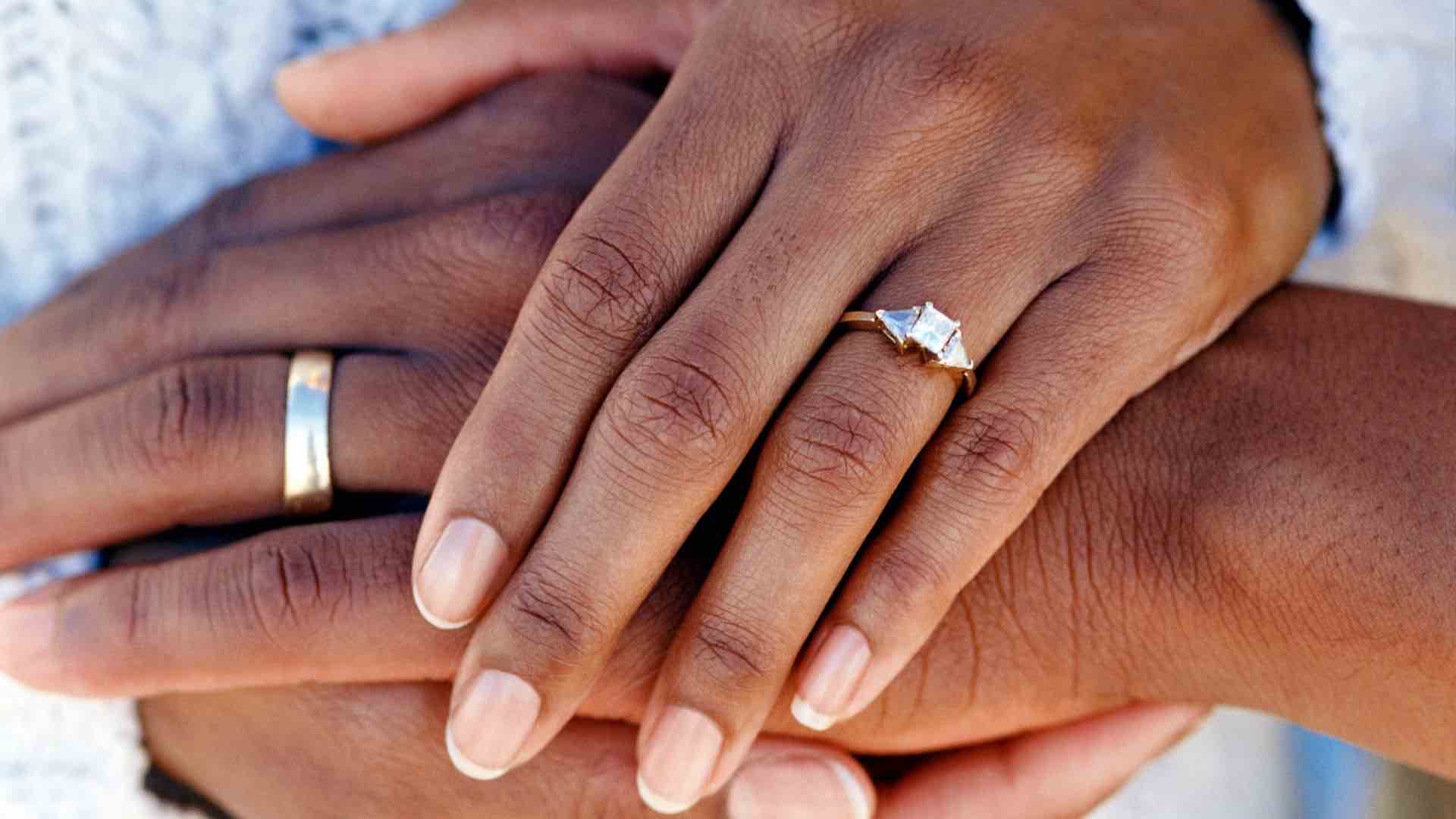
    From my pastoral experience, amongst the greatest causes of marital conflict is sex, money and in- laws. Not sure what the order is! But today we look at in-laws.

    When you marry, you don’t just marry one person, you marry a family! At first, you may not think so, but you do! This is true of all cultures, but much more pronounced in the black culture. This has great benefits and great challenges.

    Therefore a man shall leave his father and his mother and hold fast to his wife, and they shall become one flesh”, Genesis 2:24. Jesus himself repeats this verse as foundational to the meaning of marriage in Matthew 19:5.

    As we have seen before, marriage is between one man and one woman for one life, to the exclusion of others. Surprisingly, the first exclusion are the parents. In ancient cultures, the woman automatically left her family to join her husband and his family. However, this verse reinforces, that both husband and wife are to leave their parents. When a man and woman commit themselves to one another in marriage, they are both leaving their biological parents and forming a new family unit.

    This means that the first loyalty of a husband and wife is no longer to their biological family, their parents or siblings but to one another. In a primary sense, this means that a wife no longer looks to her mother or father for security or love or affirmation, but to her husband. A husband no longer looks to his father or mother for support or comfort or advice, but to his wife. They are to leave emotionally.

    Where humanly possible, the couple need to leave the physical home of their parents. They are to leave geographically. They are to establish their own home. For a newly married couple to remain in the home of either of their parents is extremely unhealthy and a significant danger to their marriage, unless there is some exceptional reason. Many years back, a couple from the USA joined our church. The wife at one stage told me. “We moved half-way across the world to get away from his family”. I said, “If that what it takes for you to have a healthy marriage, well done”.

    Where humanly possible, the couple need to be or speedily become financially independent of their parents. They are to leave financially. Parents may be able to assist their married children in one-off events, such as the cost of the wedding or purchasing a home. But far better for a couple to struggle together financially, rather than be dependent on their parents.

    This does not mean that a husband and wife are not to respect or love their parents. The Bible is clear that we are to respect and honour our parents and elders. However, whatever they do for either parent, is first discussed and agreed upon by the couple. They both know that their first loyalty is to one another, and together they decide to support a certain parent in a particular way. There may come a time, when an aging parent needs a home in their twilight years. It may be your home. But that decision, is never made solely by the child of the respective parent. It is a joint and mutually agreed decision.

    One of the greatest dangers to the health of a marriage is when the son or daughter, now married, never leave home. She may have left home geographically, but emotionally the wife is more concerned about the opinion of her father or sister than her husband. Where the husband is more concerned about the opinion of his mother than his wife. Now, you have three in a marriage. It just doesn’t work. Someone will have to go. And it must be the mother or father-in-law.

    He says, “But surely, you can’t expect me to favour my wife above my mother, for goodness sake, she’s my mother”. Well, that is precisely what the Bible expects of you! If you and your wife are able to mutually support your mother where needed, all good and well. But if there is a clash between the needs of your wife or the needs of your mother, no question, your wife takes priority.

    As a pastor, I cannot tell you how often a marriage has been severely damaged or broken because the husband never left home! In my white culture, there’s a standing joke about a husband and his mother-in-law. The truth however, is that we never joke about the real problem, the wife’s mother-in- law!

    You see, too often the husband’s mother, doesn’t think this girl is good enough for her special boy. She thinks that her special boy has married below himself! And so she interferes, she criticizes, she makes the life of her daughter-in-law unbearable. If this is true of your marriage, then the husband has a duty to graciously ask his mother to back-off. If she doesn’t listen after a number of entreaties, he will need to inform his mother that he and his wife will need to separate themselves from her as far as is humanly possible. Of course, this will hurt the mother, but far rather for the mother to be hurt, than for his wife to be hurt. Remember, his first obligation, is no longer to his parents, but to his wife. You ignore God’s pattern at your peril!

    “Therefore a man shall leave his father and his mother and hold fast to his wife”.